
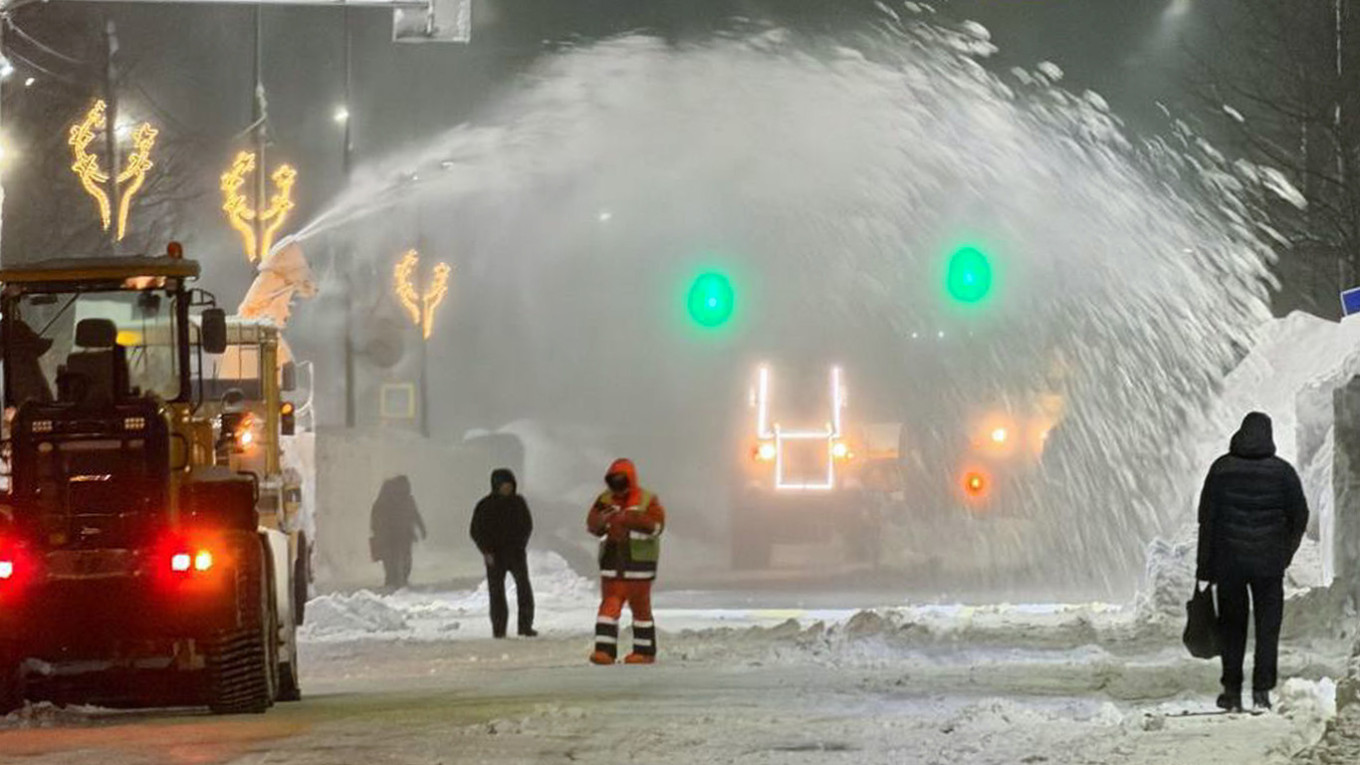
With its famed glaciers and volcanoes, Russia’s Kamchatka region is often referred to as “the land of fire and ice.”
In recent days, however, the remote Far East peninsula has been grappling with historic snowfalls that have paralyzed life for tens of thousands of people, prompting them to appeal to Moscow for aid.
Locals in the regional capital of Petropavlovsk-Kamchatsky described entire neighborhoods buried in snow and unplowed roads that have impeded everything from ambulances and firetrucks to basic food shipments as snowdrifts as high as 1.7 to 2.5 meters (5.5 to 8.2 feet) piled up.
“Some neighborhoods were completely cut off. In some areas, there were power and water outages,” one resident of Petropavlovsk-Kamchatsky told The Moscow Times.
“Conditions were and are much worse in many smaller settlements,” he added.
Videos and photos shared online showed people climbing or even jumping out of their apartment buildings through the windows as their building entrances were blocked by the snow.
“Sidewalks also barely exist. Instead, people are forced to walk along narrow paths atop huge snowbanks, sometimes almost brushing against power lines,” the local resident told The Moscow Times.
Regional Governor Vladimir Solodov on Tuesday acknowledged that Kamchatka lacked sufficient snow-removal equipment and described the situation on the roads as “critical.”
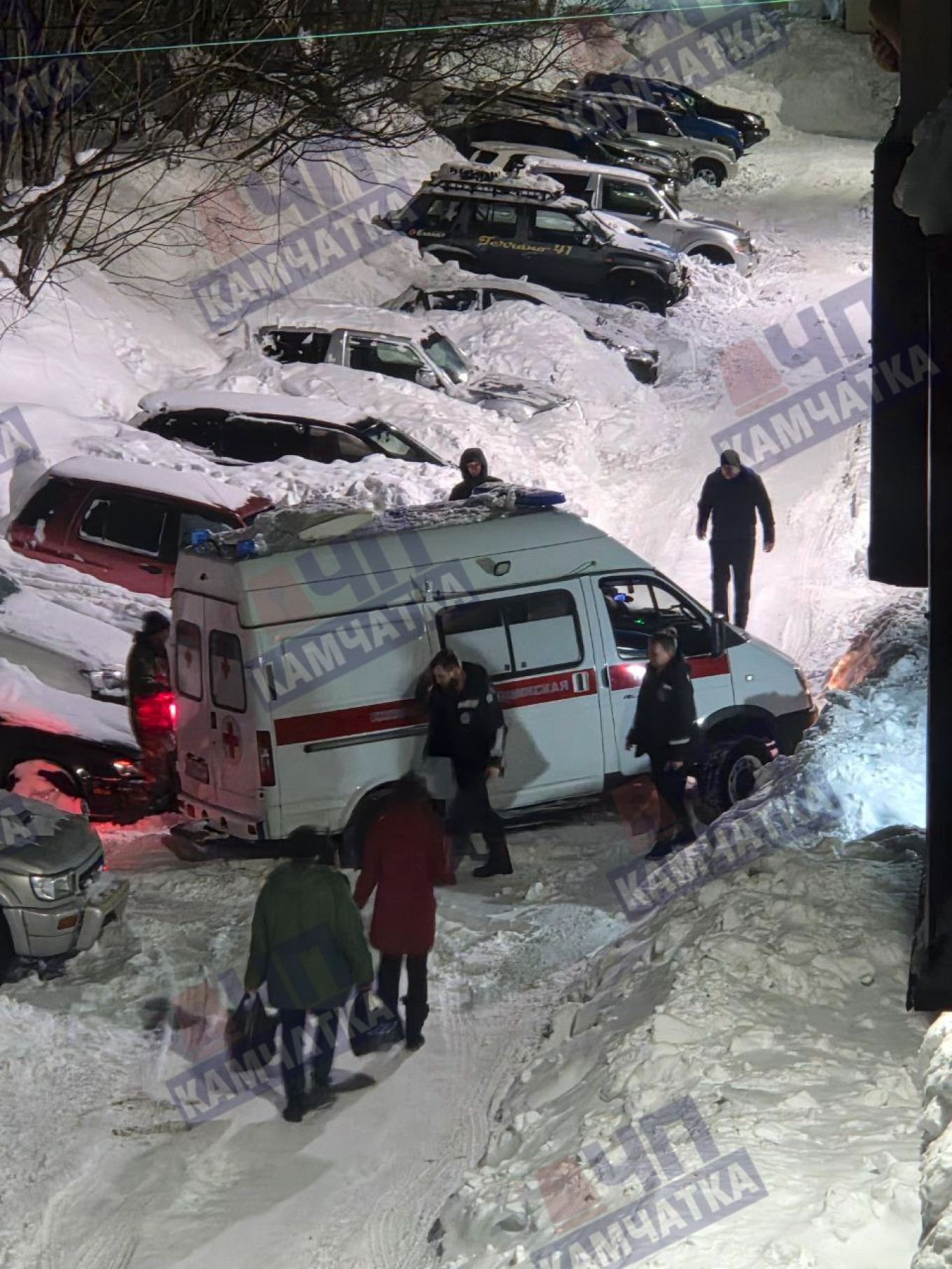
In many parts of Petropavlovsk-Kamchatsky, cars were unable to pass due to unplowed roads, hindering not only people’s movement but also the emergency services.
Locals shared footage showing ambulances stuck or blocked by the snow.
Some residents linked blocked roads to a deadly fire in late December that killed two adults and two children, saying emergency services were unable to reach the scene in time.
“Before ambulance crews arrived, firefighters carried out resuscitation efforts and then handed the victims over to medical staff, but unfortunately they could not be saved,” authorities said.
In a separate incident, fire trucks were unable to reach a burning building where three people were injured last week.
“Firefighters had to drag the hose by hand to reach the source of the fire,” regional Emergency Situations Minister Sergei Lebedev said.
Access to food has also become a concern due to delivery disruptions.
Kamchatka resident Tatyana Nazarko complained that a local store “has no essential products, like bread or dairy products.”
“The shelves are empty, like in Soviet times,” she wrote in a comment on Governor Solodov’s VKontakte page.
Elderly people, particularly those living alone, have been trapped indoors and have relied on volunteers to deliver food, the resident who spoke to The Moscow Times said.
Local authorities said last week that “the situation was stable in larger stores,” but acknowledged that “smaller shops and those with more complex logistics continue to experience shortages.”
Authorities also called on Monday for intensified efforts to clear snow and icicles from rooftops.
At least two men have died in Petropavlovsk-Kamchatsky after being struck by snow falling from rooftops following the snowstorms.
A state of emergency remained in effect in the city as of Thursday, when the first batch of additional snow-clearing equipment arrived in the region.
Russia’s Defense Ministry also said Thursday it would send an An-124 Ruslan cargo aircraft, the world’s largest operating cargo aircraft, to deliver heavy snow-removal equipment to Kamchatka.
Schools and colleges in Petropavlovsk-Kamchatsky will continue operating remotely until next week, authorities said.
In a televised meeting with President Vladimir Putin on Wednesday, Solodov maintained that the situation was “returning to normal.”
But some residents said official reports did not always reflect conditions on the ground.
“When will officials understand that for ordinary people, myself included, phrases from press releases like ‘180,000 cubic meters of snow removed’ are just information noise?” local resident Nikita Shpomer said on VKontakte.
“What we do understand is what it means to drive on roads where ice from sidewalks is thrown under car wheels, or to leave your building through an entrance that hasn’t been cleared of snow,” he said.
The Kamchatka resident who spoke to The Moscow Times said nearly everyone he had spoken to believed municipal snow-removal services had effectively collapsed.
“There is noticeably less equipment, many people are hiring tractors and snow blowers at their own expense,” he said.
“Snow is simply pushed into piles, making it impossible to properly clear the roads,” he said.
Local resident Yelena Solovey also criticized the authorities’ response, saying the scale of the problem could have been avoided.
“There wouldn’t be meters-high snow if it had been removed instead of being left to pile up,” Solovey wrote on VKontakte, asking what had happened to the equipment that was supposed to be deployed to clean snow in the region.
“Now we are shouting to the whole of Russia that there is no equipment,” she said.
A Message from The Moscow Times:
Dear readers,
We are facing unprecedented challenges. Russia's Prosecutor General's Office has designated The Moscow Times as an "undesirable" organization, criminalizing our work and putting our staff at risk of prosecution. This follows our earlier unjust labeling as a "foreign agent."
These actions are direct attempts to silence independent journalism in Russia. The authorities claim our work "discredits the decisions of the Russian leadership." We see things differently: we strive to provide accurate, unbiased reporting on Russia.
We, the journalists of The Moscow Times, refuse to be silenced. But to continue our work, we need your help.
Your support, no matter how small, makes a world of difference. If you can, please support us monthly starting from just $2. It's quick to set up, and every contribution makes a significant impact.
By supporting The Moscow Times, you're defending open, independent journalism in the face of repression. Thank you for standing with us.

Remind me later.