
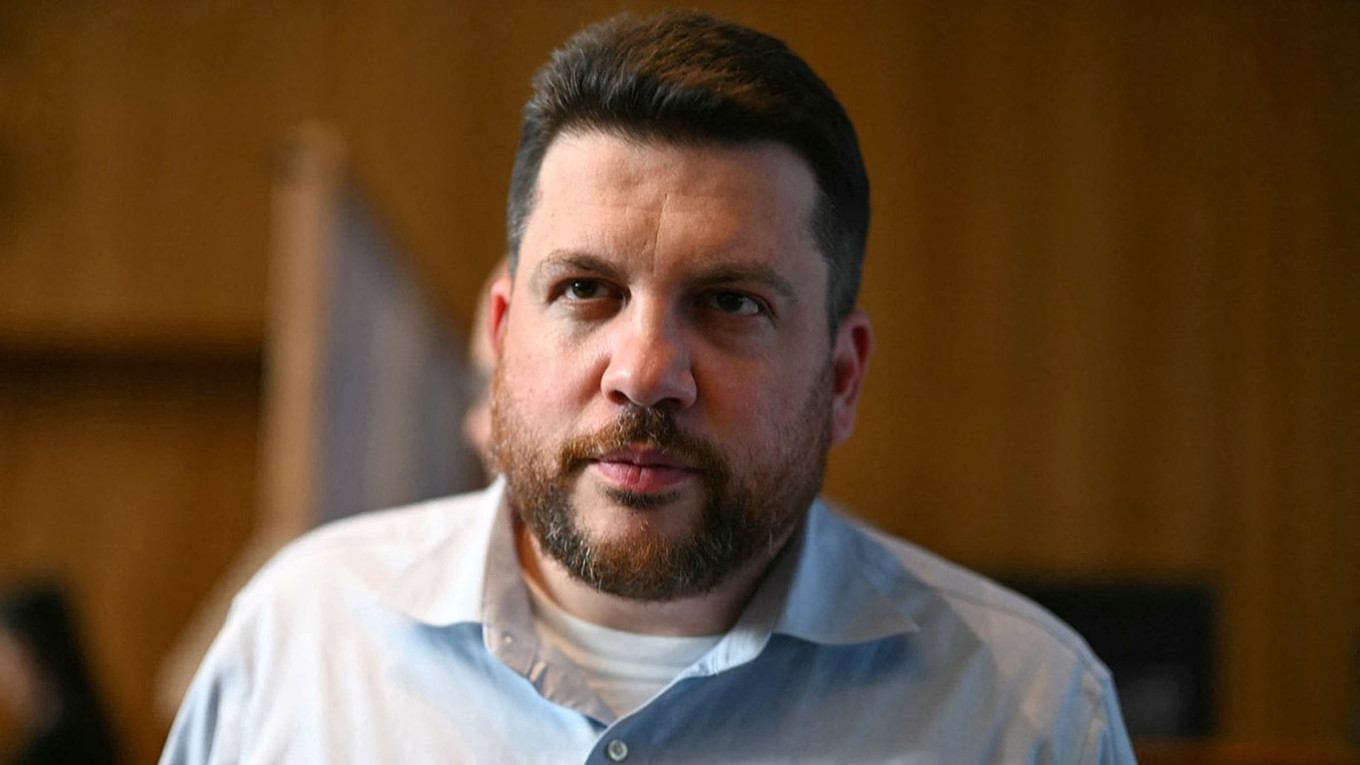
The furor surrounding Leonid Volkov’s statements is not a private scandal or yet another quarrel within the Russian emigre community. Nor is it a debate over whether he was right or wrong.
At its core, it is a test of how resilient European legal principles remain under the pressures of war, political division and an emotionally overheated public sphere. That is why this case extends far beyond Volkov himself — however controversial, conflict-prone or toxic a politician he may be.
We must approach this from the simple and fundamental principle that everyone has the right to express their opinion, especially in private correspondence. This is not a matter of personal sympathies, moral judgments or political expediency, but a foundational legal principle. Otherwise, freedom of speech turns into a conditional privilege granted in exchange for loyalty.
What is systematically ignored in this story is the basic fact that we are dealing with private comments, not public calls to action, propaganda, incitement to violence or concrete acts. Harsh, emotional or even politically misguided criticism does not constitute an offense under European law.
This is precisely why Vilnius’ response to the episode carries such broader significance. Lithuania is not at war with Russia. It has not declared martial law or a state of emergency, nor introduced a special legal regime restricting civil rights. Any measures taken against a person lawfully residing in the country must therefore be assessed strictly within a peacetime legal framework.
Under those conditions, even the hypothetical revocation of a residence permit on the basis of expressed opinions takes on the character of repression.
If the legal status of one opposition figure can be questioned for saying the wrong thing today, the same mechanism can be applied to a journalist, a researcher or an activist whose views become inconvenient tomorrow. At that point, political expediency begins to supersede the law, in direct contradiction to the European legal tradition.
Volkov’s criticism of the Russian Volunteer Corps should also be separated from judgments about his language. The group’s leadership has never concealed its far-right, and in some cases openly neo-Nazi, views. Denis Kapustin, one of its leaders, has been banned from entering the European Union since 2019 precisely because of neo-Nazi statements which German authorities said demonstrated an “aspiration to undermine the foundations of the free democratic order.” In other words, the EU has already made a legal assessment of this individual.
Against that background, an uncomfortable but unavoidable question arises: why should criticism of a person deemed undesirable in the EU because of Nazi ideology become grounds for pursuing the person who calls that ideology by its name?
The same applies to Volkov’s harsh criticism of certain figures within the Ukrainian leadership and security establishment, including Kyrylo Budanov, Andriy Yermak and Mykhailo Podolyak. However harsh, inappropriate or politically misguided these statements may have been, criticizing Ukrainian officials cannot be regarded as grounds for repressive measures.
To reiterate, we are not talking about a public campaign to undermine Ukraine’s defense or support the aggressor, but about private correspondence containing evaluative judgments. Even in wartime, criticism of specific officials is not the same as sedition.
None of this means that Volkov did not make a serious political mistake. He ignored the overall context of the war and failed to account for the extreme sensitivity of Ukrainian and Eastern European politics, where every word is automatically filtered through the lens of an existential conflict. It was crude, careless, unprofessional and predictably counterproductive.
But political responsibility must be distinguished from legal responsibility. Political mistakes should carry political consequences. European politicians and institutions are fully entitled to refuse to engage with Volkov, to distance themselves from him publicly, to exclude him or affiliated organizations from grant programs or to treat him as an untouchable figure within the Russian opposition. These are normal tools of political accountability in a democratic system.
What is not acceptable is punishment by the state. Revoking residence permits, initiating security screenings for “threats” or opening criminal proceedings over expressed opinions crosses the line into repression. At most, a civil lawsuit for defamation would fall within the bounds of the law.
Yet the current crisis cannot be explained by one private message alone. Volkov has long been one of the most toxic figures in the Russian opposition, for reasons that go beyond this episode.
During his years in leadership positions, the Anti-Corruption Foundation (FBK) consistently sought to monopolize the opposition space, denying legitimacy to any alternatives, waging a prolonged personal feud with Mikhail Khodorkovsky and encouraging waves of online attacks by supporters against anyone who questioned FBK figures or positions. The resulting atmosphere is one of sheer intolerance and aggression.
At the same time, the FBK has offered no positive political program and has clung to outdated and even harmful practices, including investigations into corruption within the Russian military that risk inadvertently assisting Moscow’s war effort.
A European reader might ask whether Volkov resigned, as a normal European politician would after such a blunder. The answer lies in the structure of the Russian opposition itself. It is not composed of parties or institutions. It does not consist of mass political movements capable of exerting pressure on their leaders. It consists of personalities.
The FBK is neither a party nor a movement, nor a democratic organization in the European sense. It has no membership, no internal elections, no leadership rotation and no real accountability. It is, in effect, an NGO, and not a particularly transparent one.
In that sense, Volkov cannot truly resign because there is no one to replace him. There is no mechanism or procedure for any other activist to step in. FBK does not allow for significant personnel change by design. The same can be said about any other prominent Russian opposition figure or group.
This is hardly Volkov’s first scandal. In 2023, he quietly signed a letter calling for the lifting of sanctions on Russian billionaire Mikhail Fridman, who had not taken an anti-war stance. When the letter became public, Volkov initially denied having signed it, then acknowledged it, announced a brief “pause” in political activity and returned to the FBK days later without consequences. This is not an exception but the norm of overpersonalized politics.
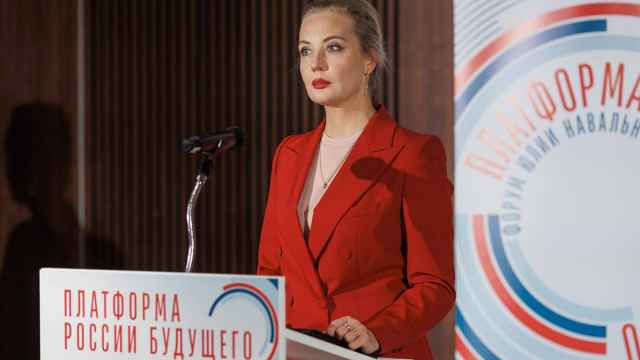
After Alexei Navalny’s death, formal leadership of the FBK passed to his widow, Yulia Navalnaya, who had no prior political experience. The FBK became an inherited project in which control is transferred along family lines. This is not a comment on Navalnaya’s personal qualities, but on the abandonment of politics as an institution, a direct result of the model Volkov helped entrench: no membership, no internal democracy, no elections.
The same logic has driven resistance to any attempts at institutional representation of the Russian opposition in Europe. Efforts by Khodorkovsky and the Russian Anti-War Committee to create representative bodies, including at the Parliamentary Assembly of the Council of Europe (PACE), were actively opposed by Volkov and the FBK. Today, the FBK refuses to participate in forming a PACE delegation because that would require acknowledging pluralism and abandoning their claim to be the only true opposition.
Still, it would be unfair to place all the blame on Volkov alone. His behavior reflects a systemic problem afflicting the Russian opposition as a whole.
What unites Volkov and other opposition leaders is a strategy of waiting for a hypothetical moment when Vladimir Putin is gone and they can finally make an effort to achieve political power. Until then, they are more focused on growing their YouTube channels. There is little effort to build institutions, political movements, parties or other tools of civic mobilization. This refusal to do the hard work of organization is presented as “realism,” but in practice it amounts to an ideology of passivity.
That window of opportunity may one day open. But seizing it would require structures, representation, trained cadres and sustained political work. Without them, the opposition will be incapable of acting when the long-awaited moment arrives. No people, no organizations, no instruments.
YouTube creates an illusion of influence without responsibility. Subscribers are not supporters, views are not votes and likes do not translate into citizens willing to take to the streets and clash with police and gendarmes.
Building mass movements would inevitably produce new leaders, require procedures and dismantle monopolies. That is precisely why civil society becomes a threat rather than a resource for those who claim to champion it.
The same logic explains the categorical refusal to hold elections for political representation, even in exile. The stated reasons are familiar: war, dispersion of the diaspora, technical difficulties. All are real, and all are solvable.
The real issue is simpler. Those who already see themselves as leaders do not want elections that might reveal that name recognition is not the same as support, that a brand is not a mandate and that self-appointed leaders are not necessarily leaders at all. It is therefore hardly surprising that figures who speak endlessly about democracy prefer that representatives of the Russian opposition to PACE be selected not by Russians, but by PACE itself.
In this respect, the opposition in exile increasingly mirrors the power structure in Russia it claims to oppose: no transparency, no accountability and the same people remaining in charge indefinitely.
If Europe is genuinely interested in a post-Putin Russia — and thus in a democratic and predictable Russia —it should take a closer look at those who present themselves as “true democrats.” The future Russia cannot be more democratic than its opposition in exile.
Which leads to the final and key question: What exactly does Europe want — demonstrations of support or results?
If the goal is symbolic gestures, awards and rhetoric without substantive action, then the current cast of figures — the FBK, Navalnaya, Kara-Murza — will suffice, and Volkov can be made an exemplary punishment.
But if the goal is real change, it is impossible to count on leaders who are anti-democratic by nature.
With politicians like these, you can take a stand — but you cannot build a future.
Read this article in Russian at The Moscow Times' Russian service.
A Message from The Moscow Times:
Dear readers,
We are facing unprecedented challenges. Russia's Prosecutor General's Office has designated The Moscow Times as an "undesirable" organization, criminalizing our work and putting our staff at risk of prosecution. This follows our earlier unjust labeling as a "foreign agent."
These actions are direct attempts to silence independent journalism in Russia. The authorities claim our work "discredits the decisions of the Russian leadership." We see things differently: we strive to provide accurate, unbiased reporting on Russia.
We, the journalists of The Moscow Times, refuse to be silenced. But to continue our work, we need your help.
Your support, no matter how small, makes a world of difference. If you can, please support us monthly starting from just $2. It's quick to set up, and every contribution makes a significant impact.
By supporting The Moscow Times, you're defending open, independent journalism in the face of repression. Thank you for standing with us.

Remind me later.