
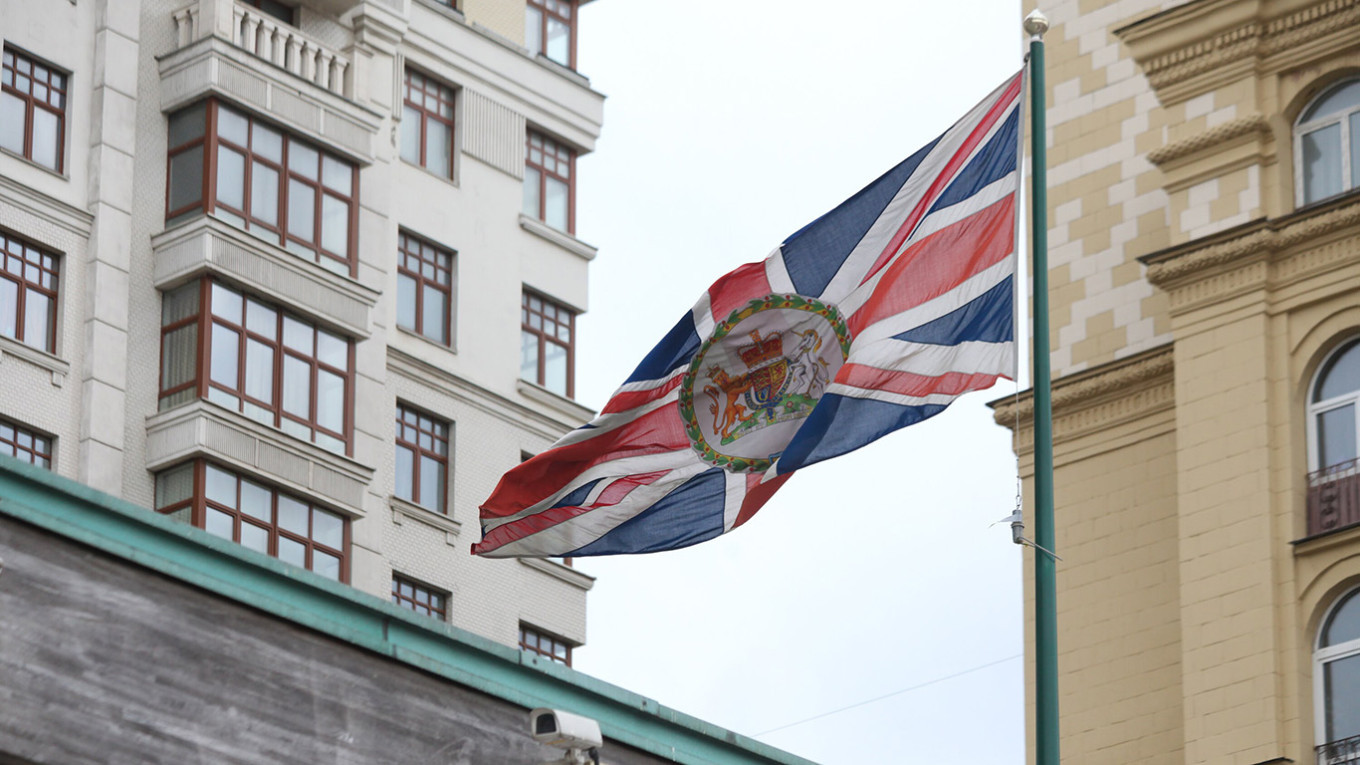
Russia’s FSB security service on Thursday accused an employee of the British Embassy in Moscow of being an undercover spy and ordered him to leave the country within two weeks.
According to the FSB, the employee, identified as 45-year-old Gareth Samuel Davies, was sent to Russia under the diplomatic cover of second secretary of the administrative section at the British Embassy in Moscow.
Since 2024, Russia has expelled at least nine British diplomats accused of espionage. The British government has dismissed the allegations against its diplomatic staff in each instance and vowed to “respond appropriately.”
The British Embassy in Moscow called the latest expulsion of one of its diplomats “baseless.”
“This is not the first time the Kremlin has made malicious and baseless accusations against our staff,” an embassy spokesperson told The Moscow Times. “Their targeting of British diplomats comes out of desperation.”
“We are carefully considering our options in response,” the spokesperson added.
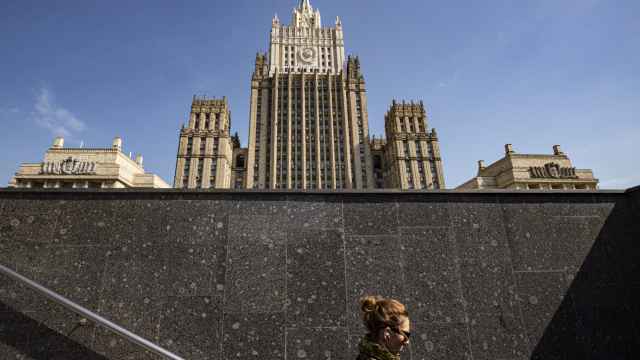
Russia’s Foreign Ministry said Thursday that it summoned Britain’s charge d’affaires to issue a “strong protest” in connection with the spy allegations.
“Moscow will not tolerate the activities of undeclared British intelligence officers on Russian territory,” the ministry said in a statement.
It warned that Moscow would issue a “decisive tit-for-tat response should London choose to escalate the situation.”
Both the Foreign Ministry and the FSB claimed the diplomat’s accreditation was revoked in accordance with the 1961 Vienna Convention and that he was ordered to leave Russia.
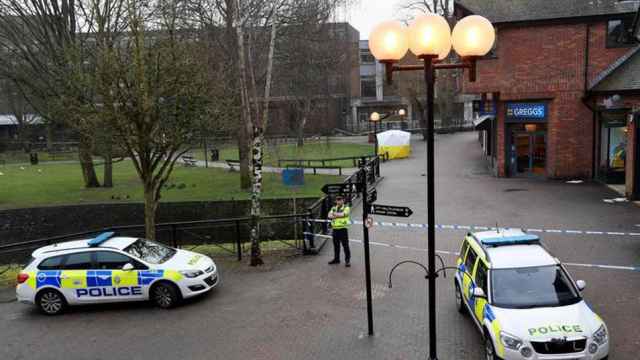
Relations between the United Kingdom and Russia soured before President Vladimir Putin ordered the full-scale invasion of Ukraine in 2022, with a slew of espionage and interference scandals, including the 2018 poisoning of former Russian spy Sergei Skripal in Britain.
A Message from The Moscow Times:
Dear readers,
We are facing unprecedented challenges. Russia's Prosecutor General's Office has designated The Moscow Times as an "undesirable" organization, criminalizing our work and putting our staff at risk of prosecution. This follows our earlier unjust labeling as a "foreign agent."
These actions are direct attempts to silence independent journalism in Russia. The authorities claim our work "discredits the decisions of the Russian leadership." We see things differently: we strive to provide accurate, unbiased reporting on Russia.
We, the journalists of The Moscow Times, refuse to be silenced. But to continue our work, we need your help.
Your support, no matter how small, makes a world of difference. If you can, please support us monthly starting from just $2. It's quick to set up, and every contribution makes a significant impact.
By supporting The Moscow Times, you're defending open, independent journalism in the face of repression. Thank you for standing with us.

Remind me later.