
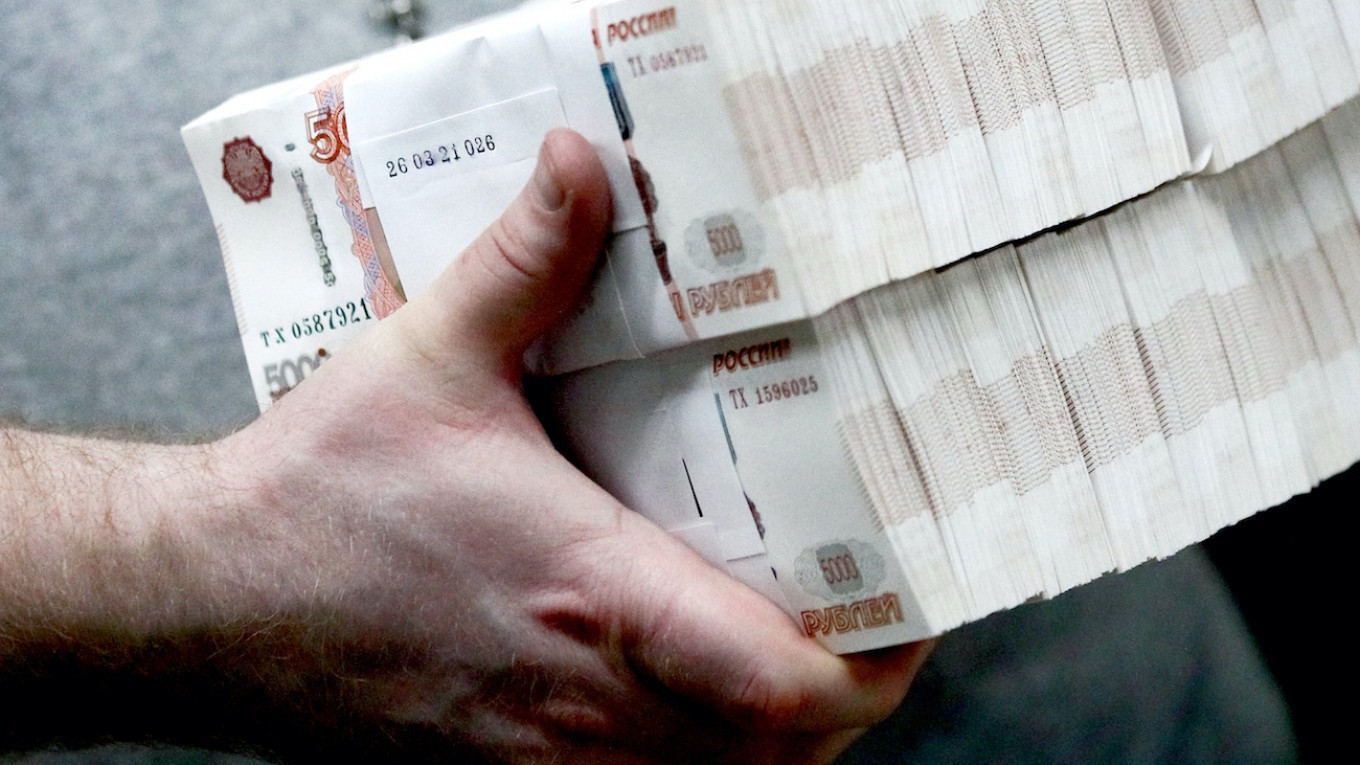
People generally have little faith in statistics and the overwhelming majority of Russians are convinced that Rosstat deliberately understates inflation. When asked not about their trust in statistics but about how they personally feel price growth (hereafter, “observed inflation”), Russian respondents always give figures that are significantly higher than the official ones.
If we compare the population’s answers in relevant surveys with Rosstat’s monthly inflation data, we find that between May 2022 and October 2025, inflation as observed by Russians was on average 1.8 times higher than inflation recorded by Rosstat. If we take the period from late 2015 to May 2022, the gap is even larger — 2.5 times.
The problem is that people in every country observe inflation as being higher than the official measure, thanks to well-studied factors that distort their perception.
This raises the question of how much higher observed inflation is in other countries compared to official figures. If observed inflation in Russia is higher than actual inflation across countries to a similar degree, we may be able to have more faith in Rosstat’s data.
Below is a table comparing official and observed inflation for several countries from May 2022 to October 2025.
Additionally, I calculated the observed versus official inflation rates over a longer period and found them largely similar to the numbers in this chart. It is noticeable that the ratio between observed and official inflation in a given country does not change much depending on the time period. I would venture to suggest that this ratio is relatively stable and depends more on a country’s cultural and political characteristics than on the specific time periods (or phases of the economic cycle) used for comparison.
That said, substantiating such a hypothesis would require a much broader dataset.
I selected countries for comparison based solely on how easy it was to find data on inflation as perceived by the population. There is far more data on expected inflation, since this matters to central banks, but it is unclear what it can be meaningfully compared to.
Some of the figures are surprising. Data from Greece is particularly striking: despite living in the eurozone, Greeks manage to “observe” inflation that is higher even in absolute terms than what Russians observe. All EU data come from a single source (the ECB) and use a unified methodology, so we know confidently that it is Greek citizens who significantly overestimate inflation, rather than Greek statisticians distorting the data.
Kazakhstan also looks unusual, as its citizens exaggerate inflation to the same degree as people in the most developed European countries.
Otherwise, the picture resembles findings from studies showing that citizens’ assessments of economic inequality in their country do not correlate with its actual statistical level, like how respondents’ assessments of corruption in their country do not correlate with how often they personally encounter corruption. Simply put, in some societies, narratives about soaring prices and thieving officials are more widespread than in others. Observations only have a very limited connection to reality.
From this data, we can see that Russians overestimate inflation to a similar degree as people across Europe. Using data from 2015 onward, the gap is noticeably larger, but still does not reach Greek levels and is difficult to use as unqualified proof of Rosstat’s falsification. Proving that would require admitting that Rosstat suddenly began falsifying less during the war than before, which would be extremely illogical.
Thus, nothing particularly interesting emerges for Russia itself.
However, in exploring this question, I came across several intriguing studies that help explain why populations consistently observe higher inflation than actually exists.
It turns out that different groups exaggerate observed inflation to different degrees. For example, Finns with high IQs are less prone to exaggerating inflation than Finns with lower IQs. People with an education in economics exaggerate inflation less than those without one. And women everywhere exaggerate inflation more than men.
The presence of gender differences could not fail to spark keen interest among researchers in our politically correct age. To eliminate random-sample distortions, they compared inflation estimates between men and women living together. This removed differences in income, consumption structure, neighborhood and similar factors.
At first approximation, the difference in inflation estimates between women and men turned out to be about the same as in random samples. But after asking respondents a variety of additional questions, researchers discovered that the key factor driving the difference was how often a person visits grocery stores. In households where men and women went grocery shopping with equal frequency, the difference in inflation estimates was minimal. In households where the husband almost never went grocery shopping but the homemaker wife did so regularly, the difference was maximal.
At first glance, this might seem like proof of a global statisticians’ conspiracy: supermarket shoppers who see prices every day know inflation is higher, surely? while those detached from reality believe propaganda. But household members who do not shop for groceries do not live in a vacuum either. They fill their cars with fuel, go to restaurants and hairdressers, pay utility bills and school fees. They usually participate in non-food shopping trips and occasionally in grocery shopping as well. Thus, we must either assume that food inflation consistently exceeds inflation for other goods and services (which we know is not true), or look for explanations in perceptual distortions.
First, people tend to notice sharp changes and ignore the absence of change. Prices almost always rise, and there are always goods whose prices rise faster than inflation. Suppose a store sells only two goods: the price of good A rises by 10%, while the price of good B does not change. Inflation is 5%, but an ordinary person observes it as 10%.
Second, people generally react more strongly to risks than to favorable changes. Price decreases are less likely to attract attention than price increases.
Let me illustrate this distortion using readers of this text who live in Russia. I think everyone can easily name many goods whose prices have recently risen beyond inflation. Price reductions are statistically rarer and more unusual. And if perception were not distorted, people would notice price drops first and foremost.
Yet how many readers have noticed that, compared to the peak weekly prices of spring 2022, white cabbage today is on average 65% cheaper, buckwheat is down by 46%, beets 42% and carrots 39% against cumulative official inflation of about 25% over that period?
Yes, I deliberately cherry-picked peak values. Before reaching those peaks, prices for these goods rose sharply, and if we compare year-on-year monthly data, the scale of price declines will look much more modest. However you calculate it, several everyday staple goods today cost fewer rubles than they did three to four years ago.
I am willing to bet that some Russian readers of this article will insist that these products have actually become more expensive. Prices have indeed fluctuated strongly in both directions over the past four years and one can find comparison points where today’s prices are higher. But taken over the entire cycle of fluctuations, prices declined. People remember the increases, but not the decreases.
Another illustration is potato prices, which were the same in 2020 and 2010. Over that decade, according to Rosstat, prices for all goods and services on average nearly doubled, while potato prices — despite strong internal fluctuations — remained stable. This is an absolutely anomalous situation for a staple good; I have not found anything similar elsewhere. I have never seen this anomaly discussed.
But when potato prices suddenly rose sharply after 10 years of stagnation, it became the subject of wide public debate. Incidentally, if we compare today’s potato prices with those of 2010, the increase is about 50%, against cumulative official inflation of 120%. Despite this, if you ask the average Russian consumer, they will confidently say that potatoes are rising faster than inflation. They did indeed rise, but there are nuances.
From a statistical perspective, all the facts above are far more unusual than if some minor product suddenly tripled in price tomorrow. Yet in the population’s “observations” of inflation, a price rise will be weighted far more heavily than statistically far more unusual and inflation-relevant declines or stagnation elsewhere.
These perceptual distortions have long been known; grocery shopping simply illustrates them well. Grocery stores carry many products, some of which always rise faster than inflation, and people visit them often and remember prices well. Hence, the more frequently a person shops for groceries, the stronger the perceptual distortion.
I would like to conclude with a popular meme: “Experts say life has improved, while people say it has gotten worse. That’s because people aren’t experts.”
Despite its ironic tone, this meme describes reality quite accurately. Surveys consistently show that people’s assessments of many indicators differ from objective measurements. People tend to understate their incomes, but overstate their level of education and the accuracy of their own observations.

A Message from The Moscow Times:
Dear readers,
We are facing unprecedented challenges. Russia's Prosecutor General's Office has designated The Moscow Times as an "undesirable" organization, criminalizing our work and putting our staff at risk of prosecution. This follows our earlier unjust labeling as a "foreign agent."
These actions are direct attempts to silence independent journalism in Russia. The authorities claim our work "discredits the decisions of the Russian leadership." We see things differently: we strive to provide accurate, unbiased reporting on Russia.
We, the journalists of The Moscow Times, refuse to be silenced. But to continue our work, we need your help.
Your support, no matter how small, makes a world of difference. If you can, please support us monthly starting from just $2. It's quick to set up, and every contribution makes a significant impact.
By supporting The Moscow Times, you're defending open, independent journalism in the face of repression. Thank you for standing with us.

Remind me later.