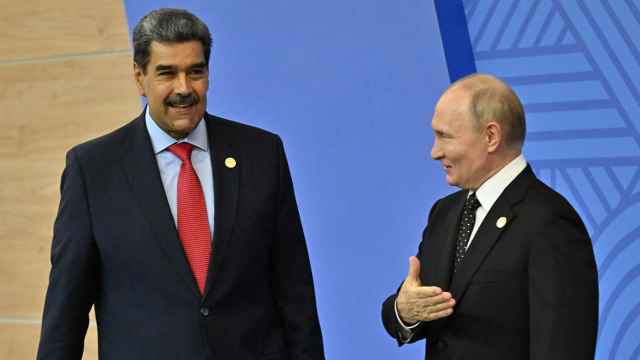

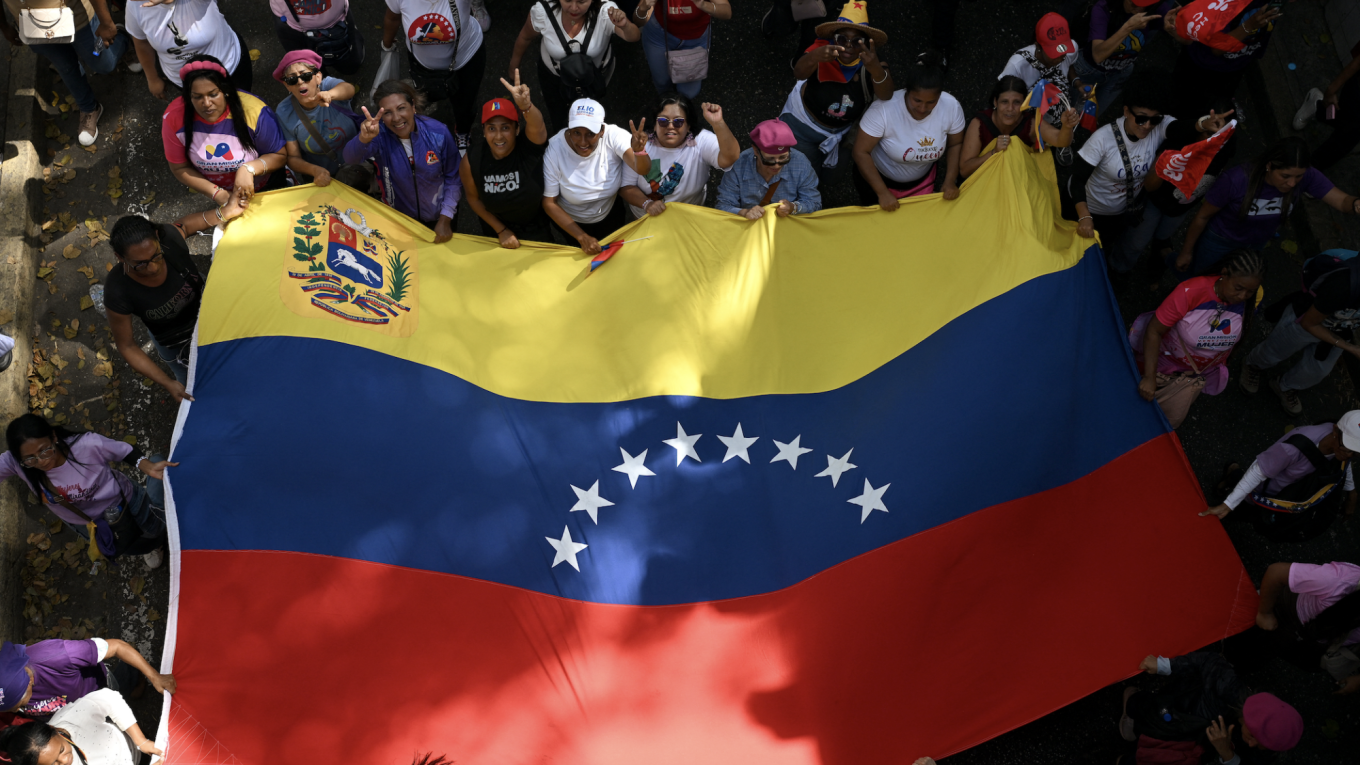
In May 2025, President Vladimir Putin “warmly” welcomed Venezuelan leader Nicolás Maduro to the Kremlin and wished him “all the very best” as the two signed a strategic partnership agreement.
But in the five days since the U.S. seized Maduro and declared oversight over Venezuela, Russia’s close ally in South America, Putin has stayed silent.
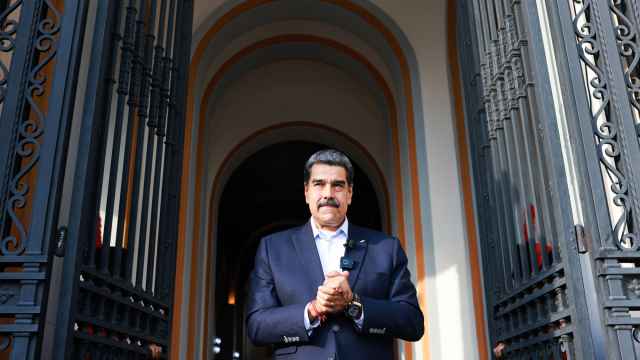
As Maduro awaits trial on criminal charges in New York, the Kremlin appears to be taking a wait-and-see approach toward the Trump administration’s latest actions to assert its dominance over the Western Hemisphere.
Experts say that while Maduro’s capture could damage Russia’s reputation as a reliable ally, the political and economic consequences for Moscow are likely to be limited.
“Russia has never held particularly strong positions in Latin America” diplomatically and militarily, former Russian diplomat Boris Bondarev told The Moscow Times. “What it could lose in Venezuela are [oil] contracts and investments.”
Moscow has demanded Maduro’s release but has taken no concrete steps to support him since the U.S. operation. It has also voiced support for Venezuela’s interim leader Delcy Rodríguez, condemning what it called “neocolonial threats and armed aggression from abroad.”
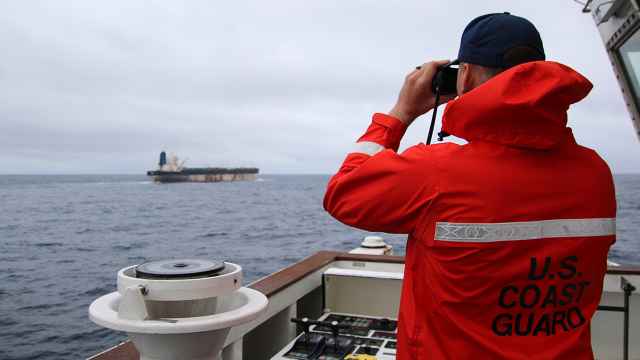
Likewise, when U.S. authorities seized a Russian-flagged oil tanker linked to Venezuela in the North Atlantic this week, Moscow accused Washington of escalating tensions but took no direct action.
“Russian officials and propagandists find themselves in an awkward position,” said Alexander Baunov, a senior fellow at the Carnegie Endowment for International Peace.
“There are no instructions — and will be none — to break ties with Trump,” Baunov said in a Telegram post. “At the same time, they are obliged to condemn the aggression against an ally, because the so-called global majority is watching.”
“On the other hand, expressing too much outrage would only highlight their own weakness: they were unable to help, prevent or delay it,” he added.
Venezuela has remained among the few countries that maintained friendly ties with Moscow after Russia’s 2022 invasion of Ukraine. At the same time, Russia and the U.S. have resumed dialogue since President Donald Trump returned to office last year as Trump seeks to broker a peace deal over Ukraine.
“The United States has demonstrated what a ‘special military operation’ looks like. It is clear that in Russia they will not be able to avoid asking themselves: why were we unable to do the same [in Ukraine]?” Baunov said.
Pro-Kremlin voices have struck a mixed tone on Maduro’s capture, denouncing it as illegal under international law while contrasting the U.S. success with Russia’s failure to topple Ukraine’s Volodymyr Zelensky in February 2022.
While Putin may suffer some reputational damage for failing to protect an ally, he could use Maduro’s capture to his advantage in the war on Ukraine, Bondarev said.
“[The U.S.] is already openly signaling that it is ready to divide the world into spheres of influence,” Bondarev told The Moscow Times.
“But Putin is also aiming for the same kind of division and wants his own sphere of influence. It seems to me the events in Venezuela could be good news for him — he can discuss [spheres of influence] openly with Trump,” Bondarev said.
“Plus, new arguments [for Putin’s war in Ukraine] will emerge: ‘If Trump is doing whatever he wants, why can’t we do whatever we want?’”
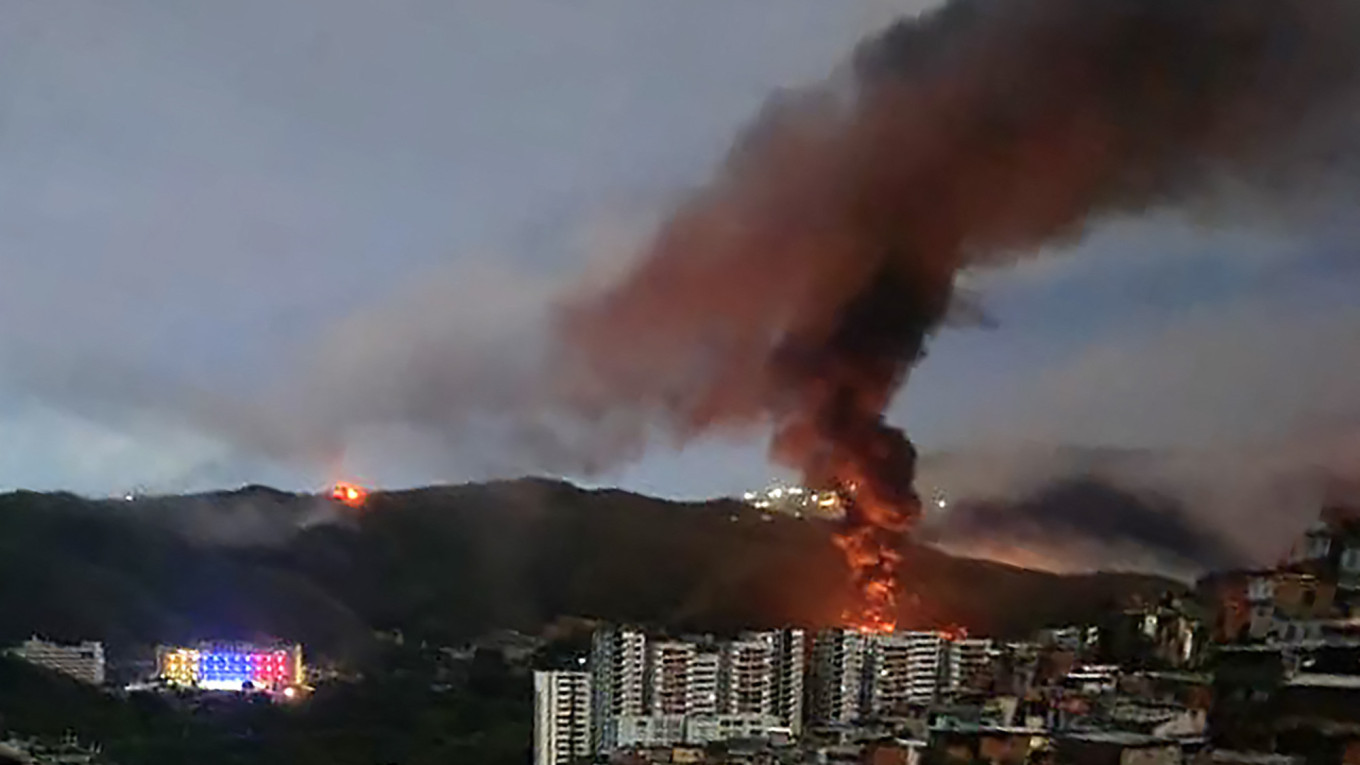
Experts say the economic losses for Moscow are also likely to be limited.
The Trump administration has told Rodríguez that Caracas must meet the White House’s demands before being allowed to pump more oil, its economic lifeline, ABC News reported.
One of these demands is that the country must kick out Russia, China, Iran and Cuba and sever economic ties, ABC’s sources said. Venezuela must also agree to partner exclusively with the U.S. on oil production and favor Washington when selling heavy crude, three people familiar with the U.S. plan told ABC.
Yet trade between Russia and Venezuela totaled about $200 million in 2024, compared with $245 billion between Russia and China, the exiled news outlet Agentstvo noted.
Russian exports to Venezuela primarily include oil products, fertilizers, pharmaceuticals and agricultural products, according to Russian Ambassador Sergei Melik‑Bagdasarov.
In 2025, Russia became a key supplier of petroleum products needed to dilute Venezuela’s heavy crude after U.S. shipments halted, Bloomberg reported. Caracas also approved an extension of oil joint ventures between state‑owned PDVSA and Russia’s Roszarubezhneft, allowing them to operate through 2041 with about $616 million in planned investment.
But according to Stanislav Mitrakhovich, an expert at Russia’s National Energy Security Fund, Russia no longer has significant oil projects in Venezuela.
“By the standards of what existed 10-15 years ago, this is now a relatively small business,” Mitrakhovich told the Kommersant business daily. “There may have been some strategic plans related to Russia’s influence in this part of the world. But in terms of economic projects aimed at generating significant revenue, there are none left.”
Besides oil products, Venezuela has purchased weapons from Russia including man‑portable air‑defense systems, tanks and air defense systems. Russian imports consisted mainly of agricultural products like cocoa, coffee, tropical fruits and alcoholic beverages.
Despite the Trump administration’s rhetoric that “this is OUR hemisphere,” industrial expert Maxim Khudalov told Kommersant that Russia is unlikely to withdraw entirely from the region.
“Based on the current state of communications with the Americans, it appears they remain open to cooperation, including with [Russia],” Khudalov said.
While the specific economic consequences of Venezuela’s leadership change for Russia remain to be seen, Baunov also noted that the political implications for Moscow are similarly uncertain.
“If Trump successfully changes the regime not only in Venezuela but also in Iran, Putin will be weakened. If [Trump] fails, or gets bogged down, [Putin] will be strengthened. It could even happen that he ends up needing some form of help from Putin,” he said.
“The problem with such American operations is their asymmetry: they are only possible in this form against weak states,” he said.
“Venezuela is a very weak country…such actions tend to reinforce the idea that the strong have the right over the weak,” Baunov added, noting that for Moscow, “the collection of valuable precedents has grown.”
A Message from The Moscow Times:
Dear readers,
We are facing unprecedented challenges. Russia's Prosecutor General's Office has designated The Moscow Times as an "undesirable" organization, criminalizing our work and putting our staff at risk of prosecution. This follows our earlier unjust labeling as a "foreign agent."
These actions are direct attempts to silence independent journalism in Russia. The authorities claim our work "discredits the decisions of the Russian leadership." We see things differently: we strive to provide accurate, unbiased reporting on Russia.
We, the journalists of The Moscow Times, refuse to be silenced. But to continue our work, we need your help.
Your support, no matter how small, makes a world of difference. If you can, please support us monthly starting from just $2. It's quick to set up, and every contribution makes a significant impact.
By supporting The Moscow Times, you're defending open, independent journalism in the face of repression. Thank you for standing with us.

Remind me later.