2025 saw the greatest and fastest change in United States-Russia relations since the 1917 Russian Revolution. This transformation has been driven entirely by the pro-Russian and anti-Europe realignment of the Trump administration, which is badly damaging America’s security and global standing while simultaneously posing an acute threat to Europe, most obviously to Ukraine.
It is part of the wider shift in U.S. foreign policy and worldview under Trump; a shift that involves abandoning alliances, rejecting international law and the principle of state sovereignty, scrapping diplomatic structures and practices and discarding the U.S.’s core values. Washington’s traditional foreign policy commitment to support democracy is no more. 2025 brought an abrupt end to the U.S.-dominated global order and to eight decades of alliance with the democracies of Europe.
This once-in-a-century shift was clearly signalled before Trump took office in January through the selection of individuals such as Elon Musk, J.D. Vance and Tulsi Gabbard as administration members. Then, of course, there are the statements from Trump himself, who has spoken for over a decade of his wish for the U.S. to “get along” with Russia.
European policymakers and many analysts were reluctant to recognize this, perhaps because it seemed too frightening and too far outside their experience to be true. As a result, they were slow to react and all too willing to be reassured by the most Europe-friendly figures in and around the administration.
But the White House’s hostility to Europe and desire for good relations with the Kremlin has become impossible to ignore.
The primary focus of Washington’s Russia policy this year has, of course, been the war in Ukraine. But the contrast with Biden’s approach over the previous three years could not be more dramatic.
Although the previous administration was extremely cautious, fearing escalation — and often appearing determined to prevent Russia, as well as Ukraine, from losing — it was unambiguous in its support for Kyiv and condemnation of the Kremlin. Despite opposition from congressional Republicans, it supplied significant aid to Ukraine in 2024, recognising that helping the country defend itself mattered for U.S., European and global security.
The Trump administration changed all this.
The most obvious change was the termination of U.S. financial support for Ukraine. New military assistance in the National Defense Authorization Act, sent by the Senate to Trump in mid-December, includes only a small fraction of the aid provided in the previous year.
Instead, the Trump administration has chosen to sell weapons to other NATO states for them to pass on to Ukraine. That this entirely commercial transaction was seen as a win for Ukraine and evidence of the administration softening its position shows how intensely hostile Washington has been towards a state previously seen as a partner.
The clearest example of this hostility was Zelensky’s disastrous Oval Office visit in February. But it has been visible throughout the year as the Trump administration has exerted enormous pressure on Kyiv to agree to an exploitative agreement on critical minerals (a less extortionate one was later signed) and a ceasefire agreement from which only the U.S. and Russia would benefit. The Trump administration’s preferred resolution to the war has seemed to be one in which the U.S. takes Ukrainian resources and Russia takes Ukrainian land, leaving Kyiv with only the promise of some kind of security guarantee — which they would have to pay for — at a later date.
Disturbingly, members of Trump’s circle and administration have often repeated false claims about Ukraine and the war that sound as if they could have come from the Kremlin. Trump has repeatedly criticized Ukraine for starting the war — despite the fact that Russia’s invasion of Ukraine was unprovoked — and avoids blaming Russia, just as he has always refused to blame Putin for the 2014 annexation of Crimea. Trump and others have alleged that the Ukrainian government was corrupt and behaved antidemocratically in failing to hold elections during wartime — a favorite Russian claim — despite the fact that the Ukrainian constitution prohibits it.
In contrast to its treatment of Kyiv, the Trump administration has applied no pressure on the Kremlin to roll back its maximalist war aims or stop its campaign of war crimes in Ukraine. This was clear despite the administration’s determined attempts to give the impression that it was being tough with Moscow by imposing several two-week deadlines for Russia to make progress toward peace — deadlines that were ignored without consequence.
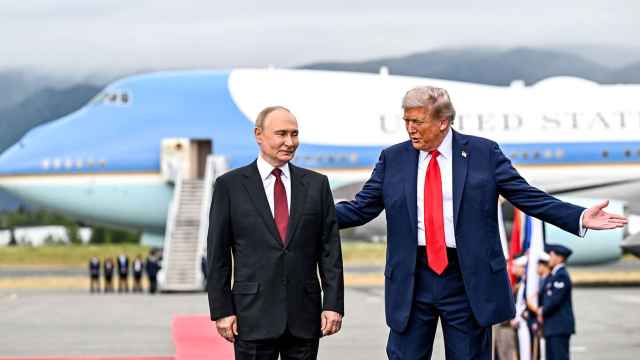
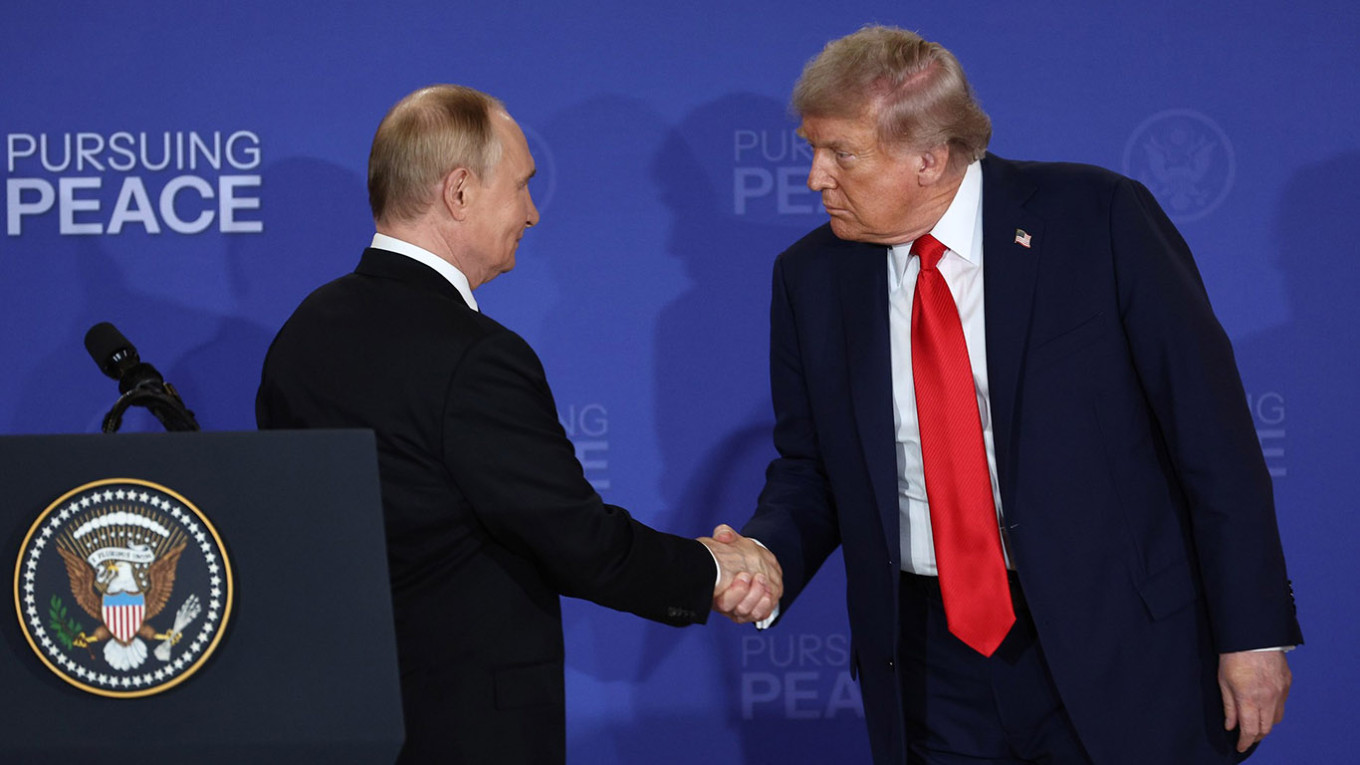
Instead, Trump chose to recognize Putin as a friend and equal, giving Russia a huge diplomatic boost via a hurried summit in Alaska, a gesture that contrasted strikingly with the attempt to humiliate Zelensky in the White House.
Instead of piling on pressure, the White House has focused on two goals: a close economic relationship and pushing allies to normalize relations with Moscow, including through the readmission of Russia to the G8 and what its 28-point peace plan described as the “reintegration” of Russia into the global economy — in other words, the lifting of sanctions.
They also seem happy to endorse Russia’s view that it has rights over its neighborhood, including the right to prevent further NATO expansion. The words and actions of the Trump administration suggest that they are happy to provide everything that Putin wants economically and in the diplomatic and security spheres. This certainly seems to be the view from the Kremlin, which described Trump’s new National Security Strategy as “largely consistent with our vision,” a claim that would have been unimaginable under any previous American president.
During the Cold War, Washington and Moscow were adversaries; for 35 years after it, the U.S. was the dominant figure in the relationship, setting the pace, depth and agenda of engagement and shaping the wider international environment in which they interacted. Until 2025, the relationship improved or worsened depending largely on the degree to which the U.S. was interested in Russia and Russia avoided aggression abroad and abuses at home. In the best periods of the relationship, the U.S. regarded Russia as a junior partner, or a junior partner-to-be.
Since Trump’s return to the presidency, that has changed entirely. Now, the Kremlin seems to set the agenda and shape how the White House sees Russia and Europe. Longstanding U.S. hostility to Russian aggression has been replaced with friendship and, it often seems, deference. Hostility has been redirected to Europe — another area where the American and Russian governments are now aligned.
Nothing in living memory compares with the scale and speed of the change to U.S.-Russia relations since Trump returned to the White House. His administration seems to be abandoning not just leadership of the West, but membership of it, in favor of ideological and economic alignment with the Kremlin.
Whoever follows Trump will struggle to undo the damage done to Washington’s alliances and the huge advantages he has given Russia, a country still profoundly hostile to U.S. interests. In the meantime, Ukraine and the rest of Europe will have to learn to live in a world in which the United States is no longer a friend. The coming year will show whether they can succeed.
A Message from The Moscow Times:
Dear readers,
We are facing unprecedented challenges. Russia's Prosecutor General's Office has designated The Moscow Times as an "undesirable" organization, criminalizing our work and putting our staff at risk of prosecution. This follows our earlier unjust labeling as a "foreign agent."
These actions are direct attempts to silence independent journalism in Russia. The authorities claim our work "discredits the decisions of the Russian leadership." We see things differently: we strive to provide accurate, unbiased reporting on Russia.
We, the journalists of The Moscow Times, refuse to be silenced. But to continue our work, we need your help.
Your support, no matter how small, makes a world of difference. If you can, please support us monthly starting from just $2. It's quick to set up, and every contribution makes a significant impact.
By supporting The Moscow Times, you're defending open, independent journalism in the face of repression. Thank you for standing with us.

Remind me later.