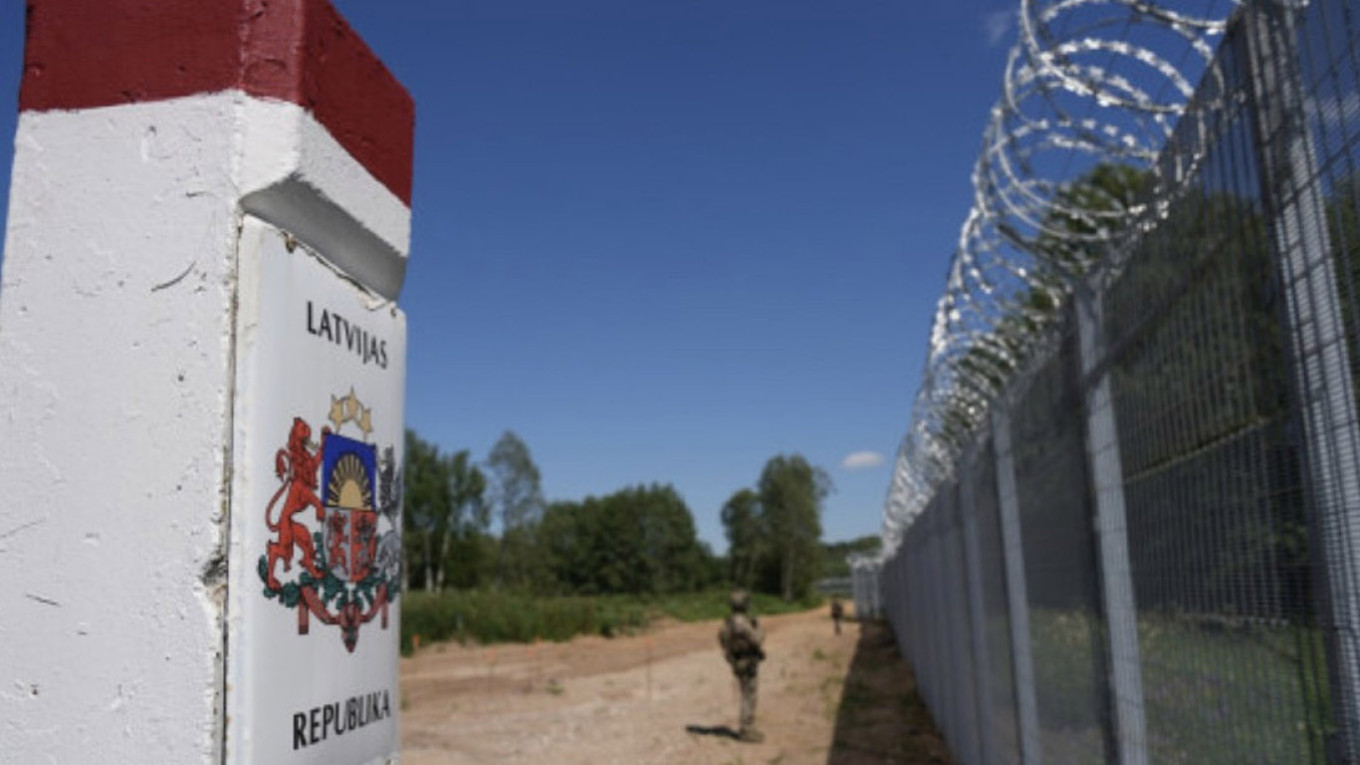
Latvia has completed construction of a 280-kilometer (174-mile) fence along its border with Russia, the Delfi news website reported Tuesday, citing the state real estate company that oversaw the project.
The 17.9-million-euro ($19.6 million) project comes as part of a broader effort in the Baltic states to strengthen border security amid heightened tensions with Russia.
Valsts nekustamie īpašumi (VNI) said work is continuing on related border infrastructure, including patrol roads, pedestrian bridges across marshland, watchtowers and other engineering structures.
Most of the remaining infrastructure work is due to be completed by the end of 2026.
Interior Minister Rihards Kozlovskis said Latvia is now installing high-tech surveillance and monitoring equipment along the border to create what he described as a “modern border protection system” on the European Union’s eastern frontier.
Finance Minister Arvils Ašeradens said the completion of the fence and supporting infrastructure would strengthen the operational capabilities of Latvia’s border guard service.
Latvia has already built a 145-kilometer fence along its border with Belarus.
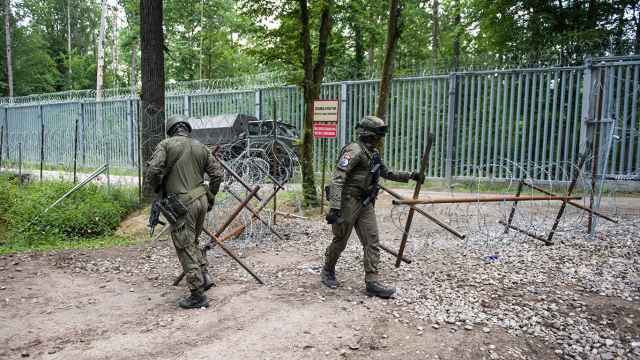
Lithuania and Estonia are also constructing barriers along their borders with Russia, citing security concerns linked to Moscow’s increased military posturing and what the region’s governments describe as the weaponization of migration.
Finland is building its own fence on the Russian border, allocating $143 million for the project and planning to secure up to 260 kilometers (162 miles) of its southeastern frontier.
Helsinki has also announced plans to construct additional fortifications, including bunkers and shelters designed to withstand direct artillery or missile strikes.
Poland has completed an electronic barrier along its border with Russia’s Kaliningrad exclave.
The $84-million system runs along 199 kilometers (124 miles) of the land border, excluding the Baltic Spit, where the frontier has long been monitored using electronic surveillance.
Warsaw has said the fence is needed in part to counter the risk of migration pressure, citing the start of flights to Kaliningrad from the Middle East and Africa.
A Message from The Moscow Times:
Dear readers,
We are facing unprecedented challenges. Russia's Prosecutor General's Office has designated The Moscow Times as an "undesirable" organization, criminalizing our work and putting our staff at risk of prosecution. This follows our earlier unjust labeling as a "foreign agent."
These actions are direct attempts to silence independent journalism in Russia. The authorities claim our work "discredits the decisions of the Russian leadership." We see things differently: we strive to provide accurate, unbiased reporting on Russia.
We, the journalists of The Moscow Times, refuse to be silenced. But to continue our work, we need your help.
Your support, no matter how small, makes a world of difference. If you can, please support us monthly starting from just $2. It's quick to set up, and every contribution makes a significant impact.
By supporting The Moscow Times, you're defending open, independent journalism in the face of repression. Thank you for standing with us.

Remind me later.