
It is all too common to hear about Russians, Belarusians and citizens of many other countries who have left — or been forced to leave — their home states for political reasons are being detained at international borders because their names have appeared in Interpol’s databases. What should you do if this happens to you?
Moscow and Minsk used Interpol notices to pursue their opponents abroad even before the full-scale invasion of Ukraine. Pyotr Silaev was arrested by Spanish authorities in 2012 despite having refugee status in Finland after fleeing Russia because of his involvement in the 2010 Khimki forest protests. In 2024, the Belarusian filmmaker and critic of President Alexander Lukashenko’s regime, Andrey Hniot, was detained in Serbia on tax evasion charges that his lawyers argue were politically motivated.
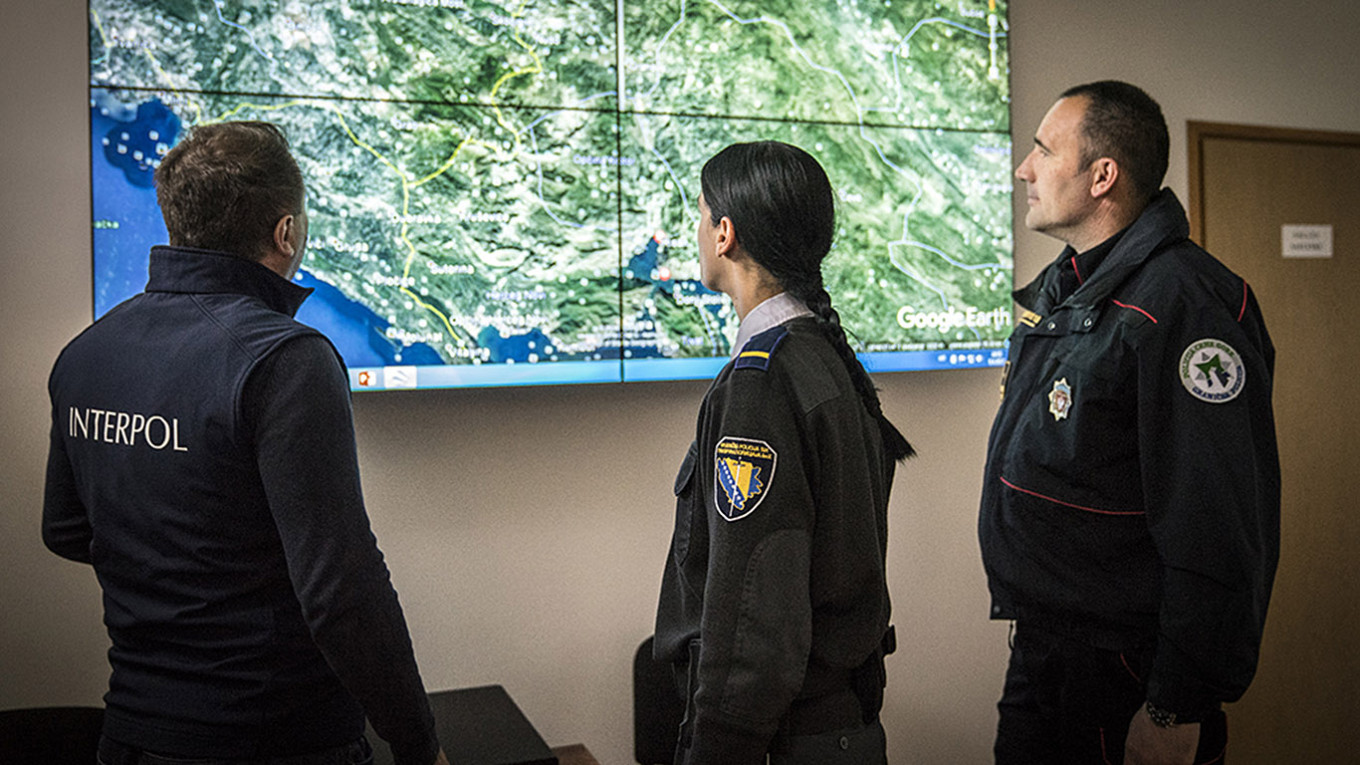
First, it’s important to understand what Interpol actually is. Based in Lyon, it is an international organization of criminal police. It is not itself an international police force, as is often mistakenly assumed. Rather, it is a database managed by the organization’s General Secretariat to which law enforcement agencies of virtually every country and territory on the planet are connected through their National Central Bureaus (NCBs). For example, Interpol’s NCB in Moscow falls under the Russian Ministry of Internal Affairs.
Connected law enforcement bodies can upload information about persons wanted for criminal prosecution (Red Notice), or because they are missing (Blue Notice).
Once uploaded, this information becomes accessible to all other member states’ police authorities. As a result, whenever someone crosses an international border, they are checked against the database. If a flag appears, the individual is detained for further investigation. Sometimes nothing comes of it. But the experience is unpleasant and time-consuming and, in the worst case, may end in extradition.
Calls to exclude states like Russia from Interpol due to political abuse of the system are unlikely to achieve anything. Interpol was conceived as a universal organization and fiercely protects its status as one of the few international bodies that Russia still participates in. This universality is its core value — and one nobody (apart from North Korea and some Pacific islands, which never joined) seems ready to give up.
So what can be done? There is a solution.
Substantively, Article 2 of Interpol’s Constitution stipulates that the organization must act “in the spirit of the Universal Declaration of Human Rights.” Its internal rules specify that its channels may not be used by member states for political purposes or in cases where, for example, the criminal allegations underlying a Red Notice are insufficiently clear or substantiated.
Procedurally, an independent body exists within Interpol to enforce this: the Commission for the Control of Interpol’s Files (CCF), composed of five highly respected members. Upon a petition from an affected individual, the CCF can order the deletion of that person’s data from Interpol’s databases.
In practice, this functions much like a judicial process: the applicant disputes the NCB that requested the notice; the CCF examines written submissions from both sides and issues a reasoned decision determining who is in the right and whether the data should be deleted or retained.
The CCF’s decisions in individual cases are usually not published. However, the General Secretariat recently released a very detailed and useful digest that, combined with my own experience, shows that the CCF can take more decisive action than bodies like the European Court of Human Rights.
Whereas the ECHR can examine whether a person’s human rights were violated during a case, the CCF can decide whether a case should have been brought in the first place and erase your red notice. For example, the CCF has concluded that Russian domestic criminal charges such as fraud are civil disputes that cannot be the basis for a ed notice.
The CCF is bound only by the “spirit of the Universal Declaration of Human Rights.” Many of its decisions, as the author (battle-hardened from thousands of pages of bureaucratic texts) can attest, read at times like a breath of fresh sea air.
Yes, the CCF is overloaded and deliberates slowly. On average, a case takes about two years. However, there are no problems with enforcement. When the CCF agrees with the applicant, the General Secretariat deletes the data from the databases immediately.
Without going further into the technical procedural nuances (which can always be discussed separately and confidentially), I belive that the CCF is an effective, independent international mechanism for those fortunate enough that their appearance in Interpol’s databases is unjustified.

A Message from The Moscow Times:
Dear readers,
We are facing unprecedented challenges. Russia's Prosecutor General's Office has designated The Moscow Times as an "undesirable" organization, criminalizing our work and putting our staff at risk of prosecution. This follows our earlier unjust labeling as a "foreign agent."
These actions are direct attempts to silence independent journalism in Russia. The authorities claim our work "discredits the decisions of the Russian leadership." We see things differently: we strive to provide accurate, unbiased reporting on Russia.
We, the journalists of The Moscow Times, refuse to be silenced. But to continue our work, we need your help.
Your support, no matter how small, makes a world of difference. If you can, please support us monthly starting from just $2. It's quick to set up, and every contribution makes a significant impact.
By supporting The Moscow Times, you're defending open, independent journalism in the face of repression. Thank you for standing with us.

Remind me later.