
When Russian authorities blocked popular gaming platform Roblox last year for what they said “justifies terrorism and LGBTQ content,” young people quickly found a workaround.
“Everyone at school has a VPN,” one teenager told The Moscow Times, speaking on condition of anonymity. “Not just for messengers, but for gaming too.”
Virtual private networks (VPNs) have become an everyday necessity for millions of Russians as the government has restricted foreign social media platforms, messaging apps and independent media.
The authorities have ramped up efforts to block VPNs as their popularity has grown — but the number of users continues to rise.
One Moscow resident said she had to switch on her VPN even to give a comment.
“You’d better ask how this is affecting my nerves,” she said.
Widespread use
Russians using the internet today must navigate ever-widening restrictions, with the total number of blacklisted websites now standing at 4.7 million.
Major platforms like Facebook, Instagram, YouTube and X have been blocked since the country invaded Ukraine in 2022.
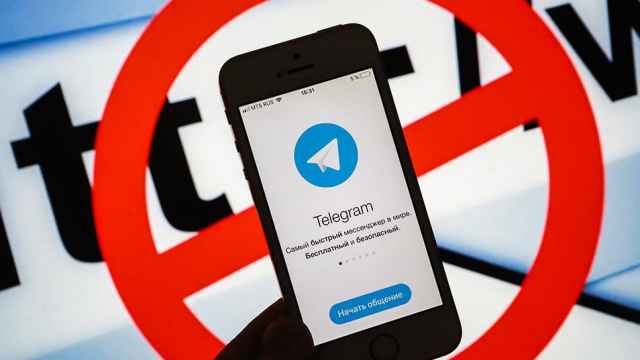
This, combined with mounting restrictions on popular messengers Telegram and WhatsApp, have pushed many Russians toward regular VPN use.
One man from Moscow said he started keeping his VPN on at all times since Telegram stopped working in February, only switching it off to use state-controlled apps, which usually do not work with VPNs.
He previously only used VPNs occasionally, when he wanted to access blocked social media platforms or OpenAI's ChatGPT.
A 29-year-old social media marketer from the Far East republic of Sakha told The Moscow Times that her job requires her to use VPNs to access Instagram and other restricted platforms like YouTube.
She typically downloads a new VPN service every six months whenever her current one gets blocked, she said.
It is difficult to determine exactly how many people use VPNs in Russia. App download numbers are not a reliable way to estimate user numbers, as many people download multiple VPNs as backups.
State communications watchdog Roskomnadzor does not have this data either, said Alexei Kozlyuk from the VPN Guild association. If it could track all VPN connections, it would be able to block them effectively, he said.
Some estimates suggest Russia ranks second globally in VPN usage, with about 37.6% of internet users relying on them.
Mikhail Klimarev, the head of the Internet Protection Society, said roughly 60 million Russians are familiar with VPNs, while a 2025 survey by the Institute of Social Marketing found that 46% of respondents had used one at least once.
Escalating fight
Using a VPN in Russia is not illegal. But authorities have increasingly targeted tools that allow users to bypass internet restrictions.
“If you live with a VPN switched on, you can access corners of the internet that are best avoided,” lawmaker Sergei Boyarsky, head of the State Duma’s Information Policy Committee, warned Russians.
Safe Internet League head Yekaterina Mizulina, the poster child of internet censorship in Russia, called VPN services “a portal to hell.”
By mid-January, Roskomnadzor had restricted access to more than 400 VPNs. Russia’s App Store also removed several VPN apps at Roskomnadzor’s request this month.
Technically, authorities can block VPNs by blacklisting server addresses or detecting the protocols they use, Klimarev said.
However, Russia restricts the use of VPNs in many other ways.
Russian law bans advertising VPN services, with fines of up to 150,000 rubles ($1,846) for individuals and 500,000 rubles ($6,153) for companies.
From Wednesday, the authorities blocked topping up Apple ID balances using mobile phone accounts — one of the most popular payment methods in the Apple Store since international payment services like Visa and MasterCard suspended operations in Russia in 2022.
Moscow residents confirmed to The Moscow Times that they were unable to transfer money from their mobile phone balances to their Apple ID accounts.
Klimarev said the move is unlikely to significantly affect VPN usage, noting that many users have already shifted away from Apple payments due to high fees.
“It’s also worth noting that this only affects Apple, Android payments still work,” Klimarev said.
Separately, mobile operators could start charging up to 150 rubles ($1.80) per gigabyte for using more than 15 GB of international data routed through VPNs per month, according to reports by Forbes Russia and BBC Russian.
“The internet is becoming something only the wealthy can afford,” expert Eldar Murtazin told the pro-Kremlin tabloid Komsomolskaya Pravda. “Most likely, prohibitive pricing will be introduced so that people give up [VPNs] for financial reasons. This will lead to everyone being confined to the Russian internet.”
The Digital Development Ministry has asked major platforms, including banks and marketplaces, to block users accessing services via VPNs or risk losing their spots on the government “white list” of essential sites accessible during outages, Kommersant reported.
At the same time, use of VPNs is treated as an aggravating factor in criminal cases, which Kozlyuk said is “creating a climate of legal uncertainty and fear.”
Russian authorities have repeatedly said a full VPN ban is not on the table, but suggested that they would only permit FSB-licensed VPNs that do not bypass restrictions.
However, as developers constantly create new services to help Russians bypass internet censorship, experts say that the state lacks the capacity to fully eliminate VPN use.
Pro-Kremlin media have published comments from experts who acknowledge that “it is not technically feasible” for the government to defeat VPNs.
At the same time, Western sanctions over the war in Ukraine like Visa and Mastercard bans are making it harder to get a VPN, experts told The Moscow Times. This, in turn, limits Russians’ ability to obtain independent information.
“Difficulties in paying for services outside Russia as well as commercial companies’ refusal to work with Russian users are significantly reducing the number of people who can pay for foreign VPN services,” said an anonymous expert from Teplitsa of Social Technologies, a project that facilitates cooperation between NGOs and the IT sector.
“Access to VPNs is being restricted both from within Russia and from abroad,” he said.
Internet shutdowns
One way to restrict VPNs without expending the time and resources needed to block individual services is to limit access to the internet itself — which is exactly what authorities have been doing over the past year.
Authorities in 83 regions have imposed mobile internet shutdowns at least once since May 2025, usually citing security concerns like Ukrainian drone attacks. Border regions like Belgorod, Kursk and Rostov have seen disruptions on more than 70% of days.
During these outages, access is typically limited to a “white list” of approved services, rendering many VPNs ineffective.
While some VPNs can still use “whitelisted” IP addresses, authorities are increasingly able to monitor and block these workarounds, the expert from Teplitsa of Social Technologies said.
However, experts believe that a complete internet shutdown in Russia, with access limited only to government-approved sites, is highly unrealistic for now.
“It’s basically impossible to fully block VPNs without introducing global white lists,” Klimarev said.
A full cutoff would come at a high cost, he said.
“If Russia were to completely cut off access to the global internet, then VPNs would probably stop working — but, of course, everything else would stop working too. How would [the authorities] trade oil, manage their shadow fleet or buy drone parts?” Klimarev said.
“It would mean total isolation from the global internet,” he said.
A Message from The Moscow Times:
Dear readers,
We are facing unprecedented challenges. Russia's Prosecutor General's Office has designated The Moscow Times as an "undesirable" organization, criminalizing our work and putting our staff at risk of prosecution. This follows our earlier unjust labeling as a "foreign agent."
These actions are direct attempts to silence independent journalism in Russia. The authorities claim our work "discredits the decisions of the Russian leadership." We see things differently: we strive to provide accurate, unbiased reporting on Russia.
We, the journalists of The Moscow Times, refuse to be silenced. But to continue our work, we need your help.
Your support, no matter how small, makes a world of difference. If you can, please support us monthly starting from just $2. It's quick to set up, and every contribution makes a significant impact.
By supporting The Moscow Times, you're defending open, independent journalism in the face of repression. Thank you for standing with us.

Remind me later.