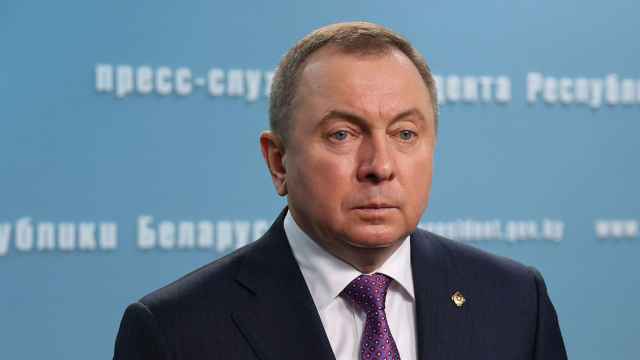
In recent months, some leading figures in the Belarusian opposition in exile have suggested that the West re-engage with the dictatorial regime of Alexander Lukashenko. The idea is far from fringe, with figures including Maria Kalesnikava and Siarhei Tsikhanouski, along with prominent experts such as Artyom Shraibman, publicly endorsing the idea.
It is hardly possible to claim to understand what drives this change of direction which presents Lukashenko not as an illegitimate dictator who should be ousted, but as a trustworthy partner. Conceivably, groups of Belarusian exiles are trying to regain prominence back home and draw donors’ attention by means of appealing to the popular fear of continuing repression, in general, and people’s concerns regarding the situation with the political prisoners, in particular.
Currently there are over 800 political prisoners in Belarus. Although several hundred people were released in 2025-26, this figure is still three times larger than the number in the entire U.S.S.R. in the mid-1980s, when Mikhail Gorbachev came to power. Some of these prisoners were released after discussions between Minsk and Washington, while others had completed their sentences. Furthermore, as some prisoners are released, others are thrown behind bars to provide the regime with new bargaining chips.
Proponents of yet another reset with Lukashenko see today’s situation as a stalemate and argue that in response to softening of the European approach the regime may be expected to release all remaining prisoners and to distance itself from Moscow. However, considering the failure of Brussels’ previous attempts to re-engage with Minsk in 2008-10 and 2015-20 and based on the same conceptual premises, this argument is far from convincing. Rather, it reveals the lack of new ideas, recycling the old approaches that have been proven wrong in the past, and is essentially nothing but wishful thinking.
This approach amounts to Stockholm syndrome. Using Lukashenko in the struggle against his own personalistic regime must be based on some indecipherable logic.
However, in real life, if this approach were to prevail, the following would happen. First, repressions would continue. Such indiscriminate intimidation — along with Russia’s economic and diplomatic support — kept the regime in power after 2020.
There are zero grounds to even hope that internal liberalization may occur unless the ruler is cornered. Lukashenko’s desire for revenge is insatiable and all those members of the Belarusian emigre community who aspire to safely return home from abroad should remember the dramatic story of the once prominent opposition figure Raman Pratasevich.
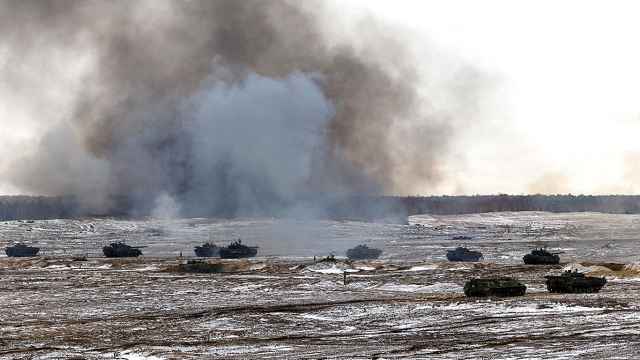
Second, in view of the fact that Lukashenko’s dependence on Moscow’s benevolence has increased enormously since 2022, no normalization of EU relations with Minsk would grant Belarus even a modicum of sovereignty. The Kremlin can currently use Belarus’ territory and airspace, its defense industry and training sites as it sees fit without seeking Lukashenko’s permission or approval. Any disloyalty he shows to Putin may lead to his removal from power. At the same time, lifting Western sanctions on Minsk would mean savings for Moscow as Belarus’s own export revenues would allow Russia to decrease the subsidies.
Thirdly, an EU reset with Minsk would not only run against the immediate security interests of Ukraine and undermine the trust in Europe-Ukraine relations. It would also contradict the very fundamentals of the Western policy toward the post-Soviet space as a whole. Aggression would be left unpunished, and an aggressor state, which Lukashenko’s Belarus is in full accordance with the 1974 UN definition, would be re-engaged with before the war of aggression is stopped or at least frozen.
Finally, and most importantly, it would embolden Moscow by signaling to the Kremlin that sooner or later, Europe will offer concessions to them as well.
It is worth repeating that in the past decades the EU attempted to establish a cooperative relationship with Lukashenko several times, relying on his good word alone without any clout to set and enforce terms. Both Europe and, above all, the people of Belarus paid dearly for that. After the mass protests of 2020, when Lukashenko demonstrated that he would not hesitate for a second before throwing away any dialogue with the West if his power was at stake. The EU finally got him right, if belatedly, issuing sanctions that are arguably helping to force Lukashenko to release political prisoners and look for a bargain. Building on that, Europe’s policy should be aimed at exploiting the regime's weaknesses, not bailing it out. If and when it is gone, there will be the right moment to extend a hand of cooperation to the new Belarus.
As for the Belarusian opposition in exile, it should remember that a stalemate is a draw, not a loss. One may not like it, but the alternative is gifting victory to the opponent.
A Message from The Moscow Times:
Dear readers,
We are facing unprecedented challenges. Russia's Prosecutor General's Office has designated The Moscow Times as an "undesirable" organization, criminalizing our work and putting our staff at risk of prosecution. This follows our earlier unjust labeling as a "foreign agent."
These actions are direct attempts to silence independent journalism in Russia. The authorities claim our work "discredits the decisions of the Russian leadership." We see things differently: we strive to provide accurate, unbiased reporting on Russia.
We, the journalists of The Moscow Times, refuse to be silenced. But to continue our work, we need your help.
Your support, no matter how small, makes a world of difference. If you can, please support us monthly starting from just $2. It's quick to set up, and every contribution makes a significant impact.
By supporting The Moscow Times, you're defending open, independent journalism in the face of repression. Thank you for standing with us.

Remind me later.