
In a recent article for the Moscow Times, the prominent Russian opposition politician Ilya Yashin claimed I argued that “the interests of Russia’s opposition in exile are fundamentally at odds with Europe’s security.”
I did no such thing, and readers can judge for themselves here. But I welcome the opportunity he has offered to continue debating these important matters.
The key point is that the Russian opposition’s strategy appears beset by a contradiction between its means and ends. Its goal is to “liquidate” Vladimir Putin’s regime. To this end, leading figures variously urge Europe to limit sanctions, to liberalize restrictions on immigration from Russia and to pay for Russia’s future reconstruction. It is difficult to see how such a strategy — more radical in ends, yet more limited in means than Europe’s own policies — could work. It seeks to undermine a regime at war by advocating measures to protect citizens from the costs of doing so. This is a circle that cannot be squared.
Take sanctions. Most opposition leaders criticize all but very limited measures like personal sanctions against regime officials. To his credit, Yashin calls for “targeting Putin’s war machine.” But as the regime diverts ever-greater resources to the battlefield, this war machine becomes increasingly inseparable from the economy that supplies and finances it.
The uncomfortable truth is that depriving Russia of war materiel requires undermining its entire productive capacity. Major wars of attrition are always waged on the home front too. Systemic sanctions, not merely personal or sectoral ones, are an inescapable necessity.
And take immigration from Russia. Persecuted exiles, some of whom I count as friends, made life-changing decisions when they left their country and have borne great personal sacrifices in doing so. They deserve our utmost admiration. But it is one thing for Europe to welcome genuine dissidents — as I made clear we should — and quite another to admit large numbers of specialists who until now have stayed in Russia and whose work may even have contributed to the war.
The security risks are clear. Yashin and others deny these on the grounds that Russia’s intelligence services already operate in Europe. But this is like saying: “We have a police force, yet crime happens; so abolish the police.” Current controls on migration from Russia restrict the ability of hostile actors to infiltrate our societies, even if they cannot stop it entirely. Does anyone doubt that easing them would create major opportunities for hostile penetration? Recent experience of FSB penetration into exile circles sadly confirms this.
Finally, it is indecently premature to plan for a reconstruction of Russia while it is firing missiles nightly into Ukraine. Yet some already seek to ensure that the West will one day offer a generous Marshall Plan to rebuild the country rather than imposing a punitive Morgenthau Plan to weaken Moscow to the point that it cannot pose a threat.
Here, too, there are contradictions. Post-war aid to West Germany followed the country’s unconditional surrender, occupation and territorial division. These are not measures that exiles support, nor that Europe is considering, for Russia.
Nor is a more recent precedent promising. The billions of dollars of financial help that the West provided in the turbulent 1990s did not prevent Russia’s later resurgence as an aggressive revisionist power. What is the guarantee that this would not happen again? Those who advocate a new Marshall Plan appear less concerned by such questions than by the need to avoid returning to Russia “empty-handed.”
Yashin is entirely correct that a democratic Russia serves European security — if it is also a post-imperial Russia. What is the exile community doing to advance this goal, beyond making demands on Western policy? Outstanding media outlets — Vyorstka, Mediazona, The Insider, iStories, Proekt, the Moscow Times and many others — make a valuable contribution. Under difficult conditions and with limited resources, they enhance our understanding of Russia. We should all support them.
What about the political opposition? As a voice, or rather many voices from Russia, it has a unique role to play in articulating a bold and compelling case to ordinary Russians for a democratic, prosperous and peaceful country that respects the sovereignty of its neighbors. Garry Kasparov is unequivocal about this, as was Boris Nemtsov until he was gunned down in 2015.
But among some other opposition figures, even those who signed the 2023 Berlin Declaration that called for Russia’s return to its internationally recognized borders, there is sometimes still a sense of hedging over what defeating Russia and supporting Ukraine mean in practice. Perhaps they fear alienating Russian opinion at home. If so, this surely tells us that such opinion needs to be engaged and challenged. Leadership means persuading and shaping public views, not tiptoeing round them.
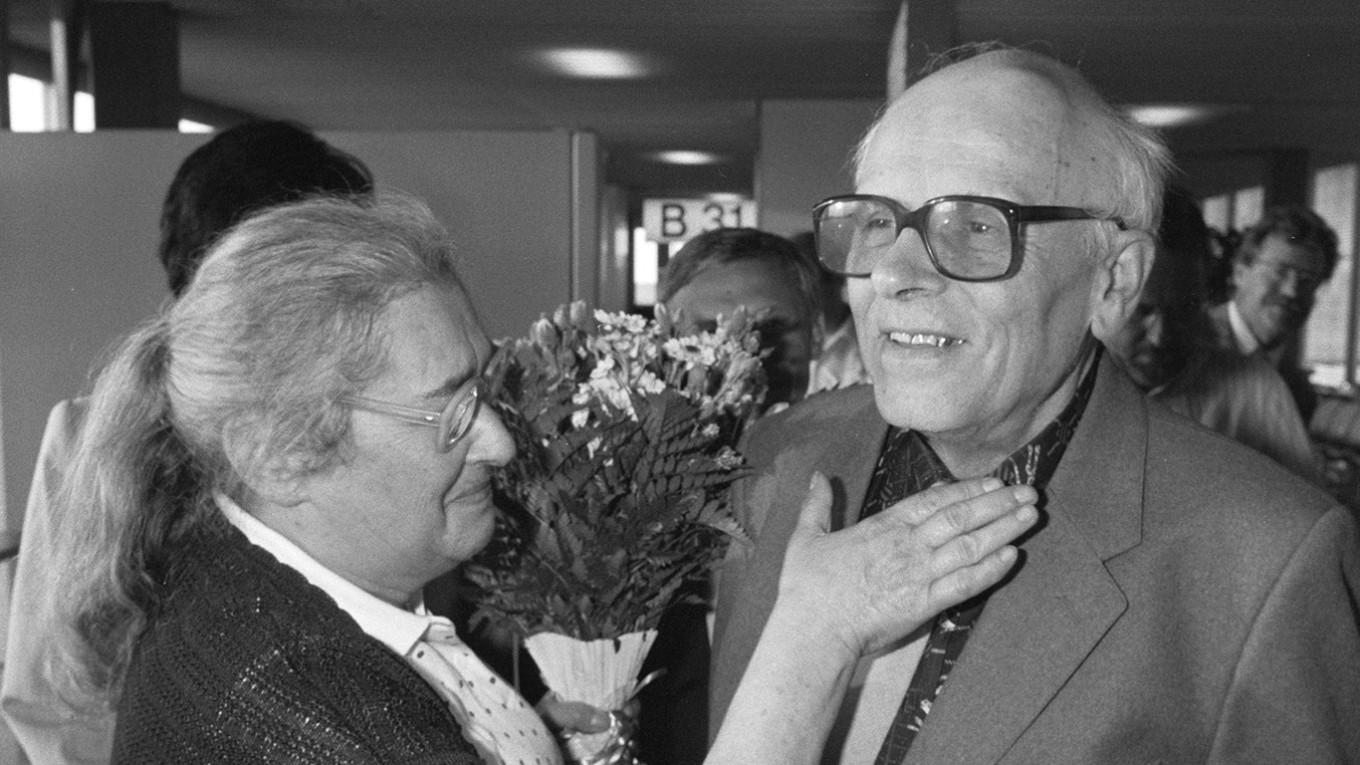
Soviet dissidents understood this. Despite their differences, major figures urged the West to impose costs on their own country. After the 1979 Soviet invasion of Afghanistan, they criticized Western détente policies that encouraged exchange with the Soviet bloc. Andrei Sakharov called on the international community to “work out a general program of further economic, ideological and military measures and firmly pursue it”. Vladimir Bukovsky insisted there was no distinction between good and bad trade — Moscow would benefit, whatever the intention. Alexander Solzhenitsyn deprecated Western grain sales, on which the Soviet economy depended, as benefiting only the military. Rather than telling the West to build “bridges, not walls,” they and other exiles, such as Alexander Ginzburg and Avital Sharansky, campaigned successfully for a boycott of the 1980 Moscow Olympics.
This Soviet intelligentsia saw itself as a moral conscience rather than as a group of politicians-in-waiting. Its principled position that Soviet power must be weakened and isolated in order for the regime to change was also strategically vindicated. Within a decade of the Afghan invasion, the communist system was heading toward collapse.
Today’s opposition may wish to ponder this precedent and its lessons. The problem is not that it cares about the interests of the Russian people, but that it may construe them too narrowly and tactically to achieve its stated goals.
A Message from The Moscow Times:
Dear readers,
We are facing unprecedented challenges. Russia's Prosecutor General's Office has designated The Moscow Times as an "undesirable" organization, criminalizing our work and putting our staff at risk of prosecution. This follows our earlier unjust labeling as a "foreign agent."
These actions are direct attempts to silence independent journalism in Russia. The authorities claim our work "discredits the decisions of the Russian leadership." We see things differently: we strive to provide accurate, unbiased reporting on Russia.
We, the journalists of The Moscow Times, refuse to be silenced. But to continue our work, we need your help.
Your support, no matter how small, makes a world of difference. If you can, please support us monthly starting from just $2. It's quick to set up, and every contribution makes a significant impact.
By supporting The Moscow Times, you're defending open, independent journalism in the face of repression. Thank you for standing with us.

Remind me later.