
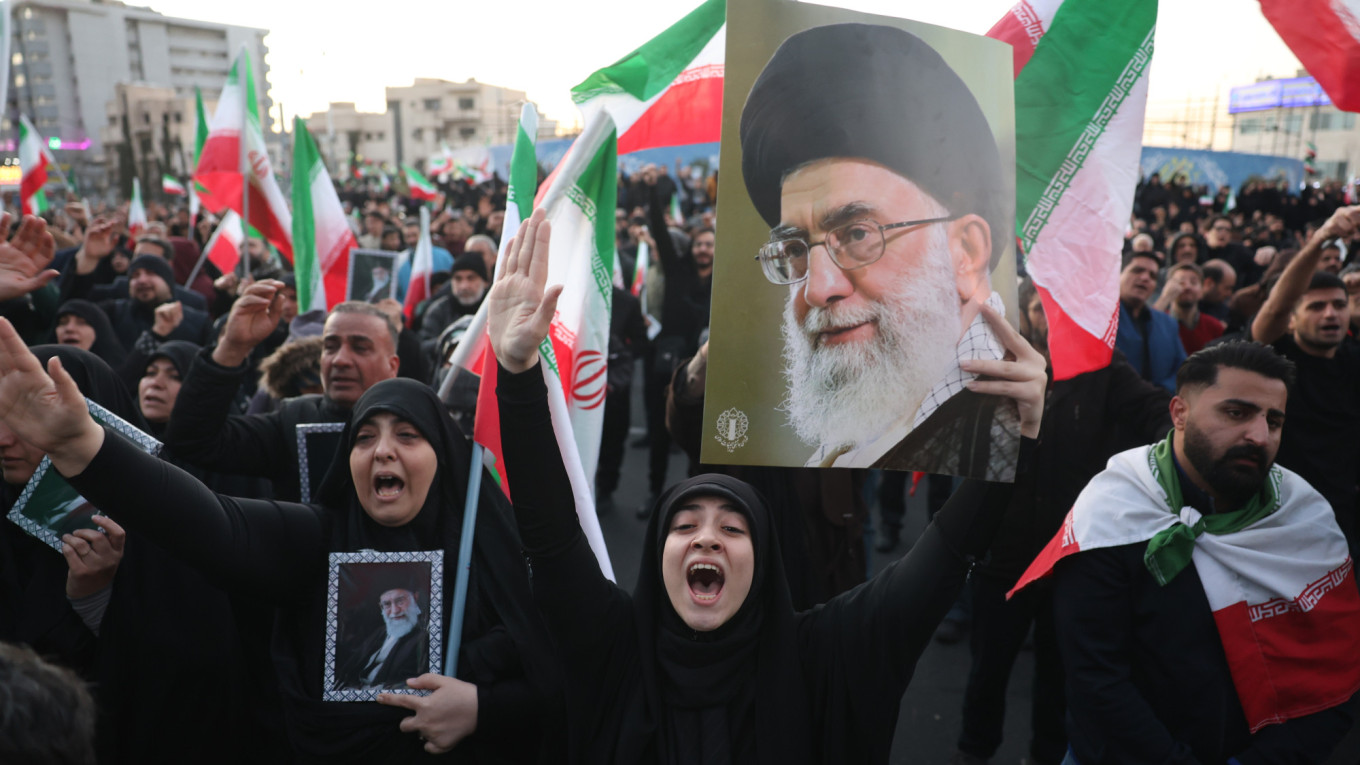
With United States and Israeli missiles over Iranian skies and much of the Islamic Republic’s leadership already eliminated, the implications of the assault on Iran will reverberate throughout the Middle East and Eurasia for years to come.
Across the Caspian Sea, Russian officials are certainly unhappy to see an aligned state under U.S. attack. Yet, while the weakening or potential collapse of an ally is an obviously undesirable outcome, closer inspection reveals more nuanced implications for Moscow and the war in Ukraine.
Having once backed international efforts to pressure Iran over its nuclear program, Russia and Iran increasingly found a common anti-Western cause in the aftermath of Russia’s 2022 invasion of Ukraine. In the first years of the war, Moscow's growing partnership with Iran provided the Kremlin with tangible benefits.
In terms of material, Russia famously sourced its Shahed-series drones from Iran starting in 2022. These drones have gone on to be one of Russia’s central tools in campaigns against Ukrainian civilians and infrastructure. Weapons deals went both ways, including a $580 million agreement for Iran to receive shoulder-mounted systems reported just days prior to Washington’s attack.
Russia’s partnership with Iran also provided valuable institutional learning opportunities. In the aftermath of the full-scale invasion of Ukraine, Russian officials sought to adapt to an intense sanctions regime of the kind Iran had faced for years and had garnered experience subverting. In 2022, Iranian officials began instructing Russia as to how to keep its oil and gas sectors afloat despite sanctions and providing networks for sanctions evasion.
No longer deterred by the threat of secondary sanctions, Russia’s economic relationship with Iran grew notably following February 2022, growing from a pre-war average of $1.9 billion in trade turnover to a reported $5 billion in 2022. According to comments by Russian officials, turnover in 2025 was roughly the same amount.
Russian direct investments in Iran likewise spiked following Moscow’s economic decoupling with the West. This growing economic relationship was made all the more important given a shared commitment to de-dollarizing international commerce, with the vast majority of these transactions done in either rubles or rials.
Despite this partnership, however, there is reason to believe that the war on Iran will have only modest impacts (or few at all) on Russia’s war in Ukraine.
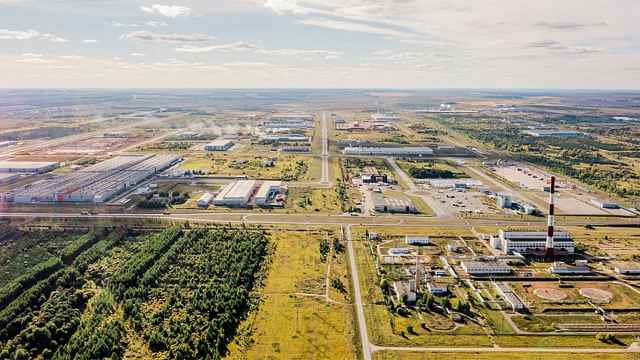
The years since Iranian-Russian relations entered a new phase have seen Russia localize many of the benefits of the relationship with Tehran. Shahed drones, once purchased in their entirety from Iran and shipped across the Caspian, are now overwhelmingly produced in Russia’s Alabuga Special Economic Zone in the republic of Tatarstan. Russia has since upgraded their simple airframes with improved engines and anti-jamming capabilities.
Iran’s incapacity may be more felt in terms of ammunition, missiles and artillery shells, which Tehran also provides Moscow. Yet, here too there is reason to doubt that the collapse of the Islamic Republic will greatly impact Russian capabilities.
While having received hundreds of Iranian ballistic missiles in recent years, there is no evidence Moscow has deployed them yet in combat. Russia has a stockpile of roughly 13,000 missiles, and appears to prefer utilizing its own domestically produced glide bombs, Kh-1 missiles, or, occasionally, Oreshnik ballistic missiles for long-range strikes.
As for shells, having faced serious shortages in 2023, Russia has drastically ramped up its own domestic capacity for ammunition and artillery. North Korea is likely a more important partner in terms of shells, estimated to have provided as much as 40% of Russia’s artillery shells between August 2023 and May 2025.
Meanwhile, arguably the most important weapon for Russian troops, small first-person view kamikaze drones, are produced domestically utilizing dual-use products shipped to Russia from a variety of states, most importantly China.
Arms deals with Iran have been a notable asset for Russia. But it would seem their greatest impact was in the first year following the outbreak of the war, with the Kremlin having since built up its own capacity and diversified relations. In the words of Russia researcher Hannah Notte, “Russia no longer needs Iran’s help to sustain the war in Ukraine.”
Perhaps counterintuitively, the war on Iran may generate newfound economic benefits for Moscow.
At its core, Russia is an oil and gas exporting economy, accounting for as much as 45% of state revenues in some years. As such, the Kremlin’s financial woes or gains roughly can be mapped onto the price of these commodities. Iran is not only another hydrocarbon exporter, the ninth largest for oil and third largest for natural gas, but due to Western sanctions primarily competes for the same customers as Russia, mainly China and India. If the US and Israel in effect shut down Iran’s capacity to export energy resources, it bodes well for Russian economic interests.
With Iran shutting the Strait of Hormuz, the world's most important corridor for energy shipments, the global price of energy is seemingly bound to spike — at least in the short term.
At a time when Russia’s economy is beginning to struggle under the pressure of its war spending, elevated oil prices could provide some needed relief.
This is not to say Moscow will feel no negative consequences of war in Iran. The North-South International Transit Corridor, a growing commercial transit way linking Russia to the Middle East and South Asia through Iran, is seemingly now an imperiled project.
But, while trade relations between Russia and Iran grew following the invasion of Ukraine, they seemingly never reached critical proportions. Negative ripple-effects of this crisis, from refugees to trade disruptions, are likely to be absorbed by the countries physically bordering Iran in the Middle East, Caucasus and Central Asia.
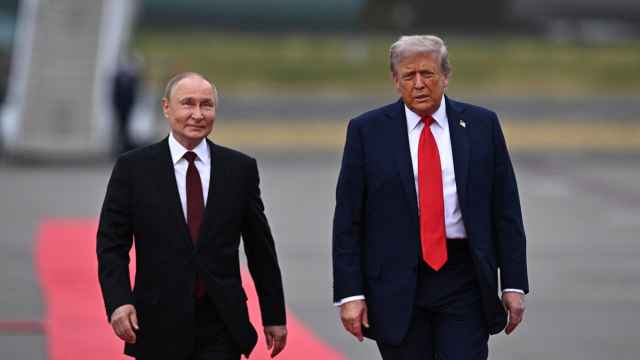
The collapse of the Islamic Republic would undoubtedly be a strategic setback for Russia. U.S. President Donald Trump, himself often affectionate towards Russian President Vladimir Putin, has nevertheless now waged regime-change operations against two Russian-friendly states in the form of Iran and Venezuela. With former Syrian President Bashar al-Assad having been overthrown in late 2024, Iran remained the only pro-Russian state in the Middle East. As with Syria, Russia’s inability or disinterest in supporting a partner underscores its lack of credibility and would seem to point to its status as a second-tier power.
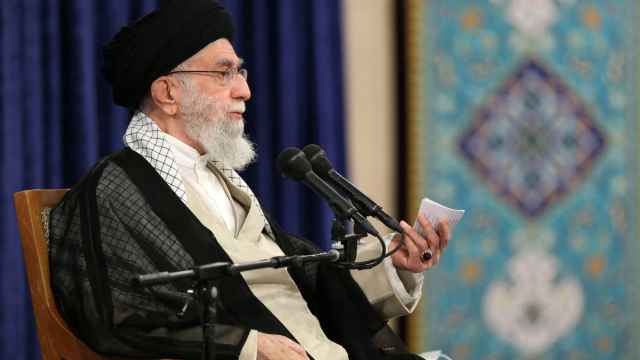
Yet, Russia has wisely resisted over-reliance on Tehran. It has adapted over the course of the war in Ukraine, in terms of international alliances, supply chains, and Russia’s own military industrial complex. As a result, the fall of Iran’s Supreme Leader is seemingly unlikely to be felt immediately on the frontline in Ukraine.

A Message from The Moscow Times:
Dear readers,
We are facing unprecedented challenges. Russia's Prosecutor General's Office has designated The Moscow Times as an "undesirable" organization, criminalizing our work and putting our staff at risk of prosecution. This follows our earlier unjust labeling as a "foreign agent."
These actions are direct attempts to silence independent journalism in Russia. The authorities claim our work "discredits the decisions of the Russian leadership." We see things differently: we strive to provide accurate, unbiased reporting on Russia.
We, the journalists of The Moscow Times, refuse to be silenced. But to continue our work, we need your help.
Your support, no matter how small, makes a world of difference. If you can, please support us monthly starting from just $2. It's quick to set up, and every contribution makes a significant impact.
By supporting The Moscow Times, you're defending open, independent journalism in the face of repression. Thank you for standing with us.

Remind me later.