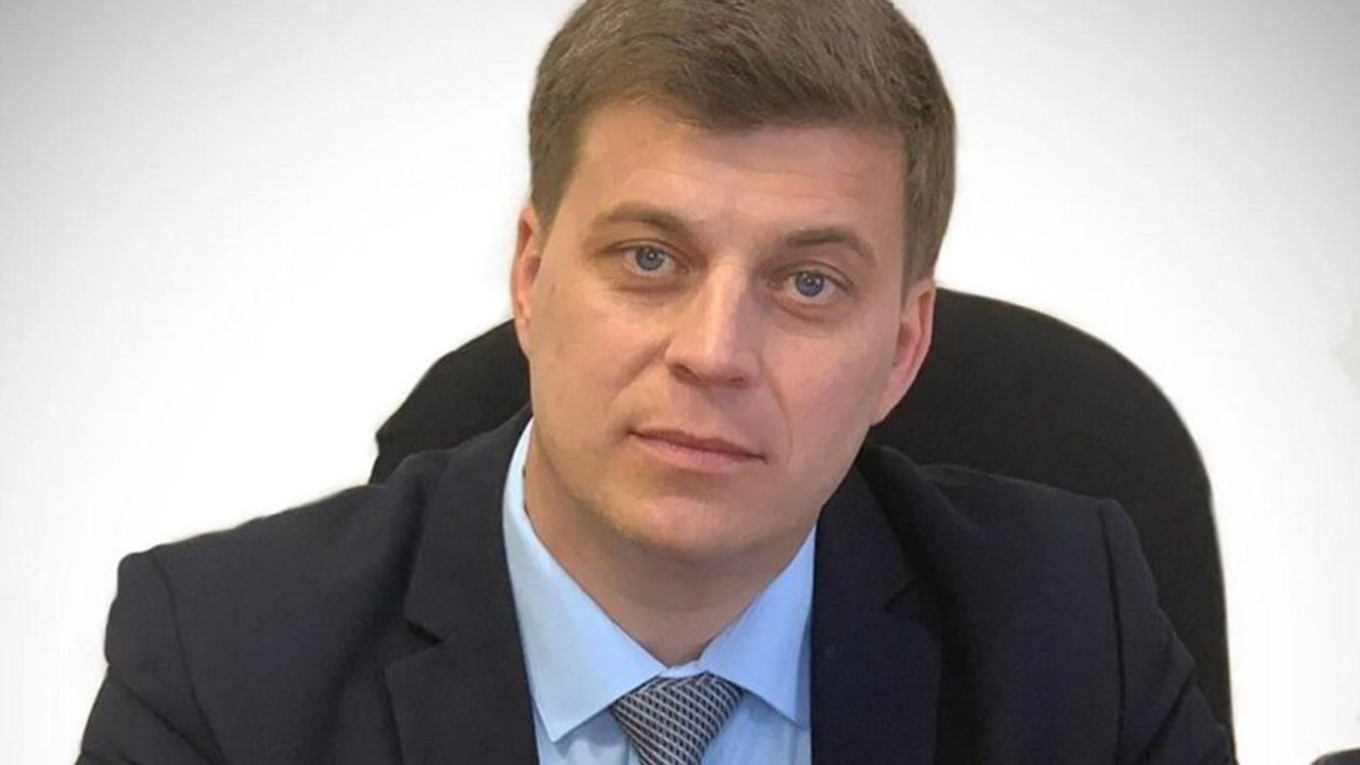
Law enforcement authorities in Siberia’s Irkutsk region on Friday arrested the mayor of a small town where residents have gone weeks without heating and water.
More than 1,000 people living in the town of Bodaybo have not had access to water since early January, when a major pipeline froze over, forcing central heating facilities to shut down. Heating was restored on Sunday, but repair work continues to return water supplies to homes.
Temperatures have dropped as low as minus 40 degrees Celsius (minus 40 degrees Fahrenheit) amid the outage.
Investigators launched a criminal probe into negligence and violations in the provision of critical public services shortly after the loss of heating and water. They did not name any suspects when announcing the investigation.
On Friday, Bodaybo Mayor Alexei Botvin was arrested and charged with “abuse of power resulting in grave consequences,” the Investigative Committee, Russia’s top investigative body, said in a statement.
According to law enforcement, on Jan. 30, four boiler houses in Bodaybo were shut down after a water pipeline froze, leaving more than 140 residential buildings and two schools without heating. Investigators accused Botvin of failing to promptly resolve the outage.
“Given the low outdoor temperatures, the loss of heating, water supply and sewage services in these residential buildings and children’s public facilities posed a threat to the life and health of at least 1,321 residents of Bodaybo,” the Investigative Committee said.
Russia saw a sharp rise in utility outages in January. Despite aging infrastructure and widespread breakdowns, the government’s three-year budget plans for a gradual reduction in spending on housing and utilities, as military expenditures remain a top priority.
A Message from The Moscow Times:
Dear readers,
We are facing unprecedented challenges. Russia's Prosecutor General's Office has designated The Moscow Times as an "undesirable" organization, criminalizing our work and putting our staff at risk of prosecution. This follows our earlier unjust labeling as a "foreign agent."
These actions are direct attempts to silence independent journalism in Russia. The authorities claim our work "discredits the decisions of the Russian leadership." We see things differently: we strive to provide accurate, unbiased reporting on Russia.
We, the journalists of The Moscow Times, refuse to be silenced. But to continue our work, we need your help.
Your support, no matter how small, makes a world of difference. If you can, please support us monthly starting from just $2. It's quick to set up, and every contribution makes a significant impact.
By supporting The Moscow Times, you're defending open, independent journalism in the face of repression. Thank you for standing with us.

Remind me later.