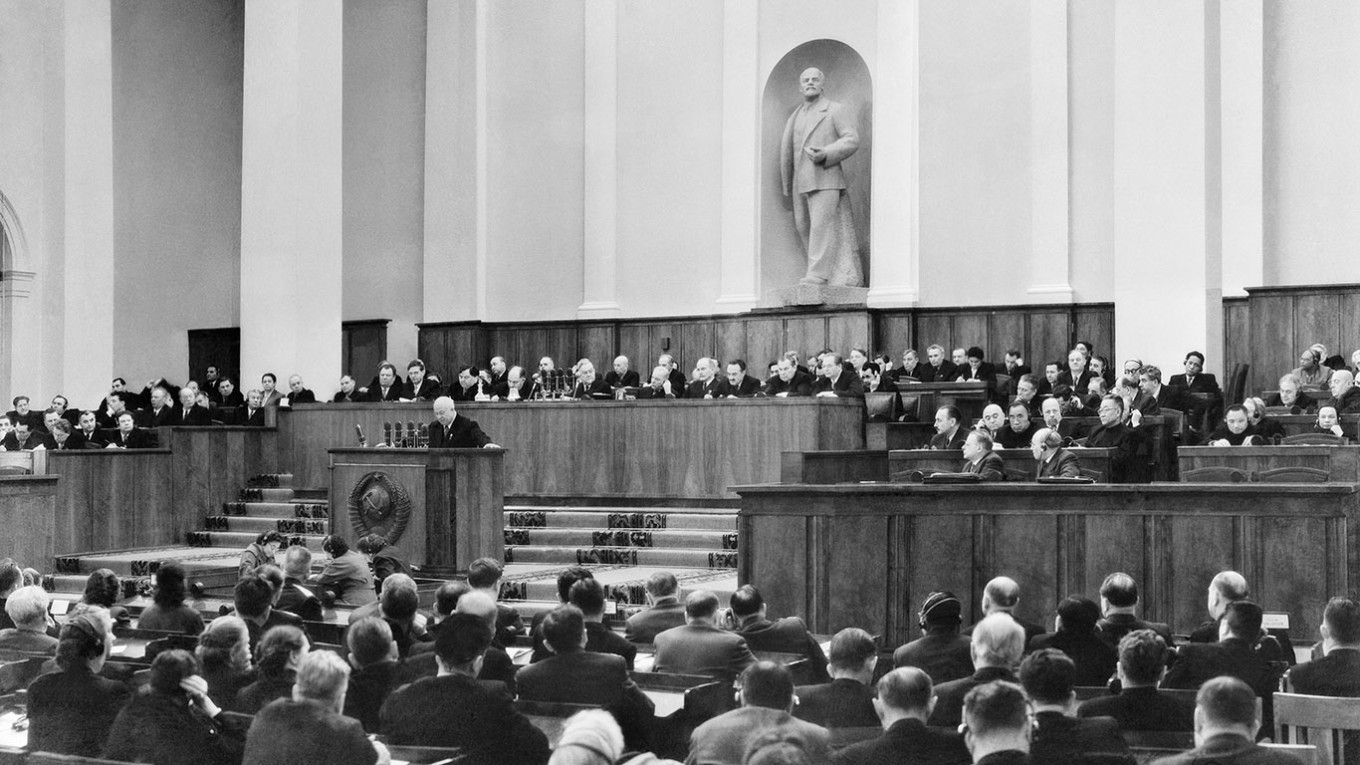
Seventy years ago today, on Feb. 25, 1956, then-Soviet leader Nikita Khrushchev took to the podium in Moscow’s Palace of Congresses and spoke for over four hours on “The Cult of Personality and its Consequences.”
In an address that quickly (if inaccurately) became known as the “Secret Speech,” Khrushchev attacked his predecessor Josef Stalin for orchestrating state terror, held him personally responsible for the imprisonment, deportation, torture or death of hundreds of thousands of Soviet citizens and mocked his leadership of World War II and foreign policy.
The revelations profoundly shocked listeners: senior communists asked to stay behind beyond the end of open proceedings of the 20th Congress of the Communist Party. Many were left in tears and at least one suffered a cardiac arrest.
The speech soon ceased to be a secret, if it ever had been. It was fiercely debated at party meetings and around kitchen tables across the Soviet Union. A version of the text then leaked abroad, making headline news globally. Over the rest of 1956, it set off pro-Stalinist unrest in Georgia and anti-Stalinist protest in Poland and most famously in Hungary, where Soviet troops had to be deployed to restore order.
As Russian media last week marked the seventieth anniversary of the opening of the Twentieth Congress, its concluding speech has been likened to the Tsar-bomba, the largest nuclear weapon ever tested in the U.S.S.R. It “blew up the image of Stalin,” claimed Komsomolskaya Pravda. Yet state media outlets also insist that “the court of history still has not passed a definitive judgment on Stalin” and that “the cult of Stalin did not disappear with its ‘dethroning’.”
Both these assessments have some truth to them. They capture why the speech continues to matter, seven decades after it was performed and nearly four decades since the Soviet Union collapsed, amid sharper criticism of the Soviet past.
It is impossible to imagine Russian leaders today condemning Stalin and Stalinism so strongly, as signs of the reappearance of the Stalin cult are increasingly visible nationwide. But the supposed secrecy of the speech, its limited criticisms of Stalin and Soviet anxieties about the explosive potential of de-Stalinization all resonate with the Putin regime’s cautious handling of the Stalin question.
The Secret Speech could easily have never been performed. An investigation into the Great Terror was commissioned by the Central Committee at the end of 1955, as part of a broader drive to reform the Soviet system after Stalin. However, the question of whether to go public with the findings was much more contentious.
Even as the Congress unfolded, the Central Committee was still debating whether to perform it and frantically editing the text. Yet in the end, Khrushchev did take to the stage, likely adding in some improvised revelations of his own (no audio recording or live transcript of the speech has ever been found).
Within a few months, the party issued an official resolution confirming its condemnation of Stalinist terror. And half a decade later, Khrushchev and numerous other speakers at the 22nd Party Congress issued criticisms of Stalin, this time broadcast on Soviet TV and radio. The congress also passed a resolution to remove Stalin’s body from the Red Square mausoleum, carried out in a top-secret operation the same night. Lenin’s mummified body remains the sole occupant today, though Stalin was honored in 1969 with a bust that still stands by the nearby Kremlin wall.
This official endorsement of de-Stalinization was of paramount importance. Working through traumatic pasts, whether in former Soviet countries such as Ukraine and Kazakhstan, or in post-war Germany and post-apartheid South Africa, needs to combine grassroots memory work with state backing to scale up and secure an official national position on the past. In the U.S.S.R., criticisms of Stalinism from below outstripped those of the leadership, and Khrushchev’s stance later became anything but secure. Nevertheless, the official acknowledgements of (some of) Stalin’s wrongdoing remained in force throughout the Soviet era.
To this day, there has still never been a state-backed denial of the Great Terror, nor that Stalin bore substantial responsibility for it. Ironically, the only real attempt has come from the Communist Party of the Russian Federation, which styles itself the legal heir to the Communist Party of the Soviet Union and its decisions. Last year, the party’s congress discussed plans to rescind its long-standing endorsement of the Secret Speech and associated party resolutions, claiming that it was distorted and prejudiced.
Such direct attacks on the Secret Speech are, for now, limited to the fringes of Russian politics. State leaders and media prefer to minimize its significance or to criticize details, rather than rejecting it outright. President Vladimir Putin ignored the last major anniversary in 2016, while the national secondary school modern history textbook, authored by his closest history advisor, Vladimir Medinsky, devotes less than one page to the Secret Speech, though it does later lament the damage that it caused to the international communist movement.
Despite this reluctance to reject Soviet de-Stalinization, there are many signs today of creeping re-Stalinization, even more than in the late U.S.S.R. After the 22nd Party Congress, all monuments and place-names dedicated to Stalin disappeared from the map. They never reappeared, despite Brezhnev’s milder stance on the Stalin question.
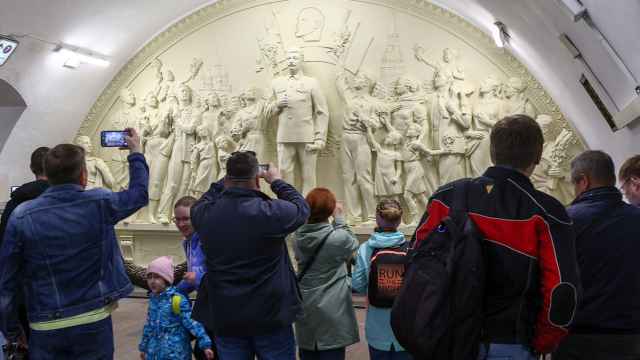
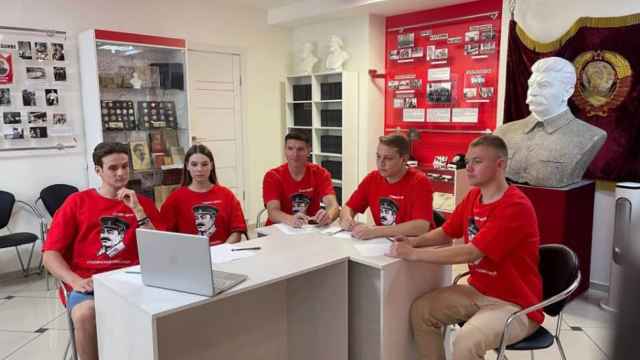
From the 2010s onward, though, dozens of Stalin busts and statues have been unveiled around Russia and in occupied Crimea, and appeals to change the name of Volgograd back to Stalingrad seem closer to success than at any moment since the Soviet collapse.
After Khrushchev’s 1964 ouster — in part due to his de-Stalinization policies — the party took an increasingly harsh line on writers, dissidents and underground organizations that continued to investigate Stalinist repressions.
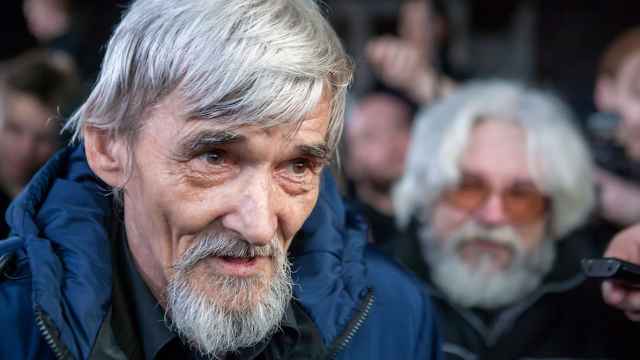
In recent years, the number of political prisoners in Russia has ballooned, while NGOs like Memorial that spearheaded the deeper de-Stalinization of the 1980s and 1990s have now been drummed out of Russia altogether. The analogy that many contemporary victims draw, including in courtroom speeches, is not with Soviet repression in general, but specifically with the terror of 1937.
This is a comparison that Putin’s regime appears keen to deflect. Its ambivalent stance on commemorating the Stalinist past seems to be one strategy to that end. And here, the Secret Speech can provide plenty of inspiration. The speech’s text, though peppered with shocking new information and criticism, omitted many Stalinist crimes (e.g. the famines and violence of agricultural collectivization), while reiterating Stalin’s personal merits and positive contributions to Soviet development.
Nothing that Stalin had done had damaged the system, Khrushchev insisted, so any criticisms should not extend that far either. The speech’s semi-secrecy and the party’s subsequent stance (and changes of stance) on the cult of personality compounded these ambiguities.
The softening of the speech’s criticism in the resolution of summer 1956 removed many of its most shocking revelations about terror and war and sternly reaffirmed the strength of the Soviet system and criticized excessive investigation of the Stalinist system. This was just one example of constant twists and turns on Stalinism during and after the Khrushchev era. These were driven less by the pursuit of historical accuracy and more by the demands of the present: above all, preventing the Soviet system from being fatally undermined from within or outside.
There are some striking parallels with the ambiguities, silences and stealthiness of Putin-era memory politics. Putin has said little directly about Stalin. When he has publicly intervened, though, it has usually been to emphasize positive contributions to the U.S.S.R.’s emergence as a superpower.
Meanwhile, the defining propaganda initiative of his presidency, the cult of war victory, places increasingly strict limits on criticising Stalin’s crimes before and during the war. It also seems to invite greater commemoration of the leader, as those behind new monument projects often claim. On the other hand, the “Concept of state policy for the commemoration of victims of political repression” came into force in 2015 and remains on the books today. Though a 2024 update softened criticism of Stalinism and warned that some victims had been wrongfully rehabilitated, it still proclaims a commitment to museums, education and media about state repression.
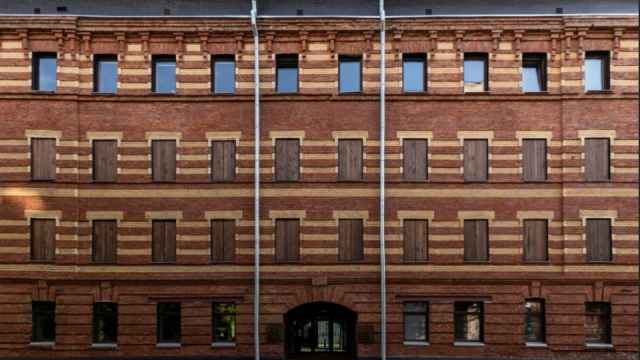
However, words and deeds seem to be tacitly diverging, much as they did after and even during Khrushchev’s time. Especially in the 2020s, many repression-themed museums and other initiatives that seem perfectly aligned with the state’s concept have been closed down, for ostensibly non-historical reasons, or silently shelved. Mere days ago, the State Gulag Museum’s temporary closure in 2024 was made permanent: a new “Museum of the Genocide of the Soviet People” will replace it.
Despite an evident dislike for Khrushchev, perhaps Putin’s regime learned more from the Secret Speech and the containment of its fallout than it cares to admit.
A Message from The Moscow Times:
Dear readers,
We are facing unprecedented challenges. Russia's Prosecutor General's Office has designated The Moscow Times as an "undesirable" organization, criminalizing our work and putting our staff at risk of prosecution. This follows our earlier unjust labeling as a "foreign agent."
These actions are direct attempts to silence independent journalism in Russia. The authorities claim our work "discredits the decisions of the Russian leadership." We see things differently: we strive to provide accurate, unbiased reporting on Russia.
We, the journalists of The Moscow Times, refuse to be silenced. But to continue our work, we need your help.
Your support, no matter how small, makes a world of difference. If you can, please support us monthly starting from just $2. It's quick to set up, and every contribution makes a significant impact.
By supporting The Moscow Times, you're defending open, independent journalism in the face of repression. Thank you for standing with us.

Remind me later.