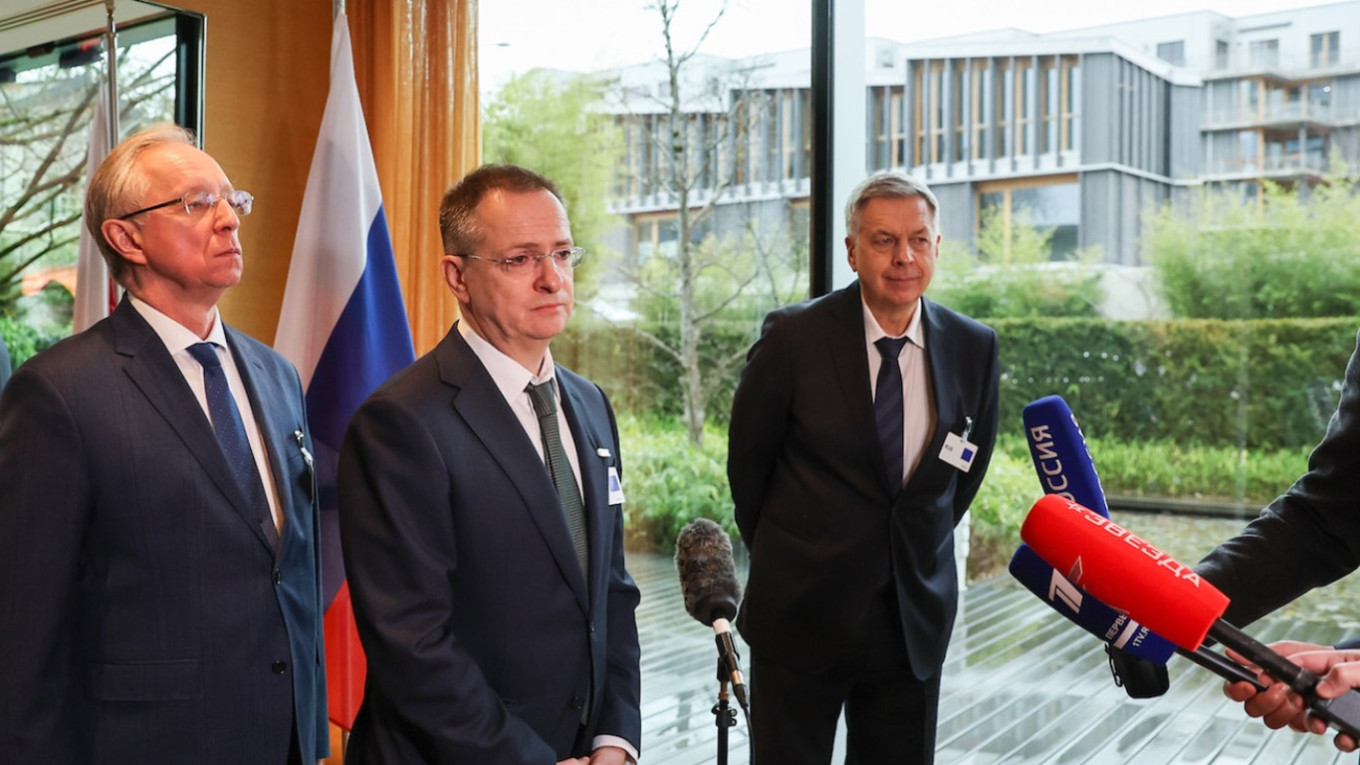
Senior Russian and Ukrainian officials have ended the latest round of peace negotiations brokered by the Trump administration, with Ukrainian President Volodymyr Zelensky saying the two sides once again failed to reach an agreement on fundamental issues.
“We can see that some groundwork has been done, but for now the positions differ, because the negotiations were not easy,” Zelensky said in a message to journalists after the talks wrapped up on Wednesday morning.
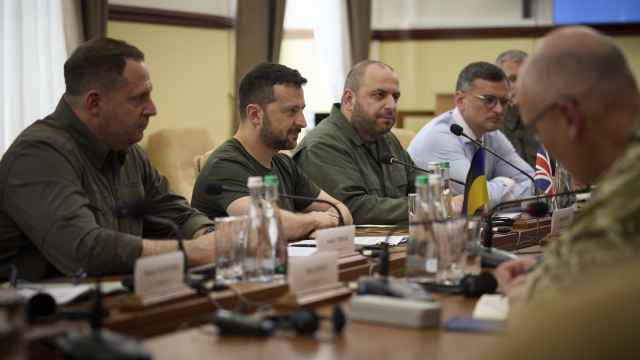
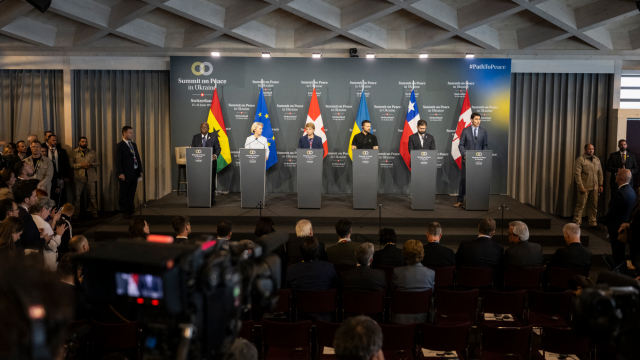
The two-day meeting in Geneva followed talks held earlier this month in Abu Dhabi, where delegates from Russia, Ukraine and the United States were in attendance.
Ukraine and Russia agreed on “almost all issues” related to a ceasefire monitoring mechanism, which will involve the United States, Zelensky said. But sensitive issues related to the fate of occupied territory and the future status of the Zaporizhzhia Nuclear Power Plant remained unresolved, he added.
Kremlin adviser and chief peace negotiator Vladimir Medinsky, who led the Russian delegation at this week’s meeting, gave a brief statement to the press after just two hours of talks on Wednesday, telling reporters that the discussions had been “difficult but businesslike.”
He said more negotiations would be held soon, though he did not specify a time or place.
The head of Ukraine’s national security and defense council, Rustem Umerov, who represented the Ukrainian delegation in Geneva, said “there is progress, but no details can be disclosed at this stage.”
Echoing that statement, U.S. Special Envoy Steve Witkoff wrote on X that “meaningful progress” had been made this week and that “both parties agreed to update their respective leaders and continue working toward a deal.”
Witkoff did not elaborate on what agreements, if any, Ukraine and Russia had reached in Geneva, in contrast to the conclusion of the previous round of talks in Abu Dhabi, where delegates agreed to a prisoner exchange.
Prospects for a peace deal appeared dim even before this week’s meeting began, as the Kremlin has given no indication it plans to abandon its maximalist demands, including Ukraine surrendering more of its territory to Russian forces.
At the same time, President Vladimir Putin’s decision to appoint Medinsky — an ultra-conservative known for his hardline views — as the head of the Russian delegation in Geneva raised concerns that negotiations may stall after some progress had previously been made in talks between top military officials from Ukraine and Russia.
In the Russian delegation, Medinsky was joined by the head of Russia’s GRU military intelligence agency, Admiral Igor Kostyukov, who served as Moscow’s chief representative at the talks in Abu Dhabi.
Nearly two dozen other officials made up Russia’s delegation. Among them was Kremlin envoy and Russian Direct Investment Fund CEO Kirill Dmitriev, who has been meeting with Trump administration officials in separate discussions about U.S.-Russian economic relations.
Also in attendance was Trump’s son-in-law, Jared Kushner, who joined Witkoff. Both men have become fixtures in the White House’s diplomatic efforts to end the war. In Geneva, they held parallel talks with Iranian officials over Tehran’s nuclear program.
U.S. President Donald Trump has been pushing hard for an end to the war in Ukraine since he took office over a year ago. Before returning to the White House, he had promised to broker an end to the conflict by day one of his presidency.
“They’re big talks. It’s going to be very easy,” Trump said earlier this week ahead of the negotiations in Switzerland. “Ukraine better come to the table, fast.”
Zelensky told Axios on Tuesday that Witkoff and Kushner said they believe Russia “genuinely wants to end the war.” However, he warned them against pressuring Ukraine to accept a peace agreement that its citizens would view as an “unsuccessful story.”
Moscow continues to insist that Ukraine hand over the eastern Donbas region despite Russian forces not controlling all of the territory. Zelensky has repeatedly rejected the idea, even as he comes under increasing pressure from Trump to make a quick deal.
Putin has warned that Russia will take more territory by force if Ukraine refuses a compromise. He has also indicated that, beyond territorial questions, he wants a change of government in Kyiv, calling Zelensky “illegitimate” and a “neo-Nazi.”
Ukraine, meanwhile, is pushing the United States and its European allies to provide it with security guarantees as part of a peace agreement since it fears Russia may launch a future invasion if there is no post-war military deterrence in place.
Kremlin spokesman Dmitry Peskov told reporters this week that Russian delegates in Switzerland plan to focus on the “main issues” concerning “territories and everything else related to the demands we have put forward.”
Zelensky told Axios that he thinks the best way to achieve a breakthrough on the question of territory is for a face-to-face meeting with Putin. He said his team would propose that idea during the talks in Geneva this week.
The Ukrainian president also said he would be prepared to discuss a troop withdrawal from parts of the Donbas region, but called on Putin to issue a similar order to his own forces at an equal distance to create the kind of demilitarized “free economic zone” that the Trump administration is proposing.
Giving Russia more territory, Zelensky warned, would never be accepted by Ukrainians if put to a vote in a referendum. “Emotionally, people will never forgive this. Never. They will not forgive... me, they will not forgive [the U.S.],” he said.
Meanwhile, sources told Axios that negotiations in the political group in Geneva on Tuesday were “stuck” due to positions presented by Medinsky, who is known to repeat many of the same maximalist views that Putin has expressed since launching the full-scale invasion.
A Message from The Moscow Times:
Dear readers,
We are facing unprecedented challenges. Russia's Prosecutor General's Office has designated The Moscow Times as an "undesirable" organization, criminalizing our work and putting our staff at risk of prosecution. This follows our earlier unjust labeling as a "foreign agent."
These actions are direct attempts to silence independent journalism in Russia. The authorities claim our work "discredits the decisions of the Russian leadership." We see things differently: we strive to provide accurate, unbiased reporting on Russia.
We, the journalists of The Moscow Times, refuse to be silenced. But to continue our work, we need your help.
Your support, no matter how small, makes a world of difference. If you can, please support us monthly starting from just $2. It's quick to set up, and every contribution makes a significant impact.
By supporting The Moscow Times, you're defending open, independent journalism in the face of repression. Thank you for standing with us.

Remind me later.