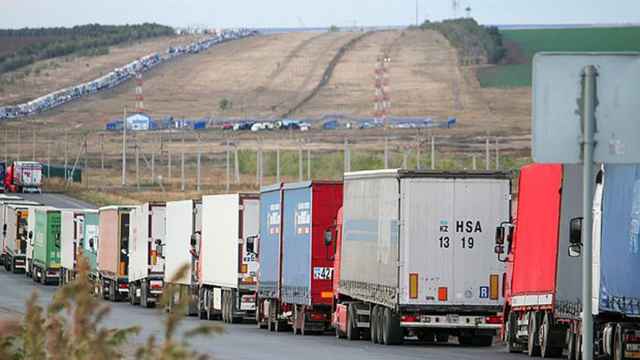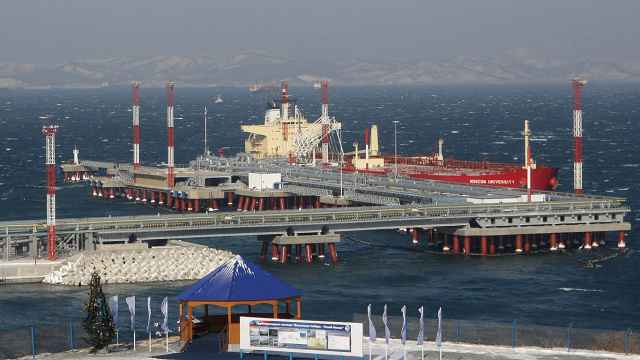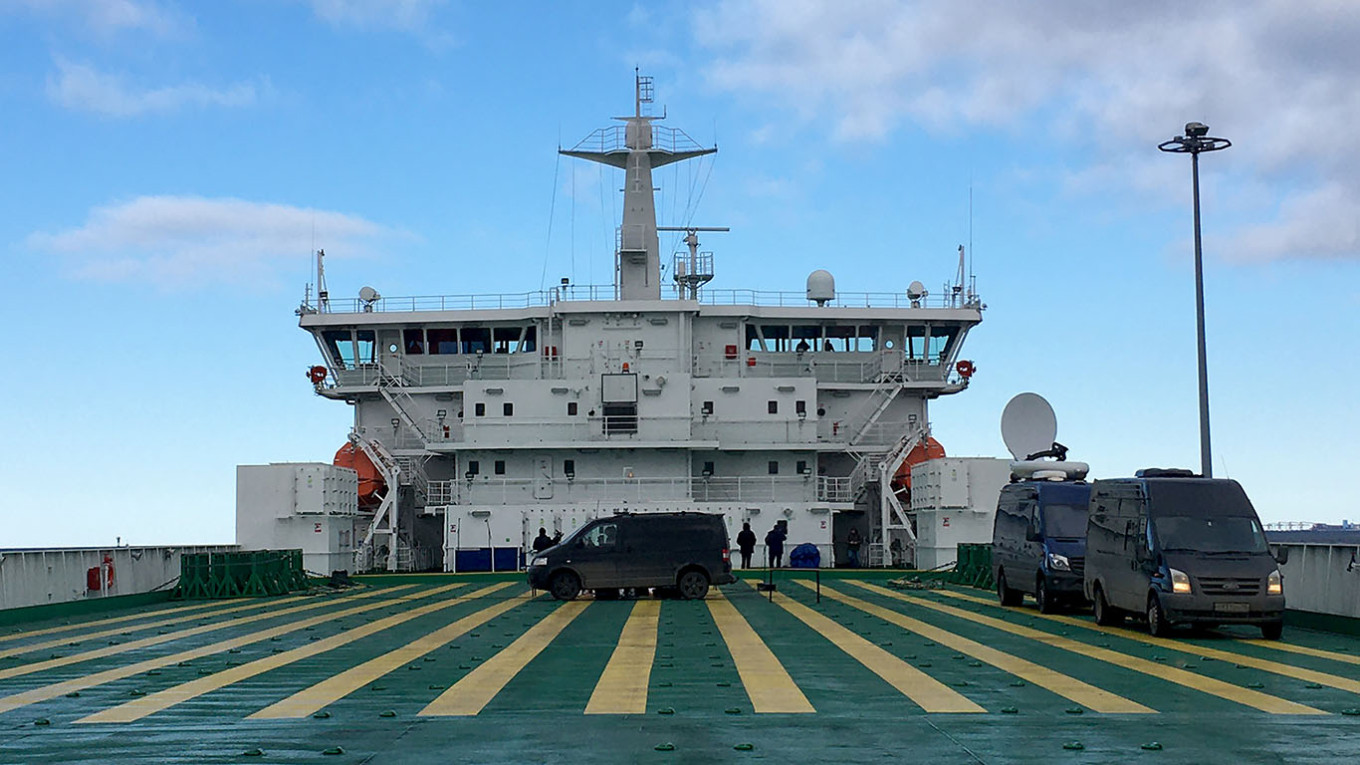
Russian ports in the northwest of the country could face a “significant decline” in foreign trade cargo handling due to enhanced inspections introduced under a decree by President Vladimir Putin, the Association of Russian Sea Commercial Ports (ASOP) has warned.
In a letter to Transport Minister Andrei Nikitin seen by the RBC news website, ASOP head Serik Zhusupov said the tighter controls, combined with severe ice conditions in the Gulf of Finland that have slowed vessel movements, risk disrupting export flows.
He cautioned that any reduction in cargo turnover would affect not only ports but also Russian Railways, cargo owners and the broader economy.
Putin ordered mandatory inspections of all vessels entering Russian ports after an explosion on the tanker Koala in the port of Ust-Luga in February 2025.
The tougher checks have strengthened port security but created “serious logistical problems,” including higher costs due to longer vessel handling times, Ilya Zharsky, managing partner at consultancy Veta, told RBC.
ASOP said it fully supported the presidential decree but proposed a temporary moratorium on underwater hull inspections for ships carrying non-hazardous cargo — such as containers, ferrous and non-ferrous metals, mineral fertilizers and coal — during the ice season.
The association also called for amendments to a government resolution implementing the decree.
It said authorities should establish clear criteria for selecting vessels for inspection, define procedures for placing ships at anchorage for checks, set deadlines for conducting inspections and develop a unified methodology.
Zharsky said the main flaw in the current regime is the lack of differentiation.
“Applying identical requirements to tankers carrying petroleum products and bulk carriers transporting grain is illogical from a risk perspective,” he told RBC, arguing for a risk-based approach.
Under such a system, tankers and gas carriers would undergo full inspections, container ships selective checks and bulk carriers simplified procedures.
Inspection rules should also be adjusted during the winter ice period, Zharsky added.
According to ASOP data, cargo turnover at Russian seaports totaled 884.5 million tons in 2025, down 0.4% year-on-year.
Throughput at Baltic basin ports fell 0.6% to 271.3 million tons. Shipments via the Great Port of St. Petersburg rose 3% to 54.6 million tons, while volumes at Ust-Luga declined 3.4% to 130.5 million tons.
Read this story in Russian at The Moscow Times' Russian service.
A Message from The Moscow Times:
Dear readers,
We are facing unprecedented challenges. Russia's Prosecutor General's Office has designated The Moscow Times as an "undesirable" organization, criminalizing our work and putting our staff at risk of prosecution. This follows our earlier unjust labeling as a "foreign agent."
These actions are direct attempts to silence independent journalism in Russia. The authorities claim our work "discredits the decisions of the Russian leadership." We see things differently: we strive to provide accurate, unbiased reporting on Russia.
We, the journalists of The Moscow Times, refuse to be silenced. But to continue our work, we need your help.
Your support, no matter how small, makes a world of difference. If you can, please support us monthly starting from just $2. It's quick to set up, and every contribution makes a significant impact.
By supporting The Moscow Times, you're defending open, independent journalism in the face of repression. Thank you for standing with us.

Remind me later.