Russians spent nearly $50 billion on trips abroad last year, close to a record high as a stronger ruble and improved flight connections spurred a surge in outbound tourism, preliminary Central Bank data showed.
Imports of services under the Travel category, which reflects spending by Russians overseas, totaled $49.7 billion, according to the Central Bank.
That was only slightly below the 2014 record of $50.4 billion and marked the second-highest figure since the Bank began publishing the data in 2001.
Spending rose by more than a quarter, or $10.9 billion, compared with 2024.
Outlays peaked in December at $5.67 billion, widening the services trade deficit to nearly double its November level.
The Central Bank said the jump reflected a traditional year-end increase in outbound tourism, captured in higher travel-related service imports.
The surge in travel spending had a visible impact on the broader balance of payments. Travel services exports — spending by foreign visitors in Russia — rose by just $1.3 billion to $8.9 billion, while the negative balance under the category widened by $9.5 billion.
The Central Bank cited two main reasons for a one-third decline in the current account surplus in 2025, to $41.4 billion from $62.6 billion, equivalent to 2% of GDP versus 3% a year earlier: lower exports amid relatively stable imports, and a sharp rise in services imports.
Data from Russia’s border service showed the number of outbound tourist trips rose 15.6% to 13.4 million. In total, Russians traveled abroad 31.5 million times in 2025, up 8% year on year.
Turkey remained the most popular destination, with 4.61 million trips, up 3% year-on-year.
It was followed by the United Arab Emirates (1.72 million, up 17%), Egypt (1.62 million, up 36%), China (1.36 million, up 34%) and Thailand (885,760).
Thailand was the only major destination to see a decline, with trips down 5.3%.
Organized tourism grew faster than the market overall. Sales of outbound package tours rose 25-30%, according to the Russian Association of Tour Operators (ATOR), citing data from tour aggregator Sletat.ru and major operators.
Industry representatives said a stronger ruble and the development of more convenient routes, including long-haul direct flights to tropical destinations such as Vietnam, China, Cuba and Oman, were key drivers of growth.
China’s decision in September to allow Russian tourists visa-free entry also boosted traffic to record levels, with tour sales to China rising multiple times over.
Tour operators said improved transit links through China also helped increase flows to South Korea and Japan, both seen as having relatively manageable visa procedures for Russians.
Market participants expect tourist flows to Japan to grow by at least 25% after the country opened visa centers in Moscow and St. Petersburg this month, with sales for cherry blossom tours already up 30-40%.
Egypt saw some of the strongest growth, with major operators and aggregators estimating sales up 30-50%, and the industry association putting the increase at 36%.
Sales to Vietnam surged by several hundred percent after charter flights to the resort cities of Nha Trang and Phu Quoc resumed.
Tour operators said prices for most foreign destinations remained close to 2024 levels, and in some cases — such as China and Vietnam — even declined. By contrast, domestic holidays became more expensive.
According to state statistics agency Rosstat, accommodation prices in Russia rose more than 9% year on year in the first 11 months, while sanatorium stays increased 11%. Overseas travel prices rose 4.6% over the same period.
Although official full-year domestic tourism data have yet to be released, Deputy Prime Minister Dmitry Chernyshenko said trips within Russia rose 5% year on year to 82.9 million in the first 11 months. However, sales of organized domestic tours fell 11%, the tour operators’ association said.
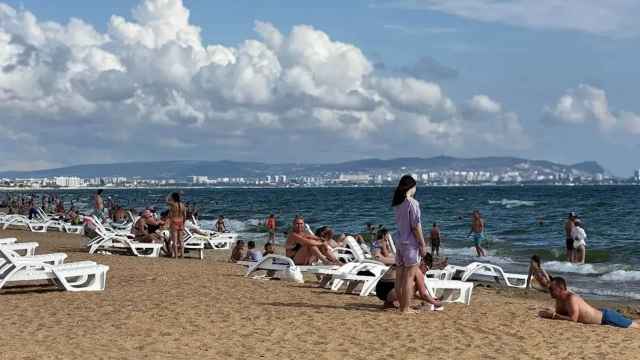
Industry figures attributed the slowdown in domestic tourism largely to a drop in visitors to the Krasnodar region, especially Anapa, where beaches remain closed following a fuel spill in late 2024.
The ATOR estimated tourist flows to the region fell 15%, including a 72% drop in Anapa and around 4% in Sochi.
Rising airfare and accommodation costs across the country also weighed on demand. Tours to the Krasnodar region last summer were on average 15-20% more expensive than a year earlier, ATOR said. Operators noted a shift toward budget hotels and apartments as travellers sought to cut costs.
Limited infrastructure was another factor. On ski resorts in Russia’s North Caucasus region during the New Year holidays, visitors reportedly queued up to 30 minutes for lifts to make short runs.
One tour company employee said a five-day trip to the Arkhyz resort cost nearly 400,000 rubles (about $5,200) per person.
He said that on a comparable daily basis, a trip to Courchevel in France would have cost a similar amount.
Sanatorium stays in the North Caucasus city of Mineralnye Vody cost about 17,000 rubles (around $221) per day per person in autumn excluding transport, he said, while comparable treatment in Druskininkai, Lithuania, could cost around 45 euros per day.
“At that price difference, people start thinking about traveling abroad, even if getting into the EU is complicated and expensive,” he said.
A Message from The Moscow Times:
Dear readers,
We are facing unprecedented challenges. Russia's Prosecutor General's Office has designated The Moscow Times as an "undesirable" organization, criminalizing our work and putting our staff at risk of prosecution. This follows our earlier unjust labeling as a "foreign agent."
These actions are direct attempts to silence independent journalism in Russia. The authorities claim our work "discredits the decisions of the Russian leadership." We see things differently: we strive to provide accurate, unbiased reporting on Russia.
We, the journalists of The Moscow Times, refuse to be silenced. But to continue our work, we need your help.
Your support, no matter how small, makes a world of difference. If you can, please support us monthly starting from just $2. It's quick to set up, and every contribution makes a significant impact.
By supporting The Moscow Times, you're defending open, independent journalism in the face of repression. Thank you for standing with us.

Remind me later.