
According to a Feb. 5 announcement by the United States European Command (EUCOM) in Germany, the U.S. and Russia have agreed to re-establish high-level military-to-military dialogue. What this means exactly was not explained.
Whether this renewed exchange will be deemed successful or not will depend on the expectations we set and the way in which we conduct it. I predict it will not be as helpful as we hope. But it will be better than not talking at all.
As a specialist in the Soviet and later Russian military, while serving for 30 years in the U.S. Army, I participated in many such exchanges with Russian military counterparts — some confrontational and some cooperative. The back-and-forth is primarily an exchange of intelligence about strategic and operational capabilities and intentions.
The Washington-Moscow military relationship is almost as old as the U.S. itself. But the historical record suggests we should be conservative in our expectations for positive outcomes.
In 1855, for example, the U.S. War Department sent a group of officers, including future Union Commanding General George McClellan, to Russia to gather information about the Crimean War, which Russia ultimately lost to Britain, France and Turkey. Having arrived in St. Petersburg, the officers waited months for permission to travel to the war zone before eventually being denied. Nevertheless, they observed Russian training and came back with Russian military texts on war-fighting, which were valuable for training America’s still young military.
Of course, there was significant cooperation and dialogue during World War II, when both the U.S. and the then-U.S.S.R. were working to defeat a common enemy — Nazi Germany. But a lack of direct military-to-military communication between forces near the end of the war nearly cost American soldiers their lives. As the two sides approached the German town of Torgau on the Elbe River, Russian forces erroneously fired from across the river on the Americans. U.S. Lieutenant William Robertson of the 69th Division had to recruit a Russian-speaking German prisoner of war to convince the Russian forces that they were not Germans. That now-famous meeting on the Elbe was almost scuttled the day before for lack of communication.
During the Cold War, U.S. and Soviet senior military leaders were sometimes directed to conduct exchanges and participate in negotiations to help increase transparency and prevent unintentional conflict from breaking out. For over 40 years, the U.S. and Russia hosted military liaison missions in eachother’s zones of responsibility in West and East Germany. These units, with bilingual commissioned and non-commissioned officers, ensured direct communication between U.S. and Soviet commanders deployed along the inner German border, reporting on troop locations and movements; as they often said, “keeping the Cold War cold.”
Despite the success in providing transparency, animosities often built up. In several confrontations, the lives of American personnel were endangered. One liaison officer, Lieutenant Colonel Arthur Nicholson, was shot and killed by a Soviet sentry in 1985.
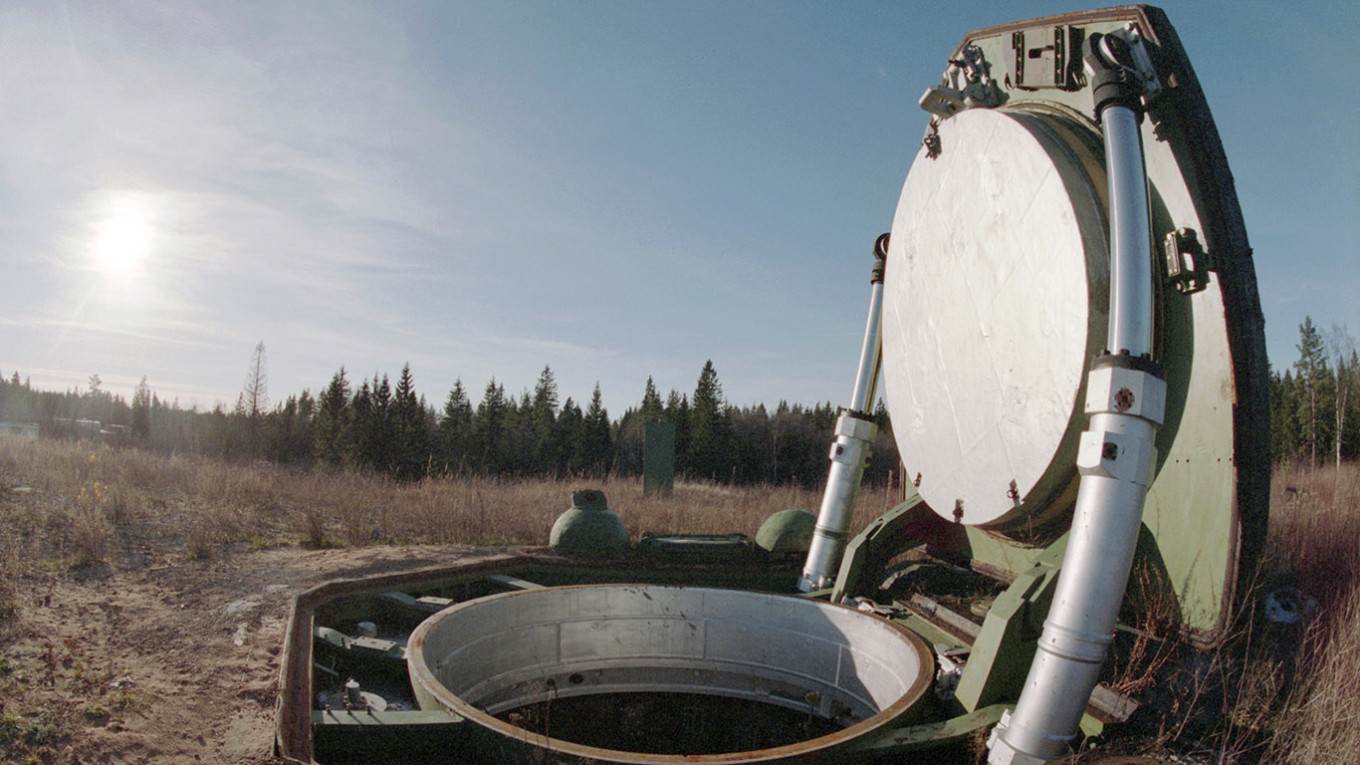
After the fall of the Soviet Union and the end of the Cold War, exchanges and meetings became mroe frequent, including joint training such as the 1994 “Peacekeeper Exercise” in Totskoye. The exercise involved about 250 soldiers each from the United States’ 3rd U.S. Infantry Division and Russia’s 27th Guards Motorized Rifle Division. Visits by the Army, Navy and Air Force Service Chiefs happened regularly, along with exchange visits by the U.S. Chairman of the Joint Chiefs of Staff and the Russian Chief of the General Staff. Even visits to nuclear weapon and missile sites were often scheduled.
As recently as the 2000s, the annual work plan for the European Command’s military-to-military activities with Russian counterparts had about 100 events listed. In 2010, American soldiers from the 1st Infantry Division marched in the May 9 Victory Day parade in Moscow. Meanwhile, U.S. and Russian officers and cadets visited each other’s training and education commands.
But in 2021, the last of EUCOM’s dialogue activities were canceled by the U.S. in the lead-up to Russia’s full-scale invasion of Ukraine.
The Feb. 5 announcement that the U.S. and Russia would “reestablish high-level military-to-military dialogue” is vague as to who will shepherd that dialogue from the U.S. and Russian sides. Although the announcement came from EUCOM headquarters, it does not specify that the EUCOM Commander, U.S. Air Force General Alexus Grynkewich, will organize and coordinate visits for the U.S.
During the post-Cold War period, EUCOM and its component commands conducted the majority of mil-to-mil activities. But visits were also scheduled independently by other military commands: Pacific Command, Strategic Command, and the Chairman of the Joint Chiefs of Staff. Individual service chiefs (Army, Navy and Air Force) scheduled visits with their Russian counterparts. The U.S. Coast Guard maintained a robust operational relationship with its Russian Border Guard counterparts in the northern Pacific.
The main reason for so many independent exchanges is that the U.S. and Russian military command structures don’t line up well. Both sides have service chiefs in charge of their various branches. But their responsibilities are not perfectly analogous. American service chiefs are responsible for the recruiting, training and equipping of their services, but not for commanding them in battle. Russian service chiefs are responsible for both.
The counterpart to the U.S. Chairman of the Joint Chiefs would seem to be the Russian Chief of the General Staff because they are both the senior uniformed officer in their militaries. But their duties can be very different. For example, the Russian Chief of the General Staff is also First Deputy Defense Minister and commands all the different services. The U.S. Chairman has none of those responsibilities. U.S. geographic combatant commanders like EUCOM are logical choices to conduct military relations with militaries in their area of operation. But in the case of Russia, they have a harder time finding a suitable counterpart.
The choice of who takes the lead in military-to-military relations is important because it tells both sides how seriously they take the dialogue and what purposes it serves. For this renewed dialogue, the U.S. Commander-in-Chief, President Donald Trump, is apparently more comfortable with the EUCOM commander as lead, even if he is not a direct counterpart to the senior Russian military officer, Chief of the General Staff Valery Gerasimov.
One aspect of Grynkewich’s responsibility that argues for placing him in charge of the relations with Russian military leaders is his command over U.S. forces in Europe, which handle not only deterring Russia but also training and assisting Ukrainian forces. And if the U.S. has any military participation in future security guarantees in Ukraine, Grynkewich and EUCOM will likely be in charge.
Of course, EUCOM is not the best choice for planning military dialogue about the Pacific region or strategic nuclear weapons. But again, nothing in the Feb. 5 announcement prevents the U.S. from adding to, or re-centering, its military dialogue with Russia.
It is important to note that although military-to-military relations between the U.S. and Russia broke off in 2021, communication channels never completely closed. Calls were made, although infrequently. So the task to “re-establish a dialogue” demands doing more than just calls between senior officers.
The EUCOM announcement claims the dialogue will provide a “consistent military-to-military contact as the parties continue to work towards a lasting peace,” implying a focus on resolving military aspects of Russia’s war in Ukraine.
But the announcement also implies a broader mission, calling the dialogue “an important factor in global stability and peace.”
Whether these two vital goals converge or diverge will be a major determinant of whether this renewed dialogue is a success or not. In either case, it’s better to try.
A Message from The Moscow Times:
Dear readers,
We are facing unprecedented challenges. Russia's Prosecutor General's Office has designated The Moscow Times as an "undesirable" organization, criminalizing our work and putting our staff at risk of prosecution. This follows our earlier unjust labeling as a "foreign agent."
These actions are direct attempts to silence independent journalism in Russia. The authorities claim our work "discredits the decisions of the Russian leadership." We see things differently: we strive to provide accurate, unbiased reporting on Russia.
We, the journalists of The Moscow Times, refuse to be silenced. But to continue our work, we need your help.
Your support, no matter how small, makes a world of difference. If you can, please support us monthly starting from just $2. It's quick to set up, and every contribution makes a significant impact.
By supporting The Moscow Times, you're defending open, independent journalism in the face of repression. Thank you for standing with us.

Remind me later.