
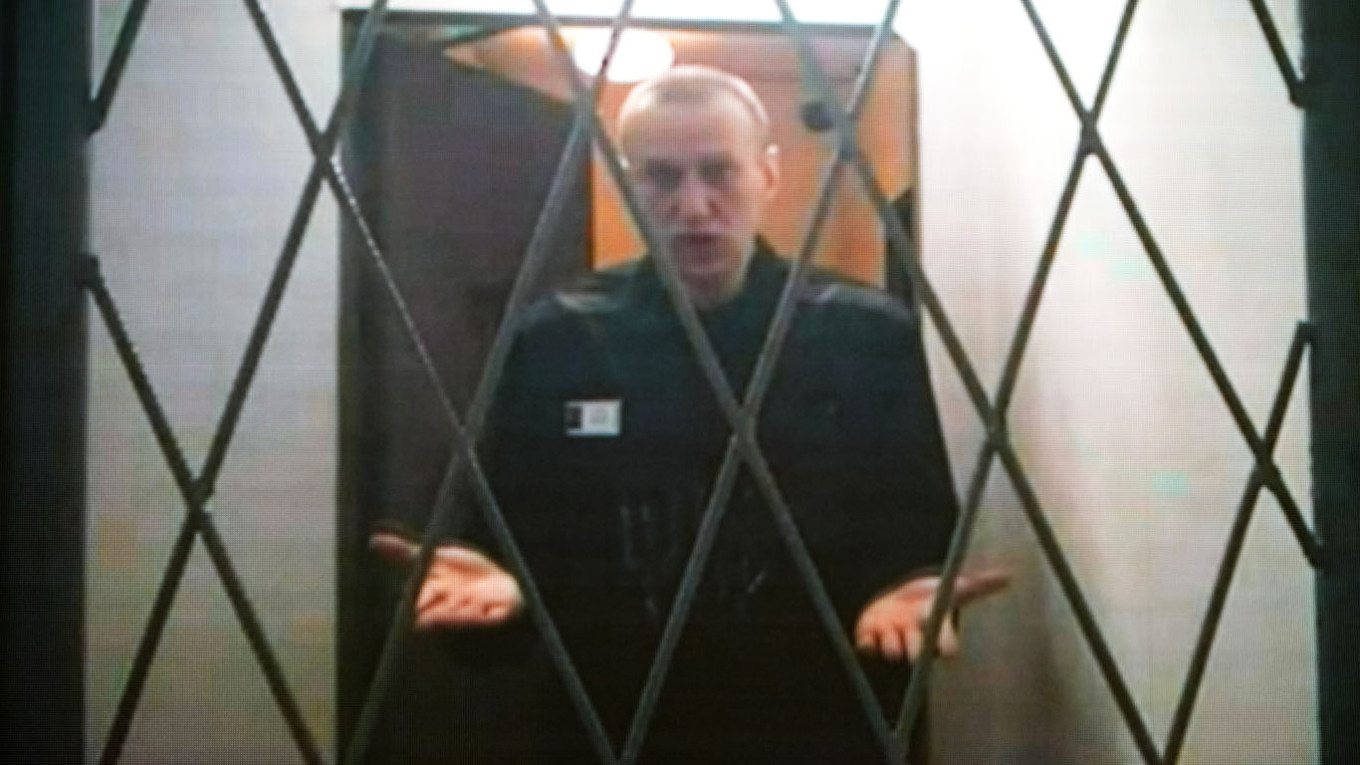
Europe's top human rights court ruled Tuesday that Russia subjected opposition activist Alexi Navalny to "inhuman treatment" following his arrest in 2021, three years before his death at an Arctic prison.
Navalny, a prominent anti-corruption campaigner and critic of President Vladimir Putin, was arrested in 2021 after returning to Russia from Germany, where he had been recovering from a 2020 Novichok nerve agent poisoning while campaigning in Siberia.
The European Court of Human Rights (ECHR) said Navalny's jailing was illegal and based on the "activation of a suspended sentence" stemming from a 2014 fraud and money laundering conviction that the court had previously found to be unlawful.
In its ruling, the ECHR said the activist was "simultaneously subjected to a combination of several forms of ill-treatment," which "reflected a pattern of disregard for his health, well-being and dignity and amounted to inhuman and degrading treatment."
While at one prison, the court said, Navalny had his head shaved, he "was kept under constant video surveillance, and deprived of sleep through hourly or two-hourly security checks."
Navalny was serving a 19-year prison sentence on multiple charges widely viewed as politically motivated when he died in February 2024 in an Arctic prison under unclear circumstances.
The ECHR allowed Navalny's widow, Yulia Navalnaya, to continue the case on his behalf and ordered Russia to pay 26,000 euros ($30,600) in damages.
Russia left the Council of Europe, which oversees the ECHR, in 2022 following its full-scale invasion of Ukraine. The court has said Moscow remains responsible for violations committed before its withdrawal, though Russia has repeatedly ignored ECHR rulings.
AFP contributed reporting.
A Message from The Moscow Times:
Dear readers,
We are facing unprecedented challenges. Russia's Prosecutor General's Office has designated The Moscow Times as an "undesirable" organization, criminalizing our work and putting our staff at risk of prosecution. This follows our earlier unjust labeling as a "foreign agent."
These actions are direct attempts to silence independent journalism in Russia. The authorities claim our work "discredits the decisions of the Russian leadership." We see things differently: we strive to provide accurate, unbiased reporting on Russia.
We, the journalists of The Moscow Times, refuse to be silenced. But to continue our work, we need your help.
Your support, no matter how small, makes a world of difference. If you can, please support us monthly starting from just $2. It's quick to set up, and every contribution makes a significant impact.
By supporting The Moscow Times, you're defending open, independent journalism in the face of repression. Thank you for standing with us.

Remind me later.