
British politicians have been talking tough, having assisted the United States Coast Guard’s seizure of the oil tanker Marinera, formerly Bella 1, after pursuing it from the Caribbean across the North Atlantic. After almost four years of sanctions against Russia’s oil industry, London belatedly claims to have identified the legal basis for the use of military force against such ships in the future.
Britain should seriously consider further boarding operations in its home waters. It has the military muscle to conduct them. On a visit to Finland, Foreign Secretary Yvette Cooper promised “assertive action." Not to be outdone, Defense Secretary John Healey reminded parliamentarians that “deterring, disrupting and degrading” the so-called Russian shadow fleet was a government priority. It remains to be seen whether it will actually be treated as one.
The seizure of Marinera shone a public spotlight on the shadow fleet of vessels used by Russia to transport sanctioned oil, avoid G7 price caps and breach maritime safety regulations.
Russia uses different measures to transport its oil to market by sea while avoiding Western sanctions of the ships, their owners, end purchasers, dodgy oil traders and insurers. Avoidance measures include opaque ownership arrangements, chopping from flag to flag, electronically falsifying ship identities, transferring cargo at sea and registering ships in countries with known lax enforcement.
These measures have evidently worked, with the fleet ballooning in size since February 2022. One analytical firm assesses that the fleet comprised over 3,300 vessels by the end of 2025, representing about 6-7% of global crude flows, with potentially over $100 billion worth of crude oil moved through shadow and sanctioned fleets that year.
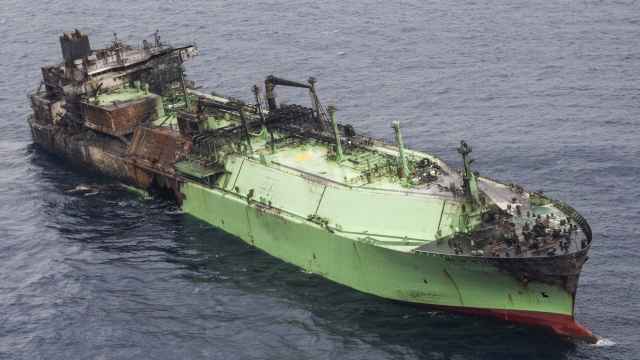
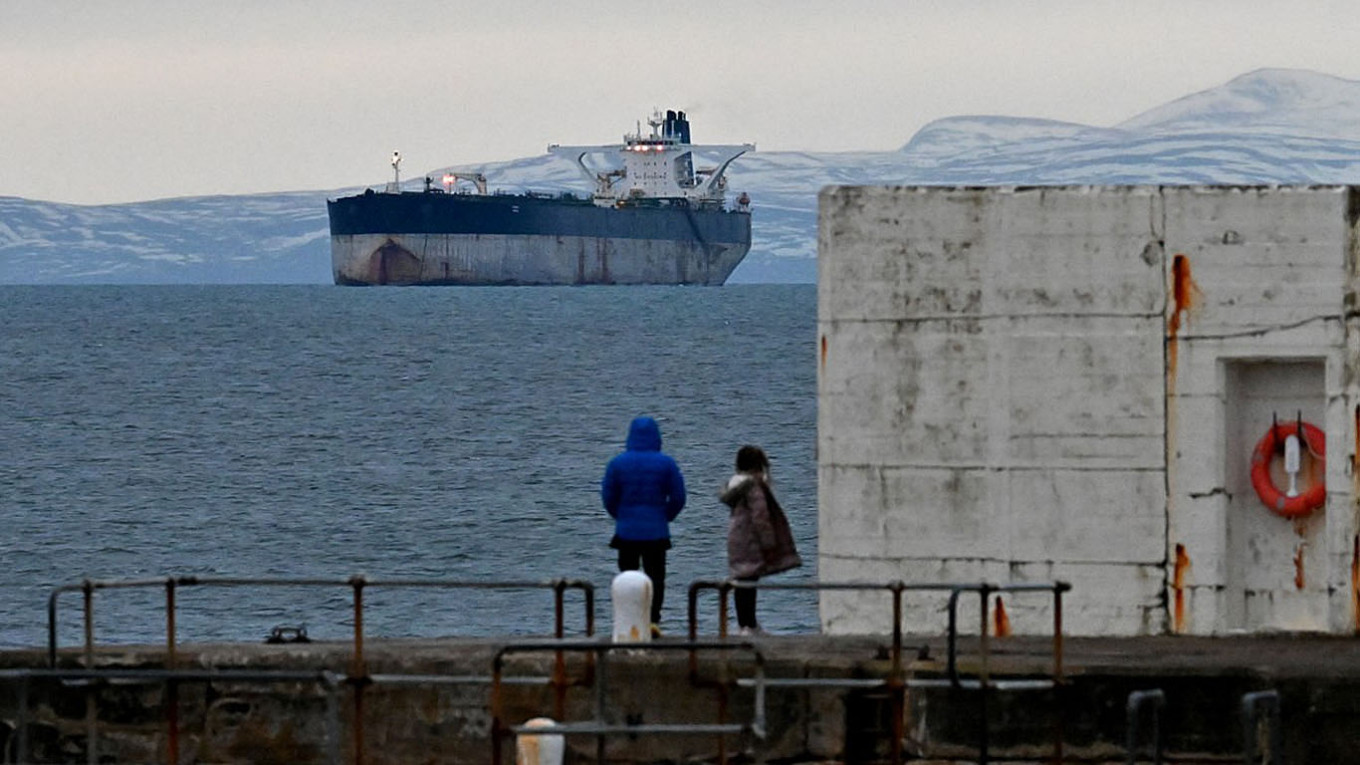
The ships in the fleet are invariably old, decrepit, inadequately or uninsured, and poorly crewed. Many have sailed through European waters since Marinera’s detention, posing a threat to other ships and the environment.
Marinera changed its flag of registration from Guyana to Russia and was rendered stateless after Washington rejected both registrations. Such ships are generally considered to be without protection under international maritime law. London says it has now identified the legislation that can be used to justify the interdiction of any sanctioned vessel which is not legitimately flagged.
Britain should seriously consider using this justification to conduct further boarding operations in its home waters. There are many potential strategic benefits: upholding sanctions; disrupting illicit funding for Russia’s war in Ukraine and diverting the proceeds for Ukraine’s war effort and reconstruction; protecting the environment; safeguarding critical underwater infrastructure from interference and reducing dangers to commercial shipping.
This is not to deny the significant risks of such actions. Russia already regularly uses naval escorts and armed personnel onboard to deter boarding and might retaliate like-for-like against ships belonging to London and Kyiv’s allies. There is international unease about the interdiction of merchant vessels on the high seas and the ever-present risk of extended legal challenge.
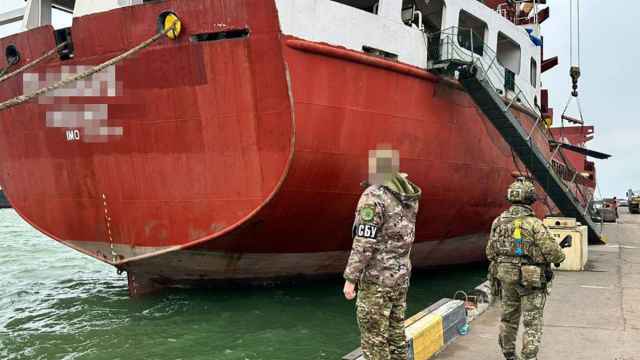
Whatever politicians decide, Britain retains a very credible sovereign boarding capability. The Special Boat Service is the Royal Navy's elite maritime special forces unit based in Poole on Britain’s south coast, supported by Royal Navy and Royal Air Force ships, aircraft and helicopters. I have witnessed first-hand at close range how they plan and execute rapid, high-risk boarding operations of merchant ships at sea. The SBS conducted one such live operation in 2020, taking control of a ship in the English Channel within only nine minutes. Other European nations can do the same.
The scale of the shadow fleet problem however precludes unilateral British action. Any boardings will have to be focused on stateless or irregularly flagged sanctioned tankers and closely coordinated with allies to present a unified front. Furthermore, there will be a problem of what to do with vessels after being detained.
Boardings alone will not work. India remains the world’s second largest purchaser of Russian crude oil. Russia supplies about 20% of China’s oil. Russia is reportedly reorganizing its supply chain to allow countries such as India to circumvent U.S. sanctions. The shadow fleet business model to ship illicit oil is entrenched, adaptable and resilient.
Coordinated expansion of U.S., EU and British sanctions targeting the shadow fleet and purchasers is required, together with a blanket ban on maritime services as called for by Sweden and Finland. This ban would include a ban on shipping, insurance, crewing and any other operations related to any ship transporting Russian carbon-based energy resources. This approach could also be extended to the export of Russian fertilizers, another massive export earner.
Britain has the legal justification, the motivation and the military force to conduct sovereign interdiction operations. But, as one leading British commentator noted in The Times last year, the country “has come to specialize in rousing, unfunded words; heroic, undeliverable promises.”
It remains to be seen whether London will indeed get tougher on the shadow fleet vessels passing through British waters. In any event, the current trans-Atlantic dispute over Greenland and deep concerns about the future of NATO will be a higher priority.

A Message from The Moscow Times:
Dear readers,
We are facing unprecedented challenges. Russia's Prosecutor General's Office has designated The Moscow Times as an "undesirable" organization, criminalizing our work and putting our staff at risk of prosecution. This follows our earlier unjust labeling as a "foreign agent."
These actions are direct attempts to silence independent journalism in Russia. The authorities claim our work "discredits the decisions of the Russian leadership." We see things differently: we strive to provide accurate, unbiased reporting on Russia.
We, the journalists of The Moscow Times, refuse to be silenced. But to continue our work, we need your help.
Your support, no matter how small, makes a world of difference. If you can, please support us monthly starting from just $2. It's quick to set up, and every contribution makes a significant impact.
By supporting The Moscow Times, you're defending open, independent journalism in the face of repression. Thank you for standing with us.

Remind me later.