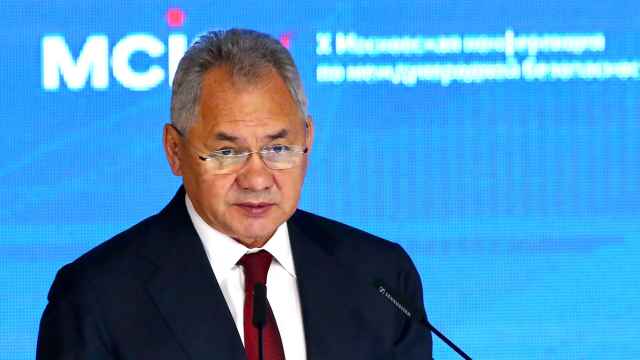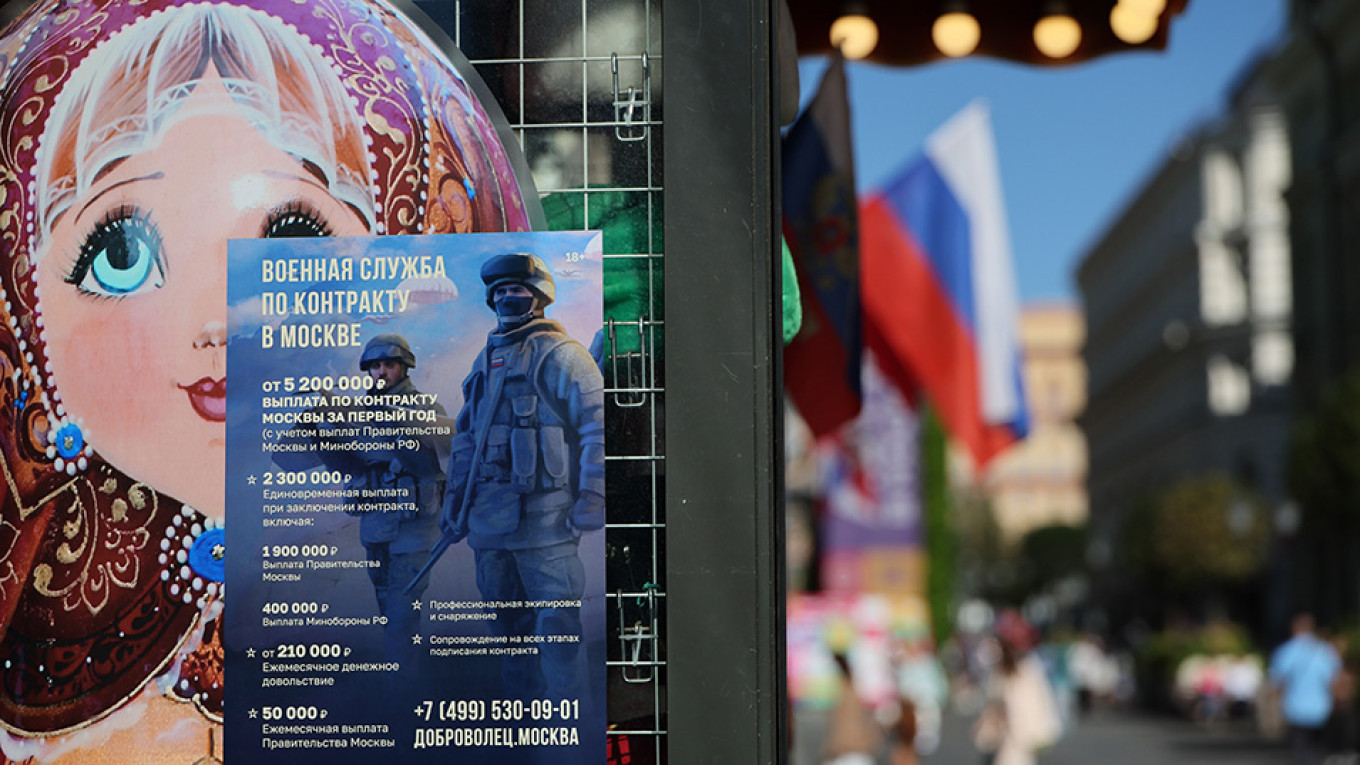
Around 422,000 people signed contracts with the Russian military last year, a 6% drop from 2024, the deputy chair of Russia's Security Council said Friday.
The exact reasons for the slight decrease are unclear, although some Russian regions are reported to have cut the size of their military sign-up bonuses last year due to economic strain.
"A couple of words about the results from last year. The supreme commander-in-chief's goal has been met: 422,704 people signed military contracts," Dmitry Medvedev said in a video posted on his social media account.
The figure he gave for 2024 was around 450,000.
Russia has launched a series of aggressive army recruitment drives since the Ukraine war began, both to make up for heavy battlefield losses and meet President Vladimir Putin's target of boosting the size of Russia's standing army.
Those joining can expect lucrative salaries, a minimum $5,000 signing bonus — though many regions offer several times that amount — and a range of social benefits, including free housing assistance.
The Kremlin and regional authorities are keen to avoid another round of mobilization, whereby men are forcibly drafted into the army.
Russia's 2022 mobilization drive, which rights experts say disproportionately targeted ethnic minority groups, led to rare protests and an exodus of fighting-age men from Russia.
Moscow has a manpower advantage over Ukraine on the battlefield, with Kyiv having struggled to recruit and draft soldiers throughout the war.
Putin said last year there were 700,000 Russian troops deployed on the front line.
The massive recruitment wave is required to replace the huge numbers of soldiers who have been killed and wounded in the nearly four-year war.
Moscow does not publish official figures on casualties, though by tracking public announcements from relatives and local officials, the BBC and independent Mediazona outlet have verified at least 160,000 Russian soldiers killed.
A Message from The Moscow Times:
Dear readers,
We are facing unprecedented challenges. Russia's Prosecutor General's Office has designated The Moscow Times as an "undesirable" organization, criminalizing our work and putting our staff at risk of prosecution. This follows our earlier unjust labeling as a "foreign agent."
These actions are direct attempts to silence independent journalism in Russia. The authorities claim our work "discredits the decisions of the Russian leadership." We see things differently: we strive to provide accurate, unbiased reporting on Russia.
We, the journalists of The Moscow Times, refuse to be silenced. But to continue our work, we need your help.
Your support, no matter how small, makes a world of difference. If you can, please support us monthly starting from just $2. It's quick to set up, and every contribution makes a significant impact.
By supporting The Moscow Times, you're defending open, independent journalism in the face of repression. Thank you for standing with us.

Remind me later.