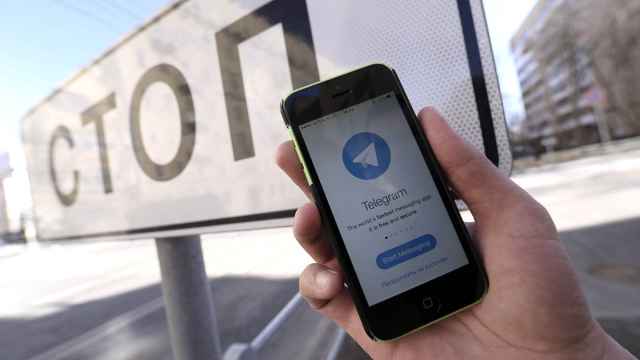
State media regulator Roskomnadzor denied claims on Friday that it is throttling download speeds on Telegram, following reports from users in Russia of problems with the messaging app earlier in the day.
A spokesperson for Roskomnadzor told the business newspaper Kommersant that it had not introduced any new restrictions against Telegram, directly contradicting comments from State Duma lawmaker Andrei Svintsov, who said the platform had failed to comply with requests to remove flagged content.
“The company’s management does engage with authorities, but the speed of their response is apparently insufficient,” Svintsov, who serves as deputy chairman of the lower house of parliament’s Committee on Information Policy, Technology and Communications, had told the news outlet NSN earlier on Friday.
“For example, there are still anonymous channels writing absolute nonsense, and they haven’t been blocked quickly enough in Russia,” the lawmaker said.
An anonymous source in the telecommunications sector had also told media outlets in Moscow that the reported slowdown was the result of newly imposed government restrictions.
Telegram has not commented on the reports.
In August, Roskomnadzor began restricting voice and video calls on WhatsApp and Telegram as part of what it described as an anti-fraud initiative, a move both companies criticized.
Svintsov claimed Friday that Russian authorities were still waiting for Telegram to ban channels that “publish outright lies and distorted facts” about the war in Ukraine, as well as information “used to manipulate the stock market.”
He suggested the latest reported slowdown measures were a “signal” to Telegram for it to step up its content moderation efforts.
“If the violations are fixed, the slowing will stop,” Svintsov told NSN. “Everything needs to be cleaned up. I believe we should become the first country in the world to completely abandon online anonymity.”
State Duma lawmakers suggested last month that Russia could block Telegram as soon as major pro-Kremlin channels fully switch to the government-backed messaging app Max.
Svintsov, meanwhile, has said that WhatsApp could be fully blocked in Russia by the end of 2026.
A Message from The Moscow Times:
Dear readers,
We are facing unprecedented challenges. Russia's Prosecutor General's Office has designated The Moscow Times as an "undesirable" organization, criminalizing our work and putting our staff at risk of prosecution. This follows our earlier unjust labeling as a "foreign agent."
These actions are direct attempts to silence independent journalism in Russia. The authorities claim our work "discredits the decisions of the Russian leadership." We see things differently: we strive to provide accurate, unbiased reporting on Russia.
We, the journalists of The Moscow Times, refuse to be silenced. But to continue our work, we need your help.
Your support, no matter how small, makes a world of difference. If you can, please support us monthly starting from just $2. It's quick to set up, and every contribution makes a significant impact.
By supporting The Moscow Times, you're defending open, independent journalism in the face of repression. Thank you for standing with us.

Remind me later.