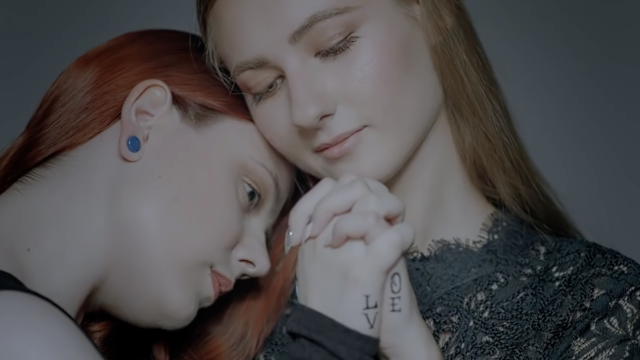
A Canadian television series about a romance between two rival professional hockey players has become a surprise hit with Russian viewers despite Moscow’s sweeping repression of LGBTQ+ people and a ban on gay “propaganda.”
“Heated Rivalry,” which follows a secret relationship between a Russian and a Canadian NHL player, now ranks among the top three most popular shows on Kinopoisk, Russia’s largest film and television streaming platform. With a rating of 8.6, it outperforms Netflix’s “Stranger Things” and “Landyshi,” a drama set against the backdrop of the war in Ukraine.
For many Russian viewers, the series goes beyond mere entertainment, providing a rare portrayal of queer lives and relationships at a time when LGBTQ+ visibility inside Russia has largely vanished.
“I immediately knew I would watch it, because it’s the only series that features queer athletes of this level, top NHL hockey players,” Galina, a Russian fan, told The Moscow Times.
“This is not just a fairytale about two boys falling in love. It’s a serious social drama,” she said, asking that her name be changed for safety reasons.
Like “Anora,” the Oscar-winning 2024 film featuring a Russian character that became popular in Russia, “Heated Rivalry” has benefited from its cultural familiarity.
One of its main characters, Russian hockey player Ilya Rozanov, struggles to accept his sexual identity while keeping it hidden from his family and teammates.
But unlike “Anora,” the series centers on LGBTQ+ themes that are formally prohibited under Russian law.
Russia’s Supreme Court banned what it described as the “international LGBT movement” as “extremist” in 2023, effectively criminalizing most public expressions of LGBTQ+ identity.

The ruling has not stopped fans like Galina from seeking out the series or building online communities around it.
While the series is not available on Russian streaming platforms, viewers in Russia can access it via the VKontakte social media site, through torrent downloads or on pirated websites and Telegram channels, with the sixth episode alone earning over 1 million views on VKontakte.
The Telegram messaging app has become the main hub for Russian-speaking fans, who share memes, artwork, collages and merchandise such as keychains featuring the show's central couple.
The largest “Heated Rivalry” fan channel has more than 45,000 subscribers, with membership surging on Dec. 18, according to analytics platform TGstat.
That surge coincided with the airing of the first season’s penultimate episode, “I’ll Believe in Anything,” in which Rozanov tells his Canadian rival Shane Hollander that Russia and his family would never accept the pair as an openly gay couple.
On Russian-language TikTok, more than 6,000 videos had been posted under the hashtag #HeatedRivalry by mid-January. Some users shared light-hearted edits, while others discussed LGBTQ+ representation, their ambivalent feelings about Russia or personal experiences.
“No foreigner would even begin to understand what Ilya meant when he said, ‘Because of Russia’,” says a fan on TikTok. “They’ll never understand why he returns to Moscow every time, even when he doesn’t want to. They’ll never understand the visceral fear of letting your parents down, like Ilya.”
On Ficbook, a Russian-language fanfiction platform, users have published dozens of “Heated Rivalry” stories, ranging from G-rated material to more explicit content rated NC-17.
Rachel Reid’s novel on which the series is based remains available in print on major Russian online marketplace Ozon, where it has a rating of 4.8 out of five.
More broadly, LGBTQ+ literature remains under pressure in Russia. On Tuesday, Russia’s leading publisher shuttered Popcorn Books, a young-adult imprint known for its popular queer titles.
“Thank you very much for the opportunity to read the print edition,” one reader wrote in a review on Ozon’s website, concealing his personal details.
Fans can also buy merch like pins, phone cases, mugs and acrylic figurines depicting the characters, priced between 390 and 727 rubles ($5-$9).
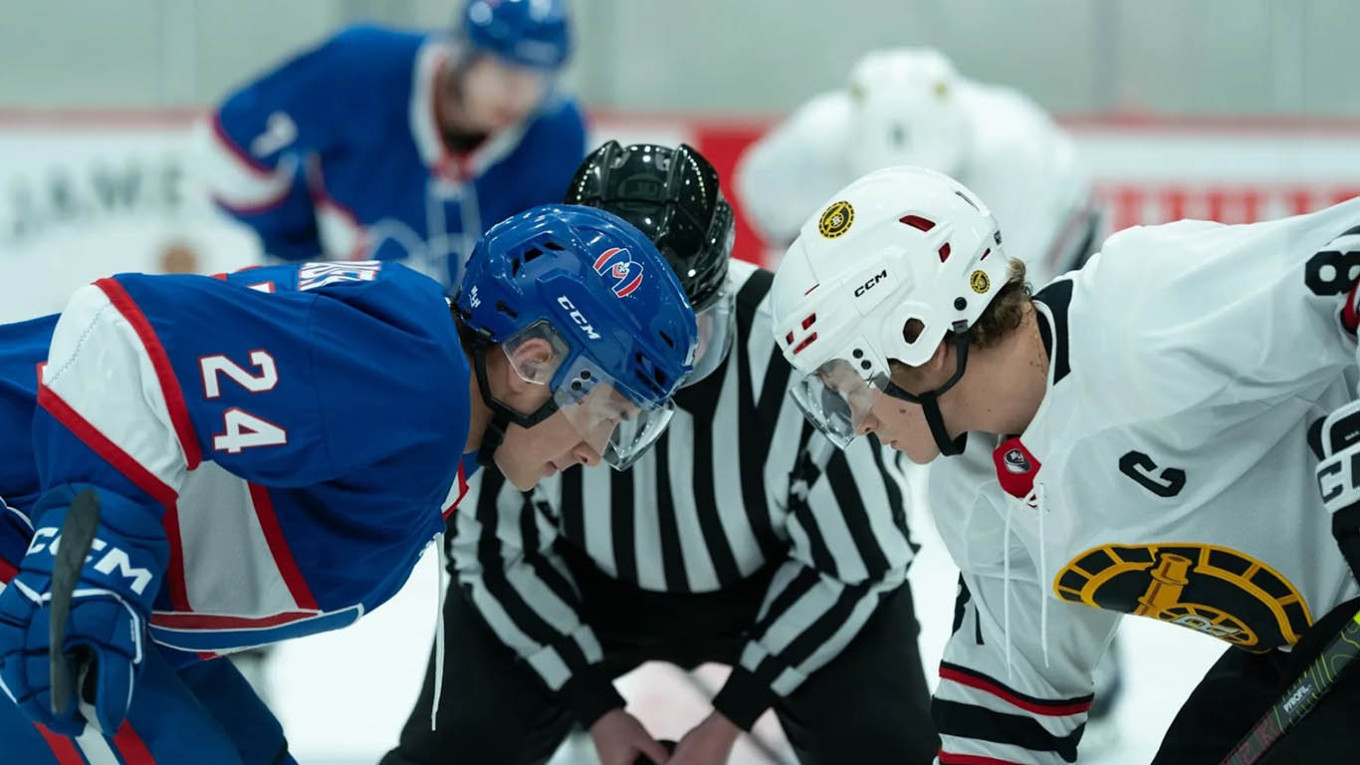
The series has also drawn backlash from conservative activists.
On Jan. 9, Andrei Soldatov, chairman of the far-right Orthodox movement Sorok Sorokov, said the show was saturated with what he called “sodomite scenes” that promote “unnatural depravity.”
“Birth rates are already lower than death rates, and we are still allowing propaganda of unnatural vice to be broadcast to our youth,” Soldatov said.
He said the movement was preparing complaints to the Prosecutor General’s Office and media regulator Roskomnadzor seeking a ban.
Alexei, a gay man living in Russia, said such restrictions often fuel interest rather than suppress it.
“For my peers in Russia, there is a world of restrictions, and there is a special open world of the internet and Western culture which we can all freely access,” said Alexei, whose name has been changed for safety reasons.
He said the storyline of a queer Russian athlete forced into secrecy resonates with younger audiences, many of whom do not remember a time before the Kremlin started cracking down on the LGBTQ+ community.
“There’s a Russian hockey player in this series who hides his sexual orientation. This is actually a fairly popular theme in fanfiction, which is almost impossible to ban. That’s why it’s interesting to a young Russian audience,” said Alexei.
“I feel like everyone in Russia knows a dozen or more people from the music industry, professional sports or pop culture who, for one reason or another, are forced to stay in hiding, like the hockey player Rozanov,” he added.
Yaroslav Rasputin, a Russian LGBTQ+ activist living in exile in Georgia, said the series’ popularity reflects a shortage of queer content in Russian.
“There is a huge unmet demand for queer content, and government bans only make the situation worse,” Rasputin told The Moscow Times, noting that many fans of queer books, films and series are heterosexual women and girls.
“In any case, the less LGBTQ+ content manages to break through into Russia, the greater the success will be for the content that does,” he said.
A Message from The Moscow Times:
Dear readers,
We are facing unprecedented challenges. Russia's Prosecutor General's Office has designated The Moscow Times as an "undesirable" organization, criminalizing our work and putting our staff at risk of prosecution. This follows our earlier unjust labeling as a "foreign agent."
These actions are direct attempts to silence independent journalism in Russia. The authorities claim our work "discredits the decisions of the Russian leadership." We see things differently: we strive to provide accurate, unbiased reporting on Russia.
We, the journalists of The Moscow Times, refuse to be silenced. But to continue our work, we need your help.
Your support, no matter how small, makes a world of difference. If you can, please support us monthly starting from just $2. It's quick to set up, and every contribution makes a significant impact.
By supporting The Moscow Times, you're defending open, independent journalism in the face of repression. Thank you for standing with us.

Remind me later.