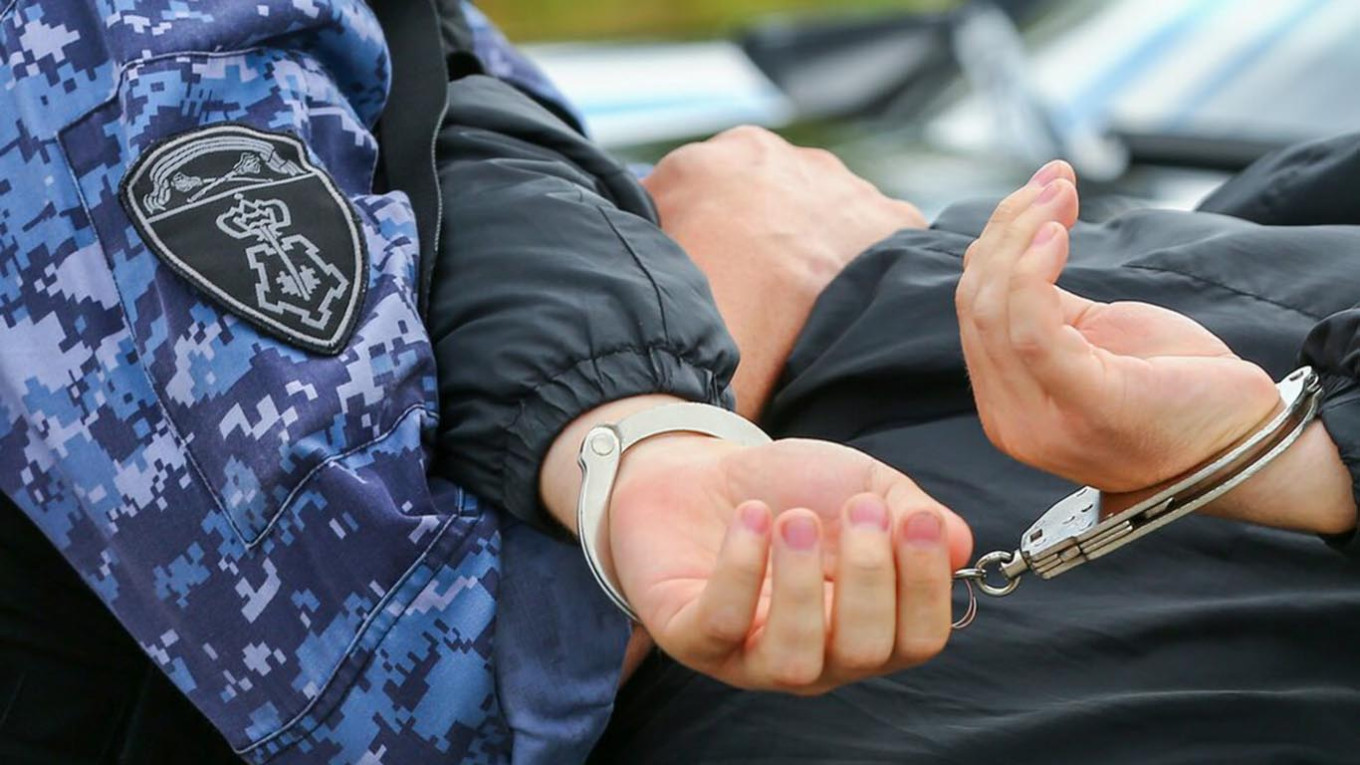
Russia added 341 minors to its national register of “terrorists and extremists” in 2025, marking the highest annual figure in at least seven years, the exiled news outlet Vyorstka reported Wednesday.
This year's number compares with 161 minors added in 2024 and just 304 over the previous six years combined, an analysis by Vyorstka found. Only one minor placed on the list this year was later removed.
The youngest person added to the register was 14-year-old Timofei Mamoshkin from the Ryazan region, who was listed in November after authorities charged him under terrorism-related legislation. The specific allegations against him have not been made public.
Another case involved Timur Omarakaev from the Stavropol region, who was added to the register on the day he turned 18.
A man with the same name was sentenced in St. Petersburg in the summer of 2025 to four years and four months in prison for assaulting passersby, though it was not immediately clear whether the cases were connected.
The sharp rise follows legislative changes signed into law by President Vladimir Putin that lowered the age of criminal responsibility for sabotage and terrorism offenses to 14.
At least 158 minors have been convicted on terrorism- or sabotage-related charges since Russia launched its full-scale invasion of Ukraine in 2022, many in cases involving arson attacks on military enlistment offices and railway infrastructure. In the first half of 2025 alone, Russian courts convicted 29 teenagers under terrorism statutes.
An increasing number of minors have also been sentenced to prison or juvenile facilities for voicing opposition to the war in Ukraine.
Investigative Committee head Alexander Bastrykin has previously accused Ukrainian intelligence services of attempting to recruit Russian teenagers to carry out acts of sabotage inside Russia.
He has said such cases often involve motives of national hatred or support for what authorities label “terrorist” or “Nazi” ideology.
A Message from The Moscow Times:
Dear readers,
We are facing unprecedented challenges. Russia's Prosecutor General's Office has designated The Moscow Times as an "undesirable" organization, criminalizing our work and putting our staff at risk of prosecution. This follows our earlier unjust labeling as a "foreign agent."
These actions are direct attempts to silence independent journalism in Russia. The authorities claim our work "discredits the decisions of the Russian leadership." We see things differently: we strive to provide accurate, unbiased reporting on Russia.
We, the journalists of The Moscow Times, refuse to be silenced. But to continue our work, we need your help.
Your support, no matter how small, makes a world of difference. If you can, please support us monthly starting from just $2. It's quick to set up, and every contribution makes a significant impact.
By supporting The Moscow Times, you're defending open, independent journalism in the face of repression. Thank you for standing with us.

Remind me later.