
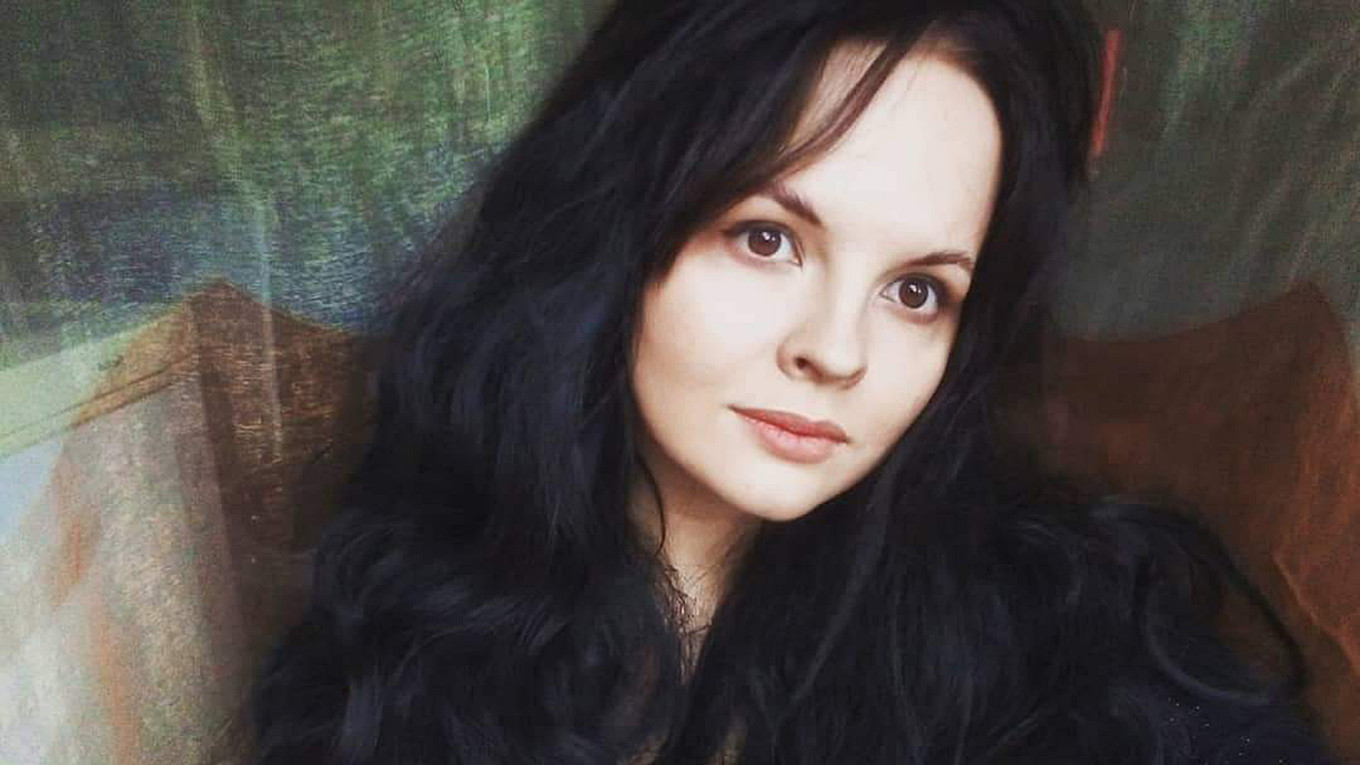
When prison officials said that Nika Novak could not be seen, her friends and family assumed the worst. The journalist, they reasoned, had somehow disappeared from her penal colony deep in the Siberian wilderness.
For more than a week from late November to early December, Novak, 33, was a missing person. Until she wasn’t.
Despite the lack of response to messages and Novak’s apparent absence when a lawyer tried to visit her, officials finally gave a stunning update: She never left.
“The staff simply remained silent” when asked about the disappearance, a Telegram channel providing updates on Novak’s imprisonment said.
For those following Novak’s situation, it was a confusing and worrying episode.
More broadly, it exemplified a grim feature of Russia’s crackdown on the free press in which sources say imprisoned journalists can face especially harsh treatment because of their profession.
Dec. 25 will mark two years since Novak was first detained under what critics say is draconian legislation designed to limit free speech. She has spent some of her imprisonment in solitary confinement and cohabitating with a “dangerous” cellmate, situations that drove her to undertake a hunger strike this fall.
To understand the conditions of Novak’s imprisonment, The Moscow Times interviewed a leading expert on Russia’s declining press freedoms and a formerly imprisoned journalist advocating on her behalf, as well as reviewed previously unreported correspondence with friends and family.
What emerges is a rare window into the harsh conditions of those who have been jailed as part of the Kremlin’s efforts to muzzle independent media.
“The situation is so bleak,” said Gulnoza Said, the Europe and Central Asia program coordinator at the Committee to Protect Journalists (CPJ). “But we don’t see any leverage that can be used in our advocacy work vis-à-vis the Russian authorities.”
‘Chilling effect’
The invasion of Ukraine did not represent an immediate stop-work order for independent journalism in Russia. Rather, seeing the story of a lifetime unfolding before their eyes, many journalists found renewed purpose in their craft.
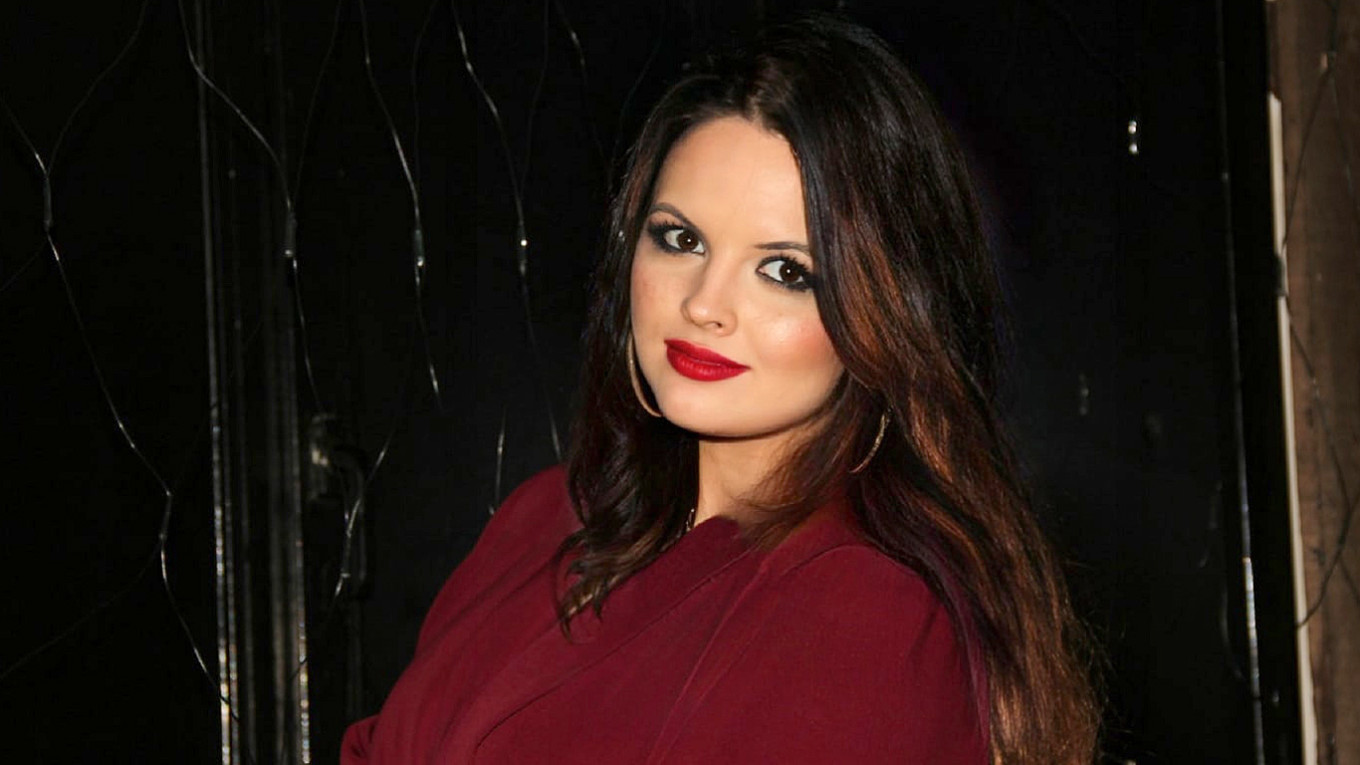
Novak was among those who continued to work. She cut her teeth reporting in the city of Chita, a trans-Siberian waypoint in the Zabaikalsky region some 200 miles from Lake Baikal.
She appeared to hold conflicting views of Russia’s war in Ukraine. According to human rights organization Memorial, Novak briefly reported in areas held by Russia-backed separatists in 2014-2015. But in the first months of the full-scale invasion in 2022, she started working for an organization known for its muckraking exposés of the war’s harmful impacts: RFE/RL’s Russian-language service, Radio Svoboda.
Critics have long decried Russia’s deteriorating press freedom under President Vladimir Putin. Even so, independent media — Russian and foreign alike — were more or less able to keep operating for much of the country’s post-Soviet history.
That changed with the full-scale invasion, when lawmakers swifty approved fines and prison sentences up to 15 years for anyone accused of spreading “fake” news about the military.
Journalism, many feared, had finally become a crime.
Those fears appeared validated as the government ratcheted up an unprecedented pressure campaign.
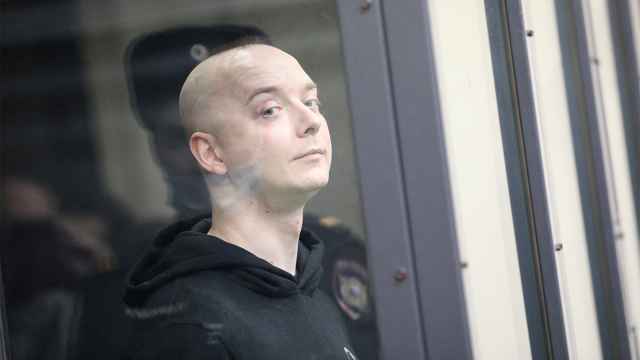
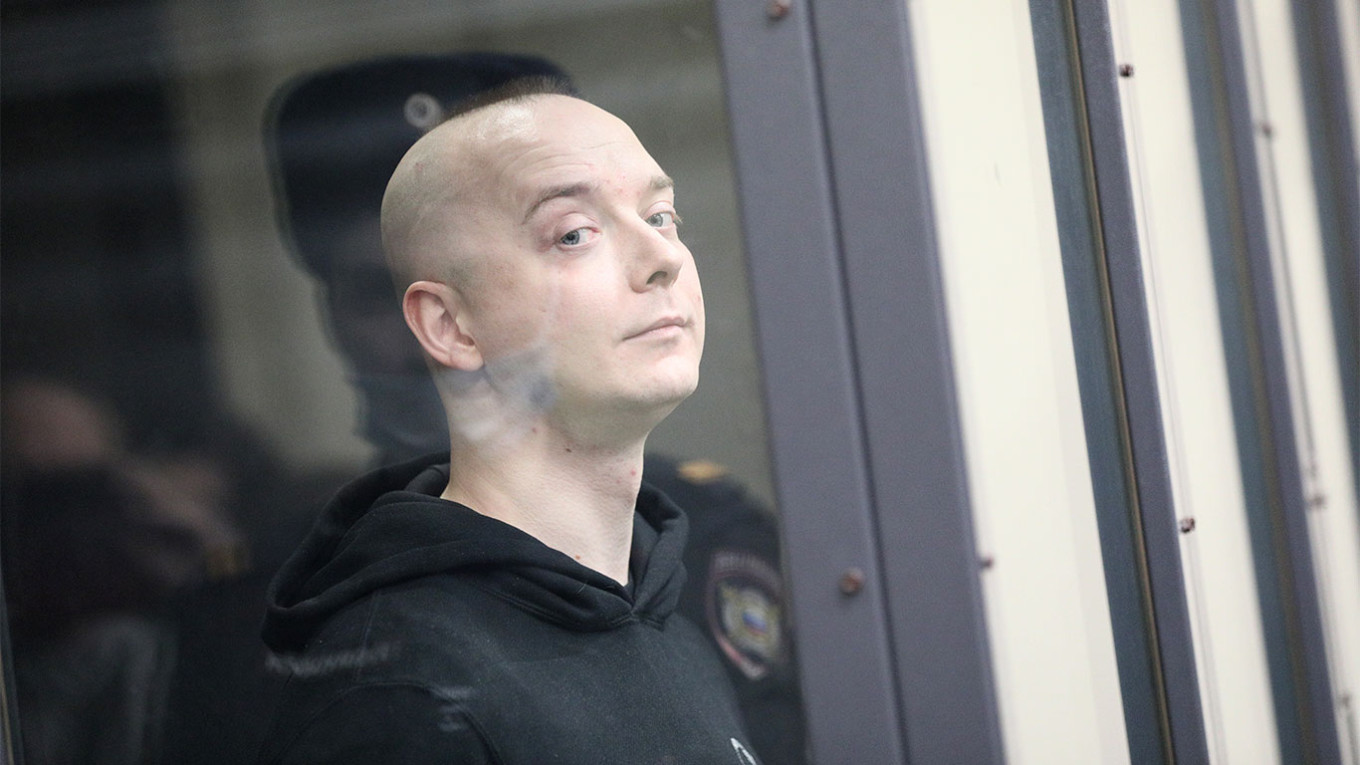
Russian journalists have faced labeling as “foreign agents,” harassment, threats and arrests, and authorities have doled out harsh prison terms. In the fall of 2022, former defense reporter Ivan Safronov received a sentence of 22 years — the longest one handed down to a journalist since the invasion.
After her arrest in December 2023, Novak became the first journalist sentenced under another new criminal provision for her work with RFE/RL: “collaboration with a foreign organization on a confidential basis.” She will spend four years in the notoriously harsh Penal Colony No. 11 in the Irkutsk region.
According to former inmates, prisoners at this facility are subjected to beatings, blackmail and solitary confinement.
RFE/RL has condemned Novak’s arrest and says she is unjustly imprisoned.
“These politically motivated charges are intended to silence individual reporters and cause a chilling effect,” said RFE/RL President Stephen Capus when she was sentenced in November 2024.
In all, CPJ counts 27 journalists imprisoned in Russia since 2022, 15 of whom are Russian. In the same period, the country has fallen nearly 20 places in Reporters Without Borders’ widely cited Press Freedom Index.
The disappearance
Russia’s prisons and penal colonies are notoriously opaque. Visits can be restricted, and letters between prisoners and their family and friends are often censored.
On more than one occasion, sources told The Moscow Times that they could not disclose certain information on the record because prison officials might retaliate against an imprisoned journalist.
In Novak’s case, a public Telegram channel shares periodic updates on her activities in Penal Colony No. 11, including anecdotes of prison life and her poetry.
It was via this channel that the word got out on Nov. 29 that Novak was missing. In a post shared on the channel, Novak’s lawyer said her colleague had tried to visit the journalist late last month but wasn’t allowed in. Inquiries about her status were met with silence.
“Every minute and every action counts right now,” the post said, encouraging followers to share the message that Novak might be missing.
Such developments are not uncommon in Russia and can be a sign that a prisoner is being transferred. Novak’s supporters reached out to other women’s prisons but could not locate her.
Then, as quickly as it began, the crisis appeared to come to an end. The same Telegram channel posted an update days later: Novak’s lawyer received a letter saying she was still in Penal Colony No. 11. According to authorities, it had all been a miscommunication.
The Moscow Times could not independently verify this account. Sources following the case say there is likely more to the story.
A letter written by Novak and shared with The Moscow Times, dated Nov. 30, is heavily redacted, presumably in sections where she could have described what happened during her disappearance.
“Nobody knows [what happened], and probably we will never know until she’s released and tells us the whole story,” said Alsu Kurmasheva, a journalist for RFE/RL formerly imprisoned in Russia.
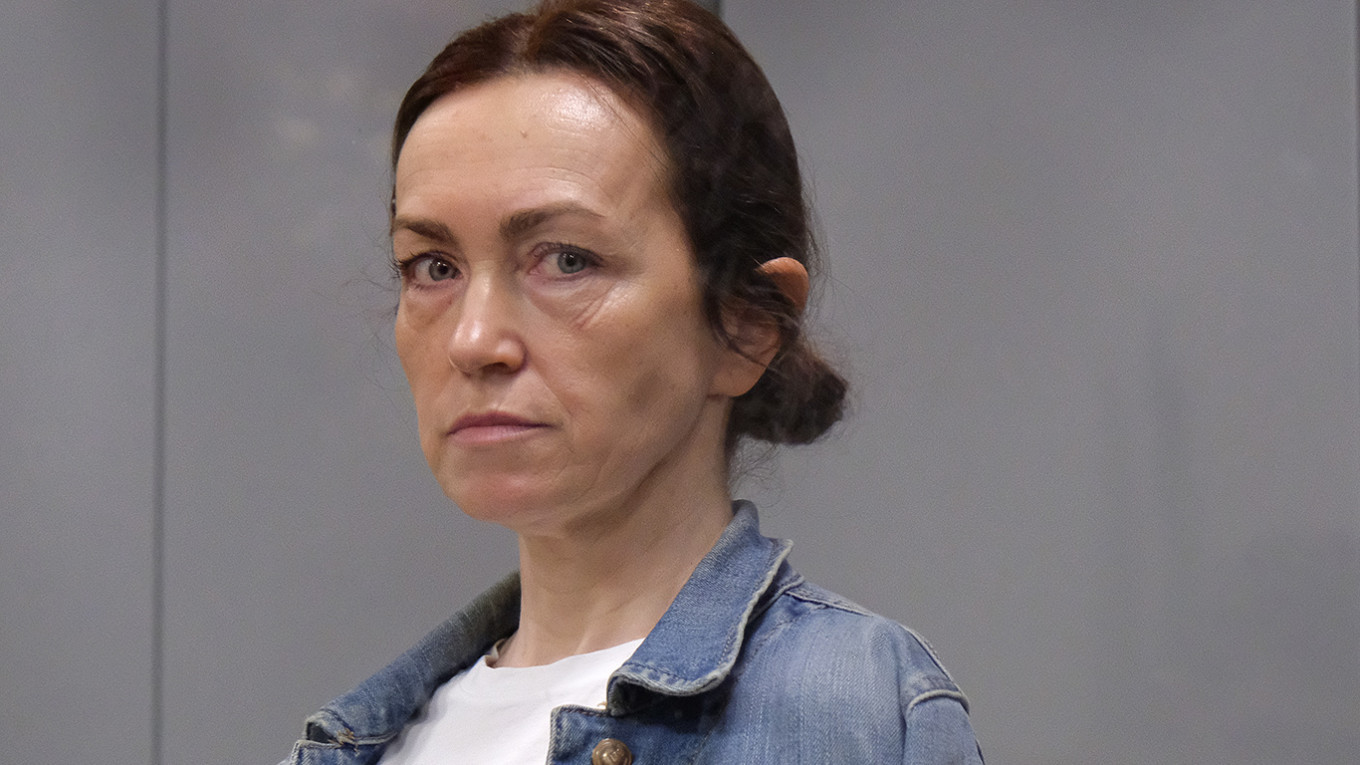
Kurmasheva was freed in a prisoner swap between the U.S. and Russia in August of 2024 alongside 23 other journalists and political prisoners. She is now helping advocate for Novak’s release.
“We demand a fair attitude toward her and having her released,” said Kurmasheva.
“I feel for her very much and I share her pain,” she added. “I didn’t want to wake up in the mornings. Mornings were the hardest and I’m sure she feels the same thing.”
‘The situation is going to get much worse’
According to CPJ’s Said, prisoner swaps are the only realistic way to secure the early release of journalists jailed for political reasons. Even then, the prospects are limited.
“We simply don’t see who those journalists can be exchanged for” at the present moment, she said.
The U.S. State Department did not respond to The Moscow Times’ emailed questions about whether it is concerned about issues of press freedom in Russia.
However, the issue appears to be on the administration’s radar. Journalists were included in two major releases of Belarusian prisoners this fall after the Trump administration lifted sanctions on the country, a stalwart ally of Moscow.
Said added that authorities’ ongoing attempts to funnel users to state-approved messaging platforms could soon imperil advocacy efforts.
“In 2025 and also looking into 2026, we expect that the situation is going to get much worse in terms of our ability to communicate with the journalists and also with sources,” Said said. “That’s very, very concerning, because we see this digital iron wall growing higher and higher.”
For people serving long sentences like Safronov, this development is especially worrying.
A source with knowledge of Safronov’s situation, who requested anonymity for fear of sparking retaliation against the imprisoned journalist, said he relies on the strict letter-writing system to communicate with people outside prison.
Three years into his 22-year sentence, there have been no positive updates in his case, the source said. He remains in a high-security penal colony in Krasnoyarsk, and also went missing for a few days in 2023.
Novak, who is serving a comparably lighter sentence, remains “strong mentally” and looks forward to reading letters that come into the penal colony, Kurmasheva said.
She has taken to writing poems to process this turn in her life.
One, a lament about learned silence, ends with a line that could be read as an indictment of the system that put her behind bars: “You speak and you go to the executioners, spreading a bouquet of false accusations.”
A Message from The Moscow Times:
Dear readers,
We are facing unprecedented challenges. Russia's Prosecutor General's Office has designated The Moscow Times as an "undesirable" organization, criminalizing our work and putting our staff at risk of prosecution. This follows our earlier unjust labeling as a "foreign agent."
These actions are direct attempts to silence independent journalism in Russia. The authorities claim our work "discredits the decisions of the Russian leadership." We see things differently: we strive to provide accurate, unbiased reporting on Russia.
We, the journalists of The Moscow Times, refuse to be silenced. But to continue our work, we need your help.
Your support, no matter how small, makes a world of difference. If you can, please support us monthly starting from just $2. It's quick to set up, and every contribution makes a significant impact.
By supporting The Moscow Times, you're defending open, independent journalism in the face of repression. Thank you for standing with us.

Remind me later.