
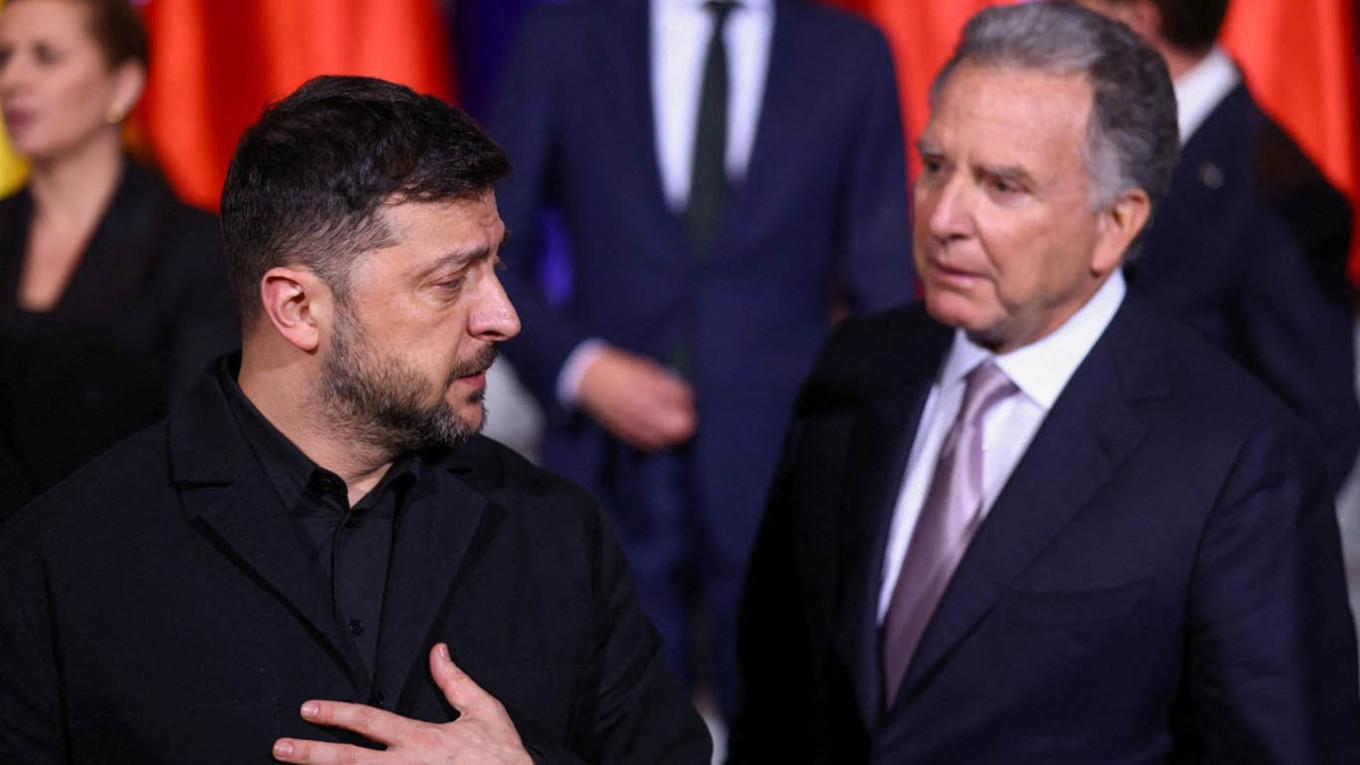
American and Ukrainian officials said on Sunday that talks held in Miami had been “productive and constructive,” but offered no indication of a breakthrough in efforts to end the war with Russia.
Senior representatives from Ukraine and Russia, along with European allies of Kyiv, have been in southern Florida for several days of separate meetings hosted by President Trump’s special envoy, Steve Witkoff. The talks are part of a weeks-long diplomatic push following a 28-point U.S. proposal unveiled last month that was widely viewed as echoing Kremlin demands.
That proposal has since been revised after consultations with Ukraine and European governments, though its contents have not been made public.
In statements posted on social media, Witkoff and Ukraine’s chief negotiator Rustem Umerov said the Ukrainian delegation had held a series of meetings with American and European officials focused on aligning positions across several documents, including a revised 20-point plan, security guarantee frameworks and an economic recovery proposal.
They said the discussions emphasized timelines and the sequencing of next steps, but did not announce further meetings.
National security advisers from European countries also joined the talks, the statements said, to coordinate a shared strategy among Ukraine, the United States and Europe.
Russian economic envoy Kirill Dmitriev was also in Florida and met separately with the American delegation, which included Witkoff and U.S. President Donald Trump’s son-in-law Jared Kushner. Witkoff described those talks as “productive and constructive” as well.
Kremlin spokesman Dmitry Peskov said Dmitriev would report back to Moscow on discussions with American and European officials.
A Message from The Moscow Times:
Dear readers,
We are facing unprecedented challenges. Russia's Prosecutor General's Office has designated The Moscow Times as an "undesirable" organization, criminalizing our work and putting our staff at risk of prosecution. This follows our earlier unjust labeling as a "foreign agent."
These actions are direct attempts to silence independent journalism in Russia. The authorities claim our work "discredits the decisions of the Russian leadership." We see things differently: we strive to provide accurate, unbiased reporting on Russia.
We, the journalists of The Moscow Times, refuse to be silenced. But to continue our work, we need your help.
Your support, no matter how small, makes a world of difference. If you can, please support us monthly starting from just $2. It's quick to set up, and every contribution makes a significant impact.
By supporting The Moscow Times, you're defending open, independent journalism in the face of repression. Thank you for standing with us.

Remind me later.