
Armenians go to the polls in a crucial election this Sunday, which Prime Minister Nikol Pashinyan has positioned as a plebiscite on his agenda of seeking peace with Azerbaijan and strengthening relations with Europe. Its relationship with Russia may not be explicitly on the agenda, but the Kremlin has sought to make it so in recent weeks.
Despite Pashinyan's background as a journalist, President Vladimir Putin had tolerated him, hoping Russia's outsize influence would constrain any multilateral instincts Pashinyan may espouse. But that strategy failed as Russia at first turned a blind eye to Azerbaijan's 2020 war to retake the territories in and around Nagorno-Karabakh and then utterly ignored Baku's subsequent 2023 recapture of the entire territory and the resulting depopulation of its ethnic Armenian inhabitants.
The Kremlin has taken a far more interventionist approach to Armenia’s latest election. Putin has publicly crowed about the arrest of billionaire-turned-opposition-politician Samvel Karapetyan. Karapteyan has long been linked to Moscow and its economic interests in Armenia, A report in The Insider last month claimed Russian records showed him having worked in intelligence at its Federal Security Service (FSB). Recent investigations by Reuters and local media outlets have found the Kremlin to not only be engaged in an active misinformation and disinformation campaign, but to be mulling over support for flying-in Armenian citizens from Russia, from where they cannot vote, to tip the scales in its favor. But the Kremlin has also turned to one of its preferred tools — economic pressure through trade restrictions.
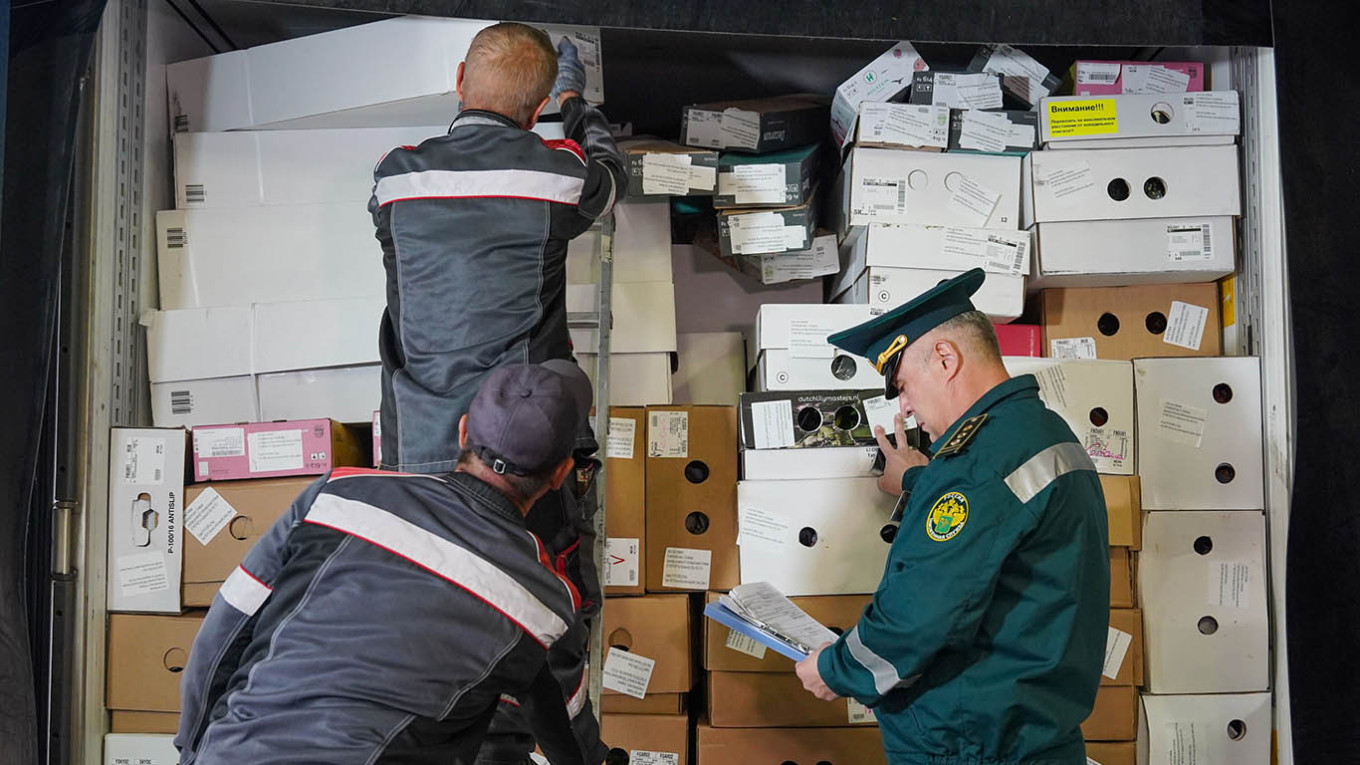
In late May, Russia's agricultural safety watchdog Rosselkhoznadzor banned imports of flowers and mineral water, before extending restrictions to fresh tomatoes, cucumbers, peppers, herbs, and strawberries. At the beginning of June, almost all of Armenia’s other agricultural produce was barred as well. Russia, a true piscine power, even restricted exports of fish from land-locked Armenia.
In each case, the official justification has been phytosanitary — alleged pest infestations and unmet safety standards. Belying such allegations, however, is the timing of Russia’s increased criticism of the Pashinyan government and inadvertently-overt meddling in pre-election politics. During an April meeting, Putin called on his Armenian counterpart to release prisoners holding Russian passports seeking to “participate in [Armenia’s] domestic political process,” It was a clear reference to Karapetyan, the Russia-based billionaire behind the Strong Armenia party who was arrested on charges of seeking to usurp power last June.
The bans come as the Kremlin’s rhetoric has only escalated. The messaging is none too subtle. Putin last week, referring to Pashinyan’s efforts to tout potentially deeper EU integration as part of his campaign, invoked the start of the “crisis in Ukraine” as its 2013 spat with Moscow over a potential EU trade agreement.
It is far too often forgotten that it was Russia that first used trade coercion and sanctions to influence Ukraine in 2013, banning products from the famous Ukrainian chocolatier Roshen in July 2013, following it up with an intentional slowing of significant amounts of trade by citing Ukrainian products as high risk — with the West doing so to Russia only after Putin’s initial February 2014 invasion of Crimea.
The parallel is clear, and the stakes significant. Russia accounted for 35.8% of Armenia's total foreign trade last year. Of $3.14 billion in Armenia’s exports to Russia in 2024, Armenian agricultural exports alone were worth $543 million — almost identical to Armenia’s total exports to the EU that year. But this is not a game for Russia, or Rosselkhoznadzor.
In 2006, Rosselkhoznadzor introduced bans on imports of water from Moldova and Georgia in response to their respective governments moving to seek deeper integration with the EU, and, in the latter case, NATO as well. Wine was, and still is, a key export earner for both countries and Russia absorbed 80 to 90% of their output at the time. Other goods, including meat and sparkling water were subsequently targeted too. The pretext was identical to what Rosselkhoznadzor cites today: pesticides and safety violations.
The effect was devastating: Moldova's wine output fell 60% in a single year, 25%of Moldovan wineries went bankrupt and an estimated $300 million in goods that had already been shipped to Russia went unpaid. Georgia's wine industry, which had built itself around the Russian palate over decades, saw export volumes collapse. William Hill, the OSCE's head of mission to Moldova at the time declared that there was “no doubt” about the political nature of the bans. Even 20 years ago, Hill described the tactic as already having been a “Russian modus operandi for ages.”
Moldova's ban was only eased after Chisinau explicitly agreed to back Moscow's bid for membership in the World Trade Organization (WTO) later that year. But Georgia's lasted until 2013, lifted only after the 2012 parliamentary elections brought Bidzina Ivanishvili’s more accommodating Georgian Dream party to power.
The irony is that Russia has expanded its use of such import bans at the same time that Putin rails against Western economic coercion as illegitimate, even dubbing it an “economic blitzkrieg” designed to crush Russia's sovereign rights.
Most striking, perhaps, is how far beyond the post-Soviet neighborhood the tactic has now spread. In early 2024, after Ecuador's President Daniel Noboa confirmed he would transfer Soviet-era military equipment to the United States, equipment widely understood to be destined for Ukraine, Rosselkhoznadzor promptly claimed to have discovered harmful insects in shipments from Ecuadorian banana companies and suspended their access to the Russian market. Ecuador supplies around 95% of Russia's bananas. The best substitute Rosselkhoznadzor could offer was suggesting Russia substitute with domestic production. With its climate prohibitive and all other investments substituted to Putin’s war’s priorities, the ban proved short-lived.
In a world of economic warfare, the Kremlin can hardly complain. After all, it was a pioneer of such trade coercion. But its rivals have moved on to competing over chips and other high value goods. With Putin favoring war over investment, it is stuck using the same tools it has long employed – even closer to home amongst fading allies such as Armenia, but also against those widely assumed to be in its pocket.
When the de facto parliament of Abkhazia — often mistakenly lumpen in with South Ossetia as little more than a Kremlin-backed Potemkin state — voted in December 2024 to reject a Russian investment agreement that would have given Moscow-backed investors sweeping privileges over the breakaway Georgian region, Rosselkhoznadzor swiftly banned the import of Abkhazian mandarins. It was as if the clock was wound back – a ban on Abkhazian agricultural imports was previously instituted in 2004 following Abkhazian election results that displeased Moscow.
Armenia is the latest target, but certainly will not be the last.

A Message from The Moscow Times:
Dear readers,
We are facing unprecedented challenges. Russia's Prosecutor General's Office has designated The Moscow Times as an "undesirable" organization, criminalizing our work and putting our staff at risk of prosecution. This follows our earlier unjust labeling as a "foreign agent."
These actions are direct attempts to silence independent journalism in Russia. The authorities claim our work "discredits the decisions of the Russian leadership." We see things differently: we strive to provide accurate, unbiased reporting on Russia.
We, the journalists of The Moscow Times, refuse to be silenced. But to continue our work, we need your help.
Your support, no matter how small, makes a world of difference. If you can, please support us monthly starting from just $2. It's quick to set up, and every contribution makes a significant impact.
By supporting The Moscow Times, you're defending open, independent journalism in the face of repression. Thank you for standing with us.

Remind me later.