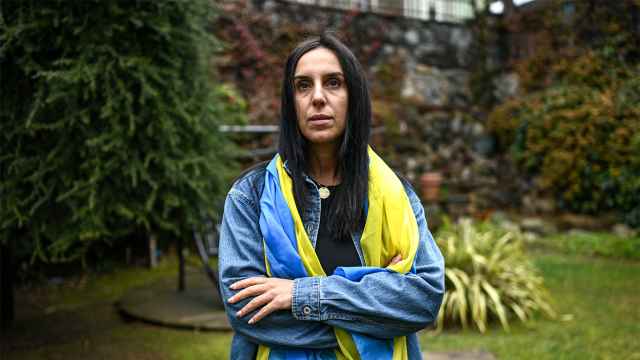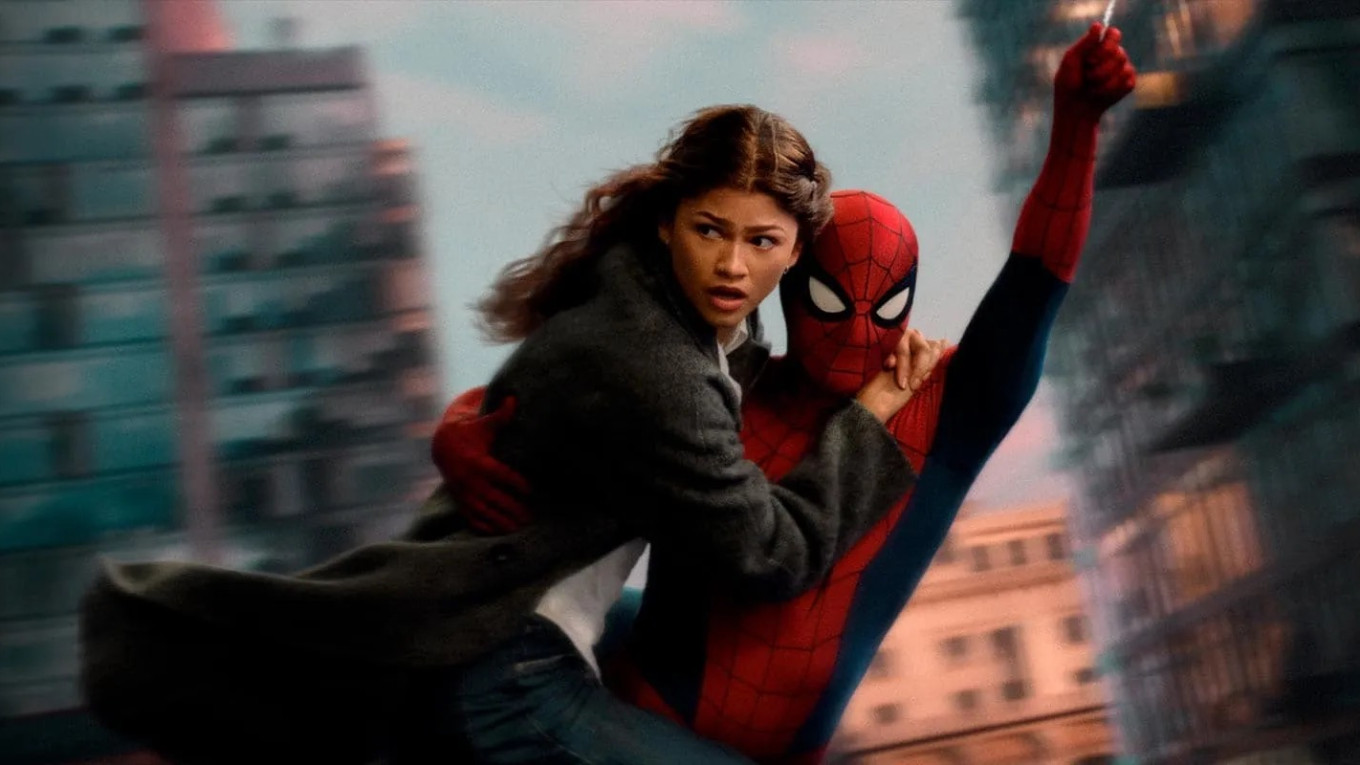
Last week, it emerged that the version of “Spider-Man: Brand New Day” to be released in Ukrainian cinemas would be three seconds shorter than the original. Those three seconds would have contained a snippet of a song by Monetochka, a Russian singer who has openly condemned the invasion of Ukraine, been declared a “foreign agent” and arrested in Russia in absentia. She was also nominated for the 2025 Nobel Peace Prize for launching a charitable project aimed at supporting Ukrainian refugees.
“I couldn’t care less about ‘good Russians’ and their views — my home has been occupied, and I hate everything associated with the Russian Federation. What about our Ukrainian dubbed version? Have they cut or replaced that episode? If they’ve left the song in, I’d rather return my tickets and not ruin my evening,” wrote a Ukrainian user on Threads. She was subsequently contacted by the cinema chain, which informed her that the episode had been cut from the Ukrainian version of the film.
The problem with such a stance lies not so much in its substance (hating someone solely for a nationality they did not choose is questionable) as in the way it stifles further discussion. Faced with an argument along the lines of “my home has been occupied,” no well-mannered person would attempt to challenge their interlocutor. Expressing sympathy may be the correct course of action from the point of view of etiquette, but it is hardly effective politically, however cold-blooded or cynical that may sound.
On the day the full-scale invasion began in 2022, the Masterskaya record label announced that it was suspending its collaboration with all Russian artists. At the time, representatives of the record label asked artists for understanding: “Yes, you probably all share the values we stand for … But the time has come to defend our values.”
There were many similar statements announcing the suspension of numerous Russian-Ukrainian cultural ties. As early as the first year of the invasion, these developments began to be reflected in Ukrainian legislation — for example, through high-profile laws banning public performances of Russian music or importing Russian books. Anti-war Russians, in turn, largely viewed these measures with understanding: how can there be any talk of cultural exchange while such a tragedy is unfolding?
It was a rather irrational, emotionally charged period at the start of the war, when several factors combined to entrench this paradigm. First, there was a genuine belief that severing all kinds of non-political contacts between the two countries might provoke a shift in public opinion in Russia that, in turn, could help bring the war to an end. Almost every well-known Ukrainian musician posted messages in Russian on social media, urging their audience in Russia not to believe the propaganda and to support the Ukrainian resistance.
Second, it was a moment of shock and overwhelming sympathy for Ukrainians, when even their most radical measures to distance themselves from Russia were viewed with almost no critical scrutiny. In part because few suspected that the war would drag on for so long and the illusion of a potential swift return to normality led many to turn a blind eye to these extremes. They were harsh and sometimes controversial, yet temporary and ultimately remediable features of wartime.
Against this backdrop, the much-needed dialogue between Ukrainians and a significant section of Russian society — which respects the sovereignty and territorial integrity of its western neighbor and openly opposes the Kremlin’s policies — has been postponed indefinitely. This protracted lack of mutual understanding has, in turn, given rise to some rather troubling incidents.
The Threads quote about Monetochka is a classic example of wartime rhetoric. Its author, and the many others who made similar calls, completely dehumanized the collective enemy by deliberately refusing to pay any attention to the most humane representatives of the enemy country (the abstract “good Russians”) and refusing to engage in any dialogue, resorting instead to emotional appeals.
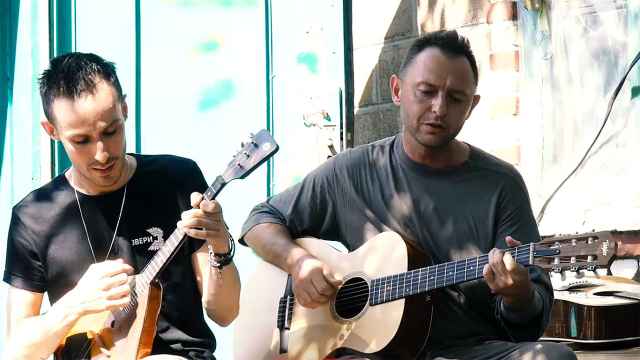
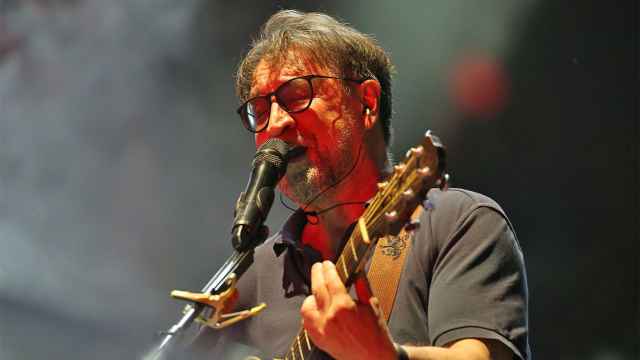
However, such rhetoric will never bring us back to the conversation on shared values that was cut short by the war. A few months after Masterskaya's statement was published, the popular Russian-speaking Ukrainian singer Ivan Dorn told The New York Times that he had sought to build a “cultural bridge” between Russia and Ukraine following the 2014 annexation of Crimea by continuing to perform in both countries. “I was confident that people who came to my concerts would not fight in a war against Ukraine,” Dorn said. In his view, he lost out to the Russian propaganda machine.
It was precisely via this cultural bridge that hundreds of Russian participants and applicants came to Dorn’s label, ready to work in the Ukrainian music industry, only to find themselves shut out precisely because of irrational wartime logic. I also very much doubt that there were even a couple of people among Dorn’s Russian concertgoers who had actually taken part in the war in Ukraine. Nor am I convinced that comparing the influence of relatively highbrow pop-house music with that of television propaganda on the masses is in any way accurate.
The fact that the very outbreak of war has led Russian and Ukrainian artists to distance themselves from each other and lose faith in art’s role as a force for peace is a huge tragedy, one that has deprived both countries of a unique platform for dialogue. Amid all of this, the discussion around Monetochka seems particularly sad because this is a rare case of a person with an impeccable public reputation who could have played a very important role in bringing people together.
Culture, of course, is hardly capable of stopping wars or undermining propaganda. That is not its function, and it is a huge mistake to ascribe such a role to it. The Russian philosopher Mikhail Bakhtin understood culture as a form of communication between people from different cultures, as well as an expression of an individual’s self-determination and their perception of the world. In the current political climate, it is hard to imagine a better investment in the future than reviving this interrupted communication between Russia and Ukraine, which was wrongly dismissed as ineffective despite the values shared by millions of people on both sides of the border.
A Message from The Moscow Times:
Dear readers,
We are facing unprecedented challenges. Russia's Prosecutor General's Office has designated The Moscow Times as an "undesirable" organization, criminalizing our work and putting our staff at risk of prosecution. This follows our earlier unjust labeling as a "foreign agent."
These actions are direct attempts to silence independent journalism in Russia. The authorities claim our work "discredits the decisions of the Russian leadership." We see things differently: we strive to provide accurate, unbiased reporting on Russia.
We, the journalists of The Moscow Times, refuse to be silenced. But to continue our work, we need your help.
Your support, no matter how small, makes a world of difference. If you can, please support us monthly starting from just $2. It's quick to set up, and every contribution makes a significant impact.
By supporting The Moscow Times, you're defending open, independent journalism in the face of repression. Thank you for standing with us.

Remind me later.