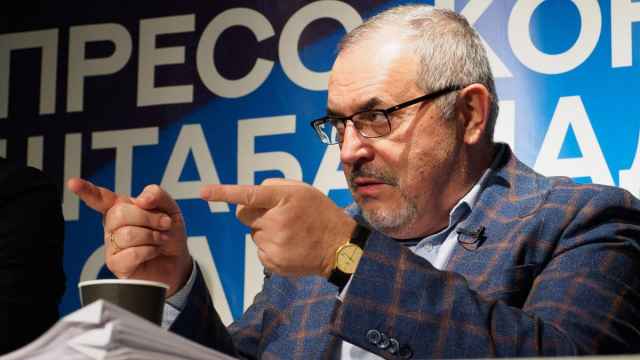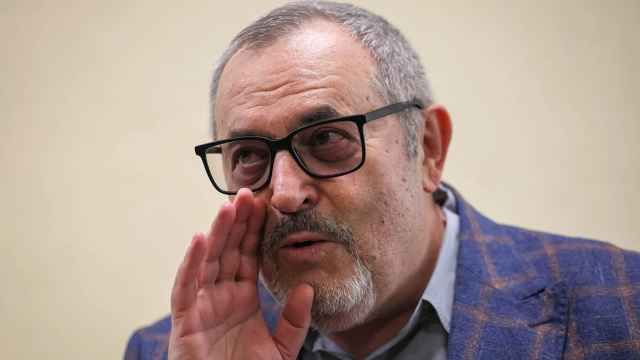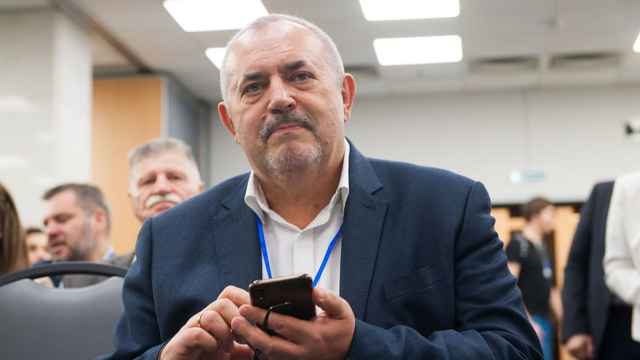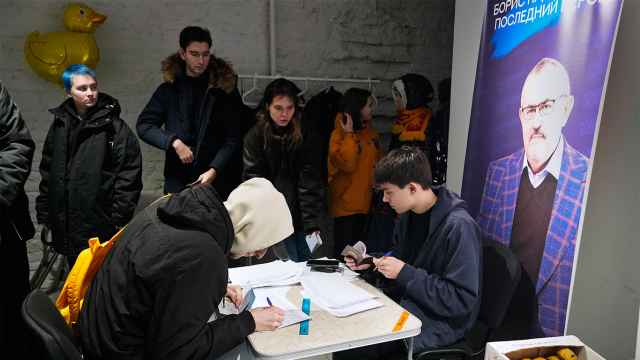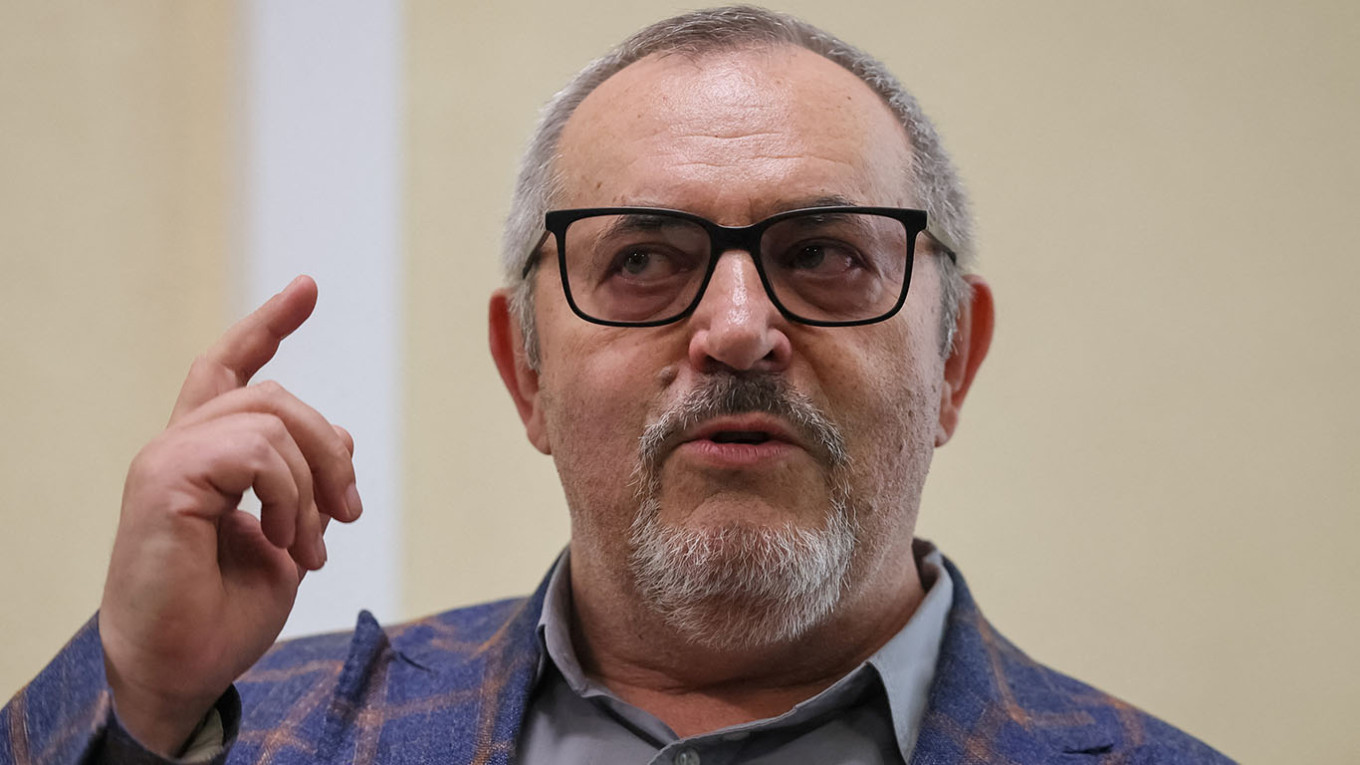
Opposition politician Boris Nadezhdin announced Monday that he has left Russia, days after he was forced to suspend his bid to run in parliamentary elections this September amid mounting pressure from the authorities.
“The good news is I’m alive and free. But sadly, not yet in Russia,” Nadezhdin said in a video recorded in front of the Eiffel Tower in Paris.
The video, published on Nadezhdin’s Telegram channel, comes after the anti-war politician was fined 1,000 rubles ($13) in July for displaying “extremist” symbols. Before that, he was designated a “foreign agent,” a label that prevents him from seeking public office.
It was not immediately clear when and how Nadezhdin, who said previously that he was banned from leaving Russia, left the country.
Nadezhdin said in the video published on his Telegram channel on Monday that he would now “take stock of the situation and figure out how to move forward in life.” He promised to provide updates about his future plans.
In an interview with Meduza last month, Nadezhdin said that he and his family were weighing whether to leave Russia due to growing pressure from the authorities. While Nadezhdin expressed a strong desire to stay, he acknowledged the threat of imprisonment, an outcome he said he is also trying to avoid.
Nadezhdin rose to prominence during a failed 2024 presidential bid to unseat Vladimir Putin on a pro-peace platform.
He previously served as an advisor to former Prime Minister Boris Nemtsov in the late 1990s, and then as an assistant to former Prime Minister Sergei Kiriyenko, who is currently deputy first chief of staff in the Kremlin. Nadezhdin was a State Duma lawmaker from 1999 to 2003. Between 2019 and 2024, he served as a councilman in the Moscow region.
A Message from The Moscow Times:
Dear readers,
We are facing unprecedented challenges. Russia's Prosecutor General's Office has designated The Moscow Times as an "undesirable" organization, criminalizing our work and putting our staff at risk of prosecution. This follows our earlier unjust labeling as a "foreign agent."
These actions are direct attempts to silence independent journalism in Russia. The authorities claim our work "discredits the decisions of the Russian leadership." We see things differently: we strive to provide accurate, unbiased reporting on Russia.
We, the journalists of The Moscow Times, refuse to be silenced. But to continue our work, we need your help.
Your support, no matter how small, makes a world of difference. If you can, please support us monthly starting from just $2. It's quick to set up, and every contribution makes a significant impact.
By supporting The Moscow Times, you're defending open, independent journalism in the face of repression. Thank you for standing with us.

Remind me later.