
Since the start of the war in Iran, conventional wisdom says that Russia has enjoyed a windfall from soaring oil prices so great that it has strengthened its position in the war in Ukraine. This has even trickled into the White House, which is quietly continuing to incentivize Russia to end the war, while Moscow claims that Kyiv is “militarily defeated.”
But that consensus has masked a far more overlooked truth. Rather than Russia, it is Ukraine that has recently seen its most successful stretch, both on and off the battlefield, in years — and perhaps since the war first began.
Start with the battlefield first. Not only has Ukraine managed to stave off Russia’s years-long offensive, forcing Moscow’s troops to advance at a slog so slow they are reminiscent of World War I. But in recent weeks, Kyiv has managed to capture more territory than the Kremlin for the first time in nearly three years. Perhaps most remarkably, some of those gains have come without the presence of Ukrainian troops whatsoever, according to President Volodymyr Zelensky. Two weeks ago, he revealed that Kyiv retook territory using a brigade of robots and drones alone for the first time.
Those gains are still incremental and hardly enough to force Russian troops out of Ukraine itself. But these new advances have come amid a parallel development that is putting the Russian military on the back foot while opening up much more of Russian infrastructure and Russia’s own territory to Ukrainian assaults.
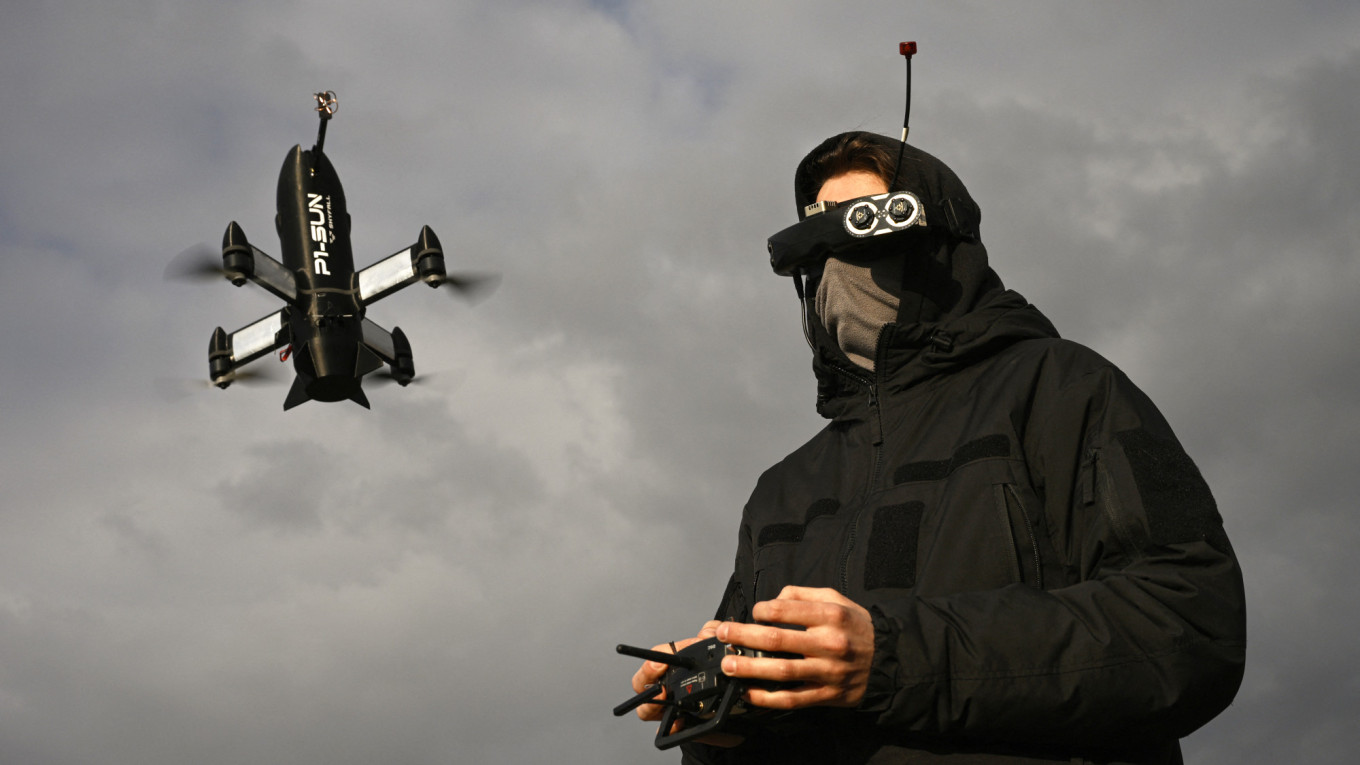
Much of that has to do with the surge in drone development coming from Ukraine, which has not only pushed back Russian troops but begun surpassing Russia in offensive operations overall. As data from both the Ukrainian Air Force and Russian Defense Ministry revealed, Ukraine has now surpassed Russia in terms of launching cross-border drone attacks, snatching a lead over Moscow when it comes to drone assaults.
Nor are these drone attacks just a few kilometers over the Russian border. In some cases, Ukrainian drone pilots can now hit targets from hundreds, and potentially even thousands, of kilometers away, allowing them to strike the Russian rear and beyond. Kyiv has swiftly closed whatever gap once existed with these kinds of long-range drone strike capabilities, so much so that Ukraine’s long-range drone industry has leapfrogged Russia’s in both quantity and quality.
All of this has only confirmed Ukraine’s role as a central node both in drone production and strategy. The only surprise in Ukraine’s surging geopolitical relevance in the aftermath of the Iran War is that anyone would find it surprising. After all, Kyiv has spent years perfecting the kinds of counter-drone tech that Iran’s Gulf adversaries (and others) now require. It should be completely unsurprising that, rather than turning to Russian tech or advice, places like Saudi Arabia, the United Arab Emirates and Qatar instead inked multiple decade-long defense deals with Ukraine.
Indeed, it is this transformation of Ukraine into a sought-after hub of all things drone technology and strategy — so much so that Kyiv now has a clear foothold in the Gulf — that has been the most remarkable turnabout of the Iran war.
Instead of Russia as the unalloyed benefactor of the conflict, it is Ukraine that has been reaping many, and perhaps even more, of the benefits.
To be sure, Russia has seen a certain amount of financial gain out of the recent oil spikes. But while the new windfall may patch some of Russia’s budget holes, it will only do so temporarily and will do little to fix the broader pressures undermining Russia’s fiscal standing. If anything, it will simply delay the inevitable reckoning facing Russia between funding its ongoing, stalemated war in Ukraine or restoring some sense of domestic economic stability.
Even the supposed windfall from the Iran War is increasingly drying up — sometimes quite literally. Already, some 40% of Russia’s oil export capacity has halted activity, thanks in large part to Ukraine’s increased drone capabilities. Videos peppering social media feeds show Russian oil facilities going up in smoke, sending billowing black acrid fumes across western and southern Russia.
All of that has only accelerated the tensions between pursuing an ongoing war and searching for economic stability. In late May, Russia’s largest state-controlled pollster, VtSIOM, revealed that President Vladimir Putin’s domestic approval rating had begun a notable slide, dropping some 12 points from just the start of this year.
There’s little reason to think that slide will end anytime soon. Russia’s GDP continues to contract, with stagflation continuing to stalk the country. All the while, casualties from Russia’s war continue to mount higher and higher, with Russia unable to replace troops lost — and with the war now dragging on long past the amount of time it took for the Soviets to help defeat the Nazis.
It is a reality that more and more people in Russia are aware of. Russian businessmen themselves are increasingly fed up with the failed war, with public criticism growing more and more prominent.
“Both I and the people I know feel a complete sense of hopelessness that nothing can be done about,” one Russian student recently said. “Living [in Russia] is difficult, expensive and bleak.”
This is the view that appears to be becoming the norm in Russia. And it is one that makes clear the reality that Russian victory in Ukraine is hardly an inevitable outcome — and now, perhaps, hardly likely at all.

A Message from The Moscow Times:
Dear readers,
We are facing unprecedented challenges. Russia's Prosecutor General's Office has designated The Moscow Times as an "undesirable" organization, criminalizing our work and putting our staff at risk of prosecution. This follows our earlier unjust labeling as a "foreign agent."
These actions are direct attempts to silence independent journalism in Russia. The authorities claim our work "discredits the decisions of the Russian leadership." We see things differently: we strive to provide accurate, unbiased reporting on Russia.
We, the journalists of The Moscow Times, refuse to be silenced. But to continue our work, we need your help.
Your support, no matter how small, makes a world of difference. If you can, please support us monthly starting from just $2. It's quick to set up, and every contribution makes a significant impact.
By supporting The Moscow Times, you're defending open, independent journalism in the face of repression. Thank you for standing with us.

Remind me later.