
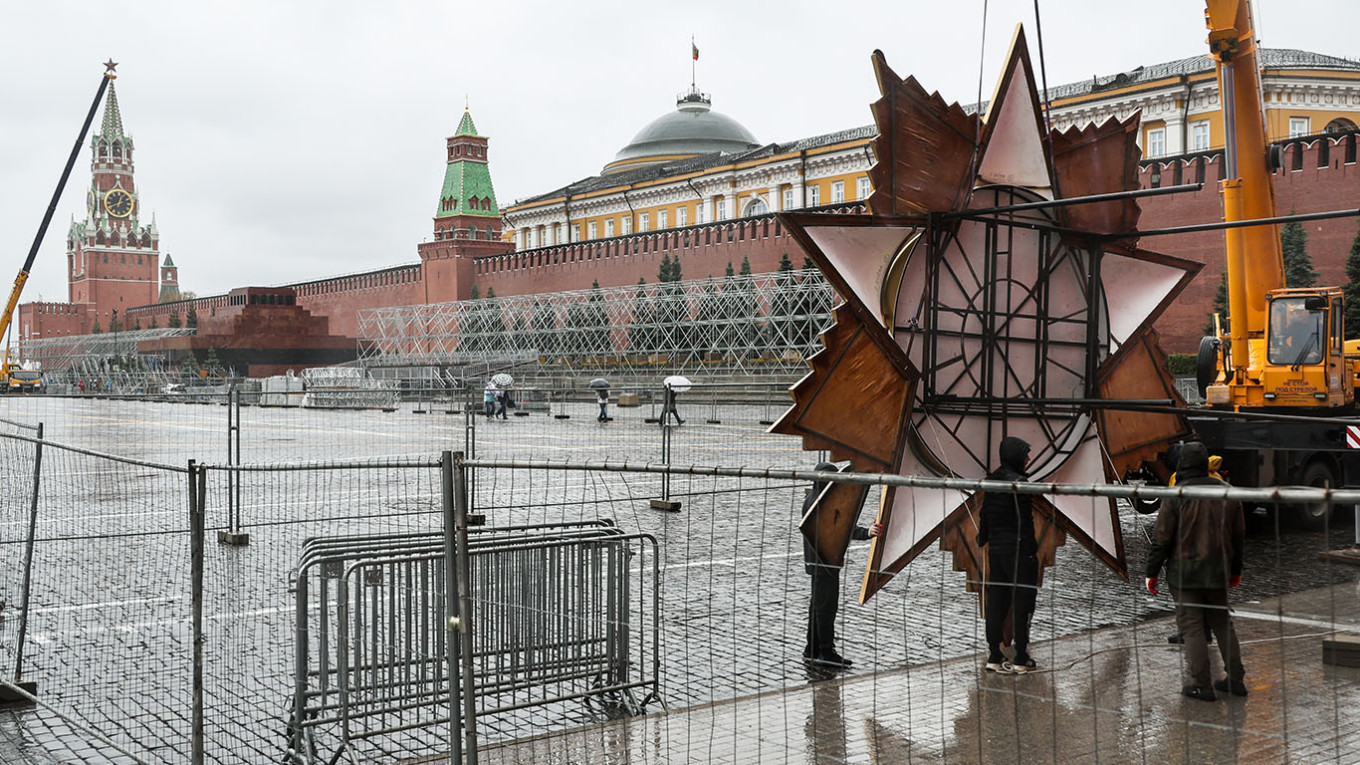
Russia’s annual Victory Day parade on Red Square, which marks the Soviet victory over Nazi Germany in World War II, will be held without military vehicles for the first time in nearly 20 years this May 9.
Speculation has swirled as to why the Kremlin would break with its long-standing tradition of showcasing tanks, missile systems and other military equipment at the event, one of President Vladimir Putin’s most important political spectacles.
Some suggested the move was due to the risk of Ukrainian drones striking the capital, while others said it might reflect “battlefield pressures” on Russia’s military as the fifth year of its full-scale invasion of Ukraine drags on.
What is going on?
Several military schools, cadet corps, “as well as the military hardware column, will not be participating in this year's military parade due to the current operational situation,” the Defense Ministry said in its midnight announcement on Wednesday.
Kremlin spokesman Dmitry Peskov said the changes were tied to what he described as the “terrorist activities” of the Ukrainian government.
“The Kyiv regime, which is losing territory every day, losing ground on the battlefield, has now gone all out with its terrorist activities,” Peskov told reporters.
Russian military blogger and Komsomolskaya Pravda war correspondent Alexander Kots suggested the parade itself was almost canceled because of the threat posed by Ukrainian drones.
“It might not have taken place at all due to the terrorist threat,” Kots wrote on Telegram. “But the Supreme Commander has decided to honor tradition, albeit in a scaled-down form.”
Ruslan Leviev, co-founder of the Conflict Intelligence Team open-source military analysis project, said the main vulnerability was likely not the parade itself, but the staging areas where vehicles are assembled and stored ahead of rehearsals.
“When military equipment participates in parades, it is initially parked and prepared for rehearsals and the parade itself in remote areas outside Moscow, in specially designated zones,” Leviev told the exiled broadcaster TV Rain. “It would be much easier to strike such areas with drones or missiles.”
Leviev added that both Russia and Ukraine have lost significant numbers of air defense systems during the war, making it more difficult for both sides to counter long-range strikes.
A military expert told The Moscow Times on condition of anonymity that the Kremlin could not afford to risk any disruption during the nationally televised event.
“If something happens, if they stop in the middle of the square, then there would be a traffic jam [on Red Square] and it would look very bad on TV,” the expert said. “It would be very hard to hide, and the whole political effect of the Victory Day parade would be moot.”
The expert described the move as a “purely political” decision aimed at avoiding embarrassing scenes online or on television. They also said they expected mobile internet shutdowns in Moscow for the duration of the Victory Day celebrations.
How unusual is this?
Victory Day parades have generally been less extravagant since Russia launched its invasion of Ukraine in 2022, though last year’s 80th anniversary celebrations still featured about 11,000 troops and 150 military vehicles, according to the Russian government.
Twenty-seven foreign leaders as well as other international officials visited Moscow for the 2025 parade.
By comparison, as of Wednesday, Slovak Prime Minister Robert Fico was the only current world publicly confirmed to attend this year’s event. Former Bosnian Serb leader Milorad Dodik has also said he will travel to Moscow, according to Gazeta.ru.
Peskov said earlier this week that the Kremlin would release the full guest list at a later date.
John Foreman, a former British defense attache to Moscow, told Reuters that a lavish military parade could attract extra criticism at a time when the government’s approval rating is down, Ukrainian drones strike targets across Russia almost daily and Russians face widespread internet outages.
The anonymous military expert also said the possibility of air raid alerts in Moscow on May 9 was likely enough to deter the Kremlin leadership.
That possibility alone might “incentivize some of the air defenses to be moved from the front back to Moscow, opening even more gaps in Russian territory,” they said.
“There are too many hurdles for not such a significant political impact.”
A Message from The Moscow Times:
Dear readers,
We are facing unprecedented challenges. Russia's Prosecutor General's Office has designated The Moscow Times as an "undesirable" organization, criminalizing our work and putting our staff at risk of prosecution. This follows our earlier unjust labeling as a "foreign agent."
These actions are direct attempts to silence independent journalism in Russia. The authorities claim our work "discredits the decisions of the Russian leadership." We see things differently: we strive to provide accurate, unbiased reporting on Russia.
We, the journalists of The Moscow Times, refuse to be silenced. But to continue our work, we need your help.
Your support, no matter how small, makes a world of difference. If you can, please support us monthly starting from just $2. It's quick to set up, and every contribution makes a significant impact.
By supporting The Moscow Times, you're defending open, independent journalism in the face of repression. Thank you for standing with us.

Remind me later.