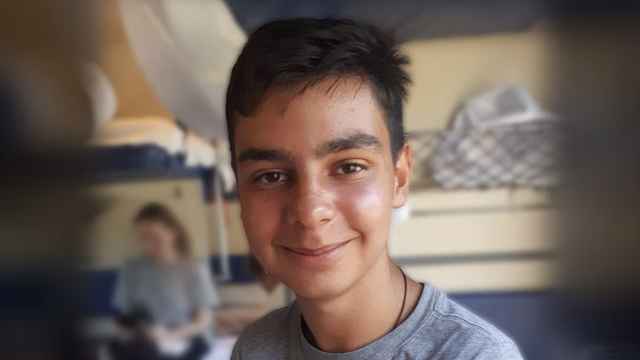

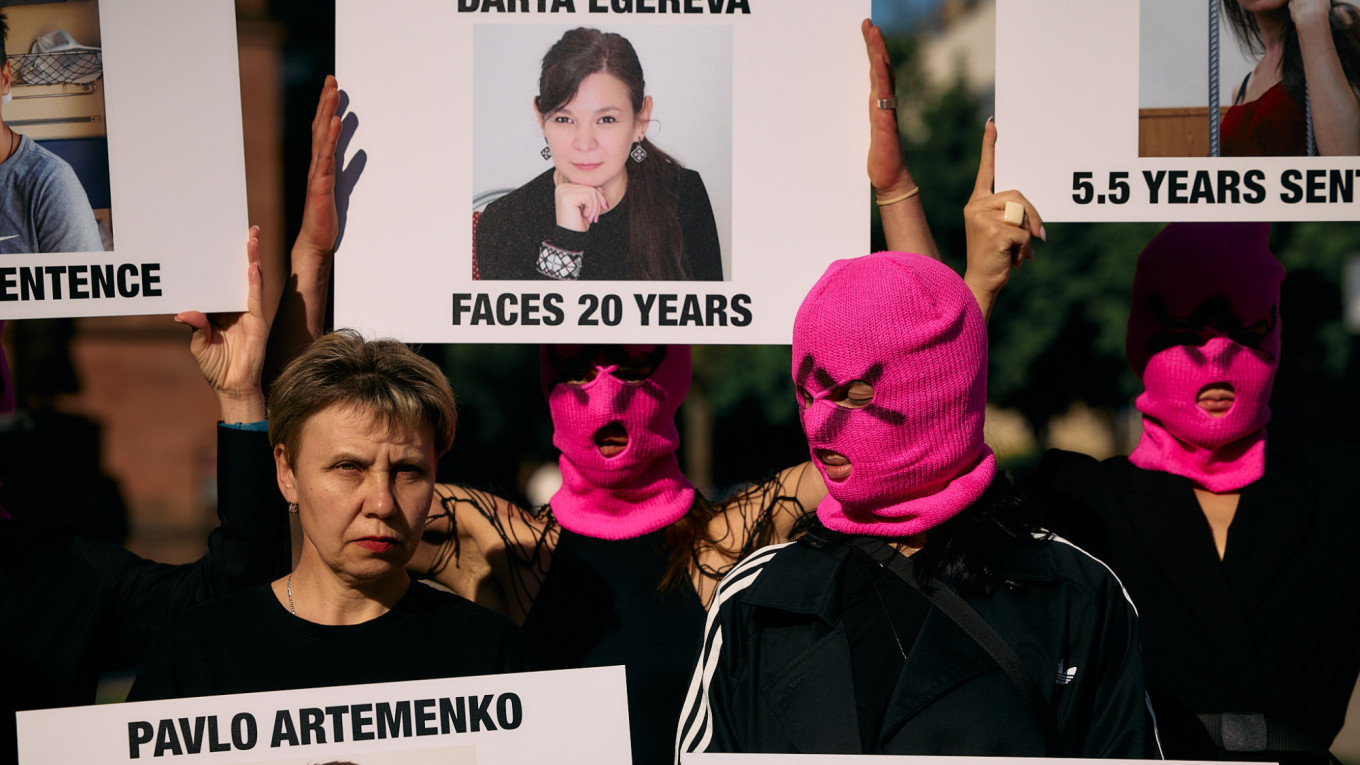
“He dreamed, like everyone, of living in a free country,” Valentina Shapyrko said of her son, Ukrainian soldier Pavlo Artemenko, who is imprisoned in Russia.
Artemenko, 29, fought in the defense of Mariupol, the strategic port city that was almost entirely destroyed during an 80-day Russian siege in the early months of Moscow’s full-scale invasion of Ukraine. He served in Ukraine’s Azov Battalion, which Russia labeled a “terrorist” organization in August 2022.
Last year, a Russian court sentenced him to 24 years in a maximum-security penal colony on terrorism charges. Nobel Peace Prize-winning rights group Memorial later designated him a political prisoner.
“My son was convicted for defending his country,” Shapyrko said this week at a press conference in Strasbourg, France. “People who defended their homeland, who never entered the territory of another state, are being tried for terrorism — this is terrifying.”
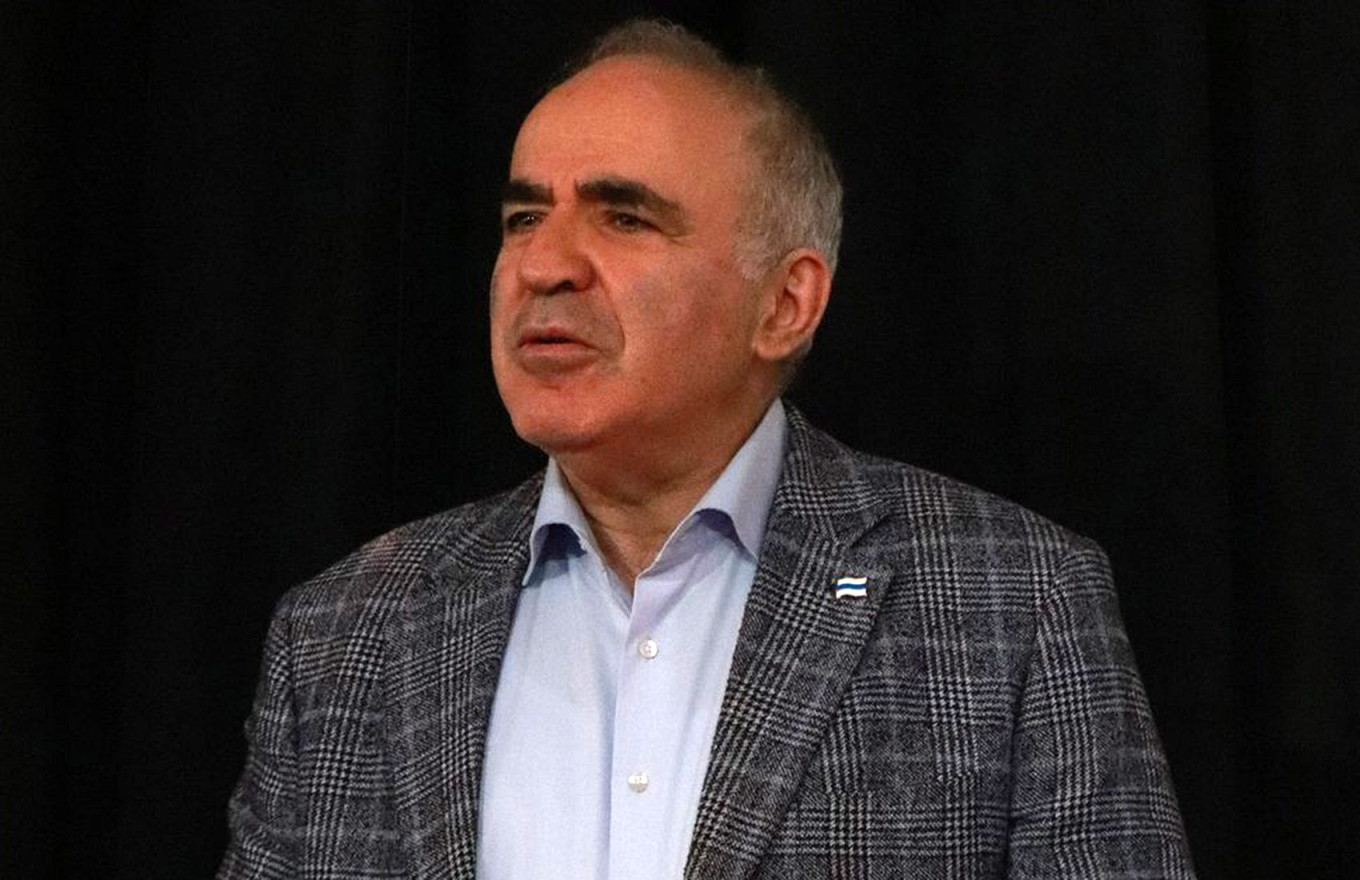
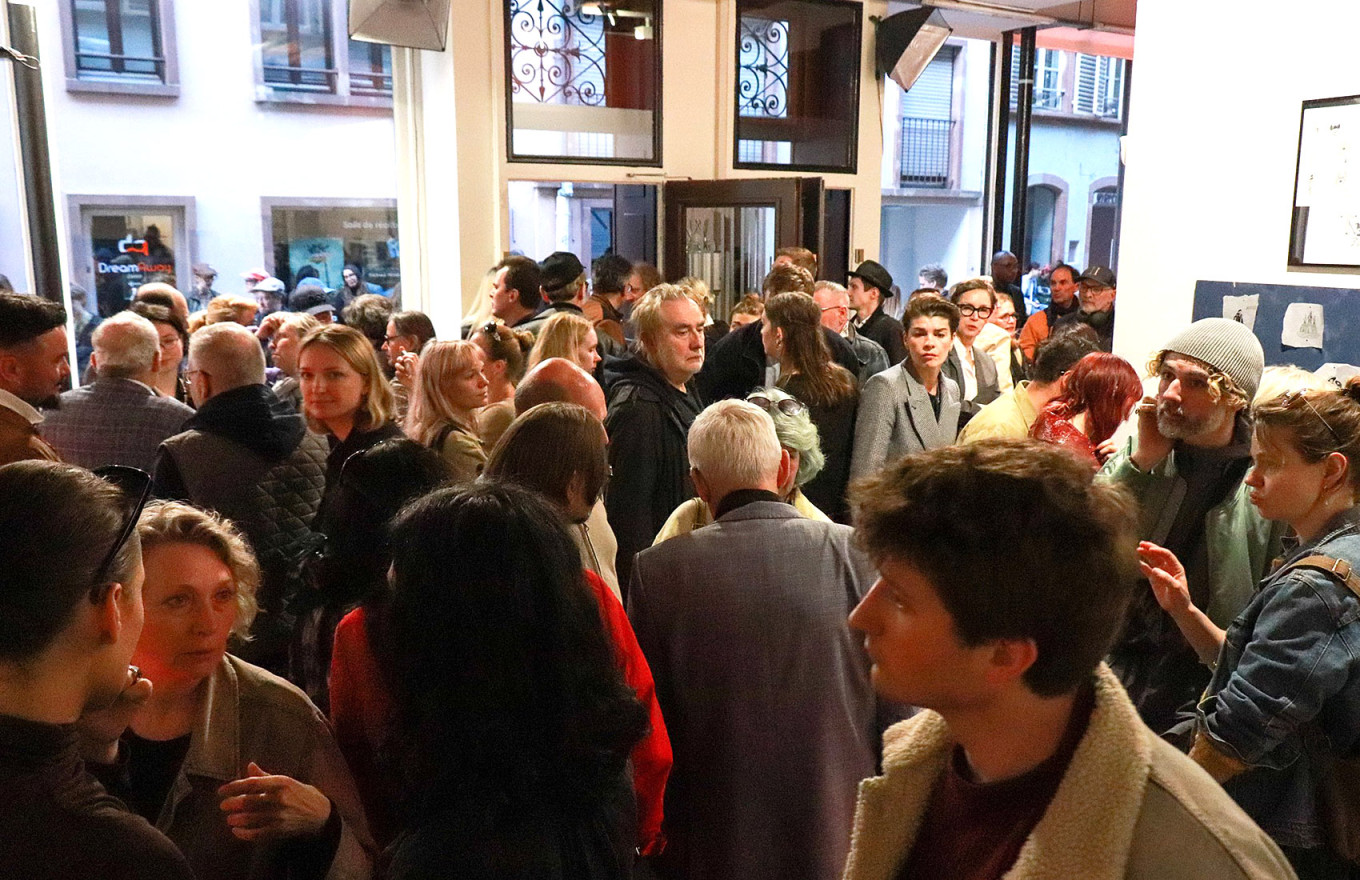
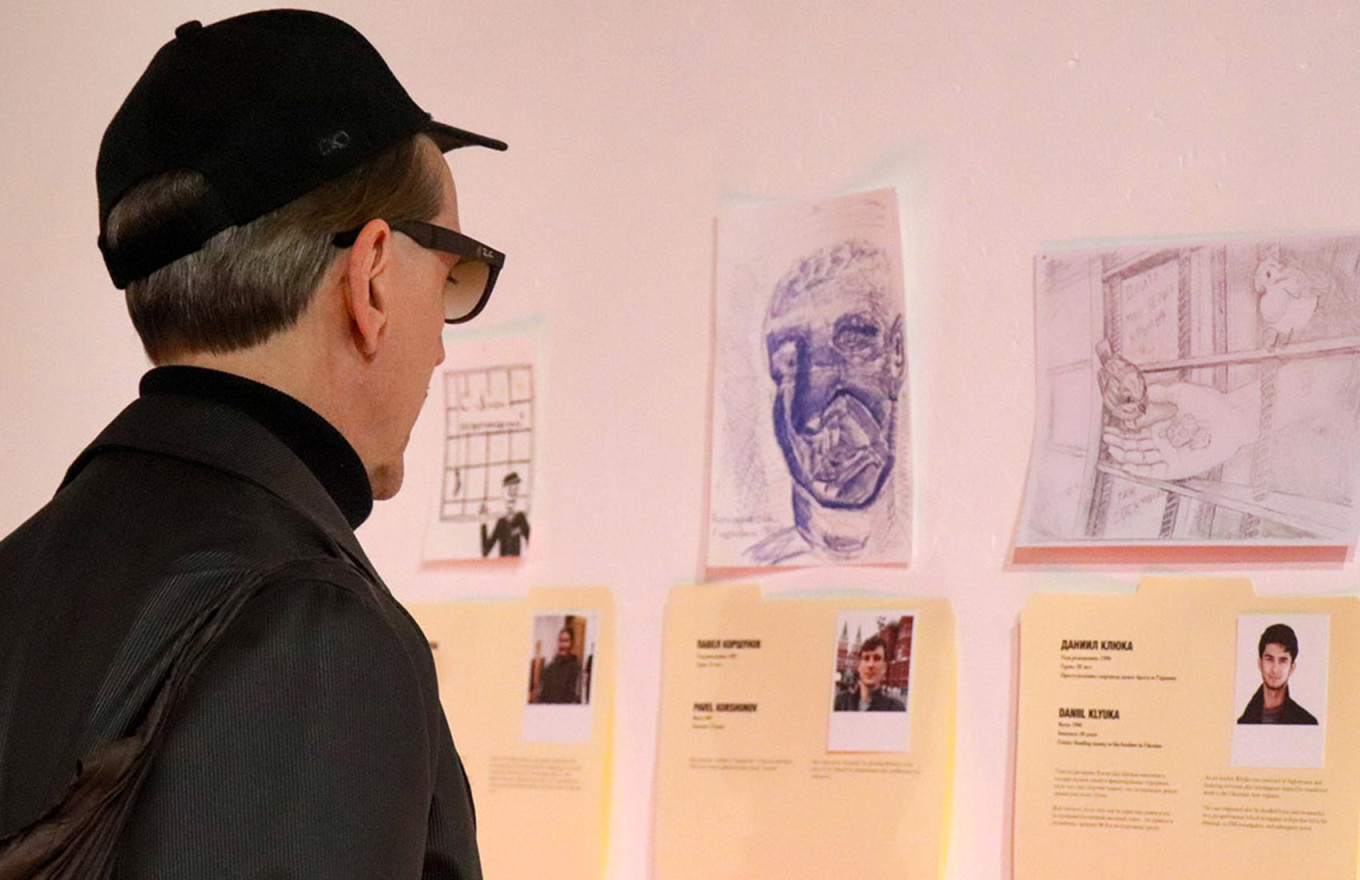
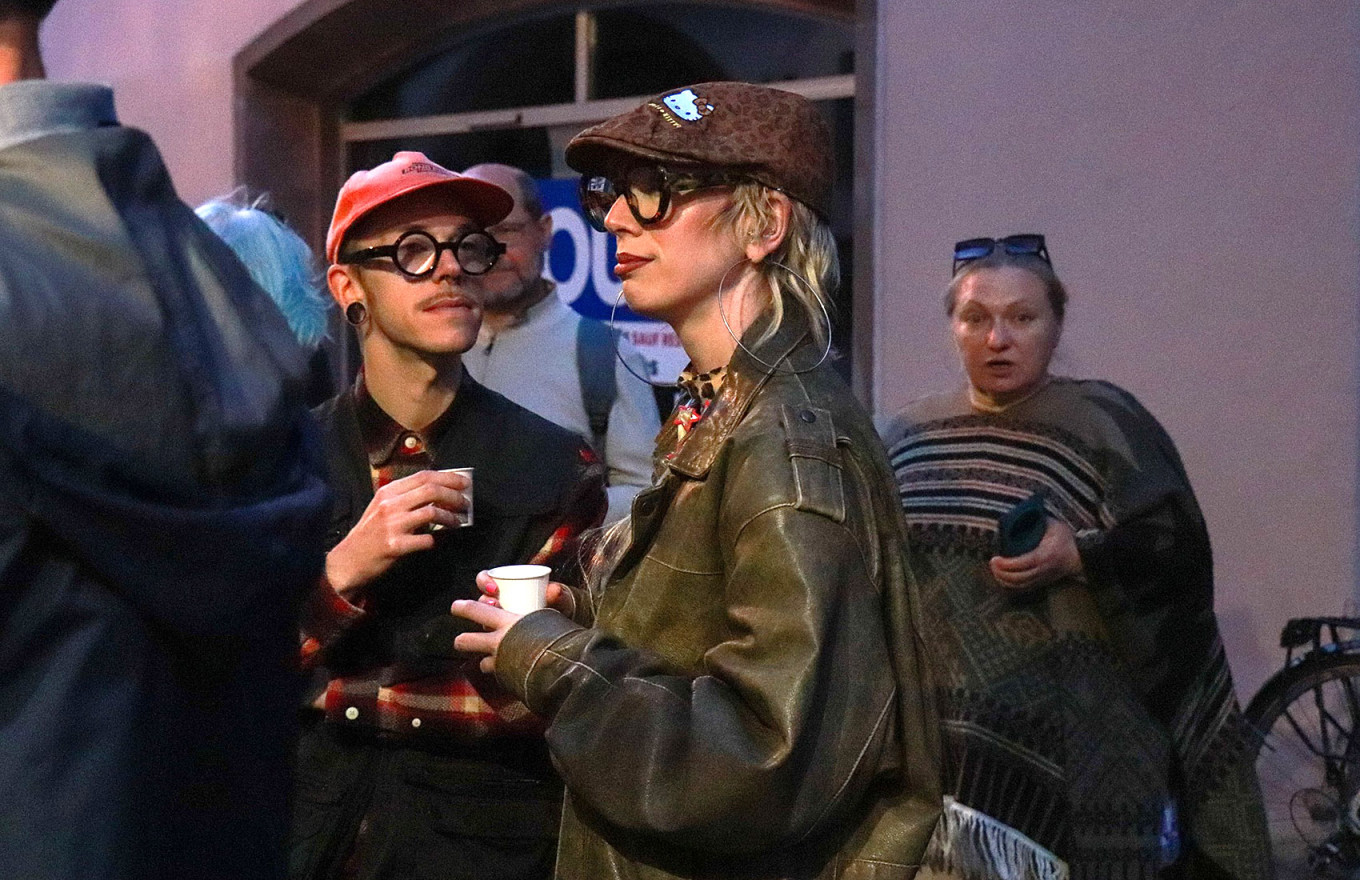
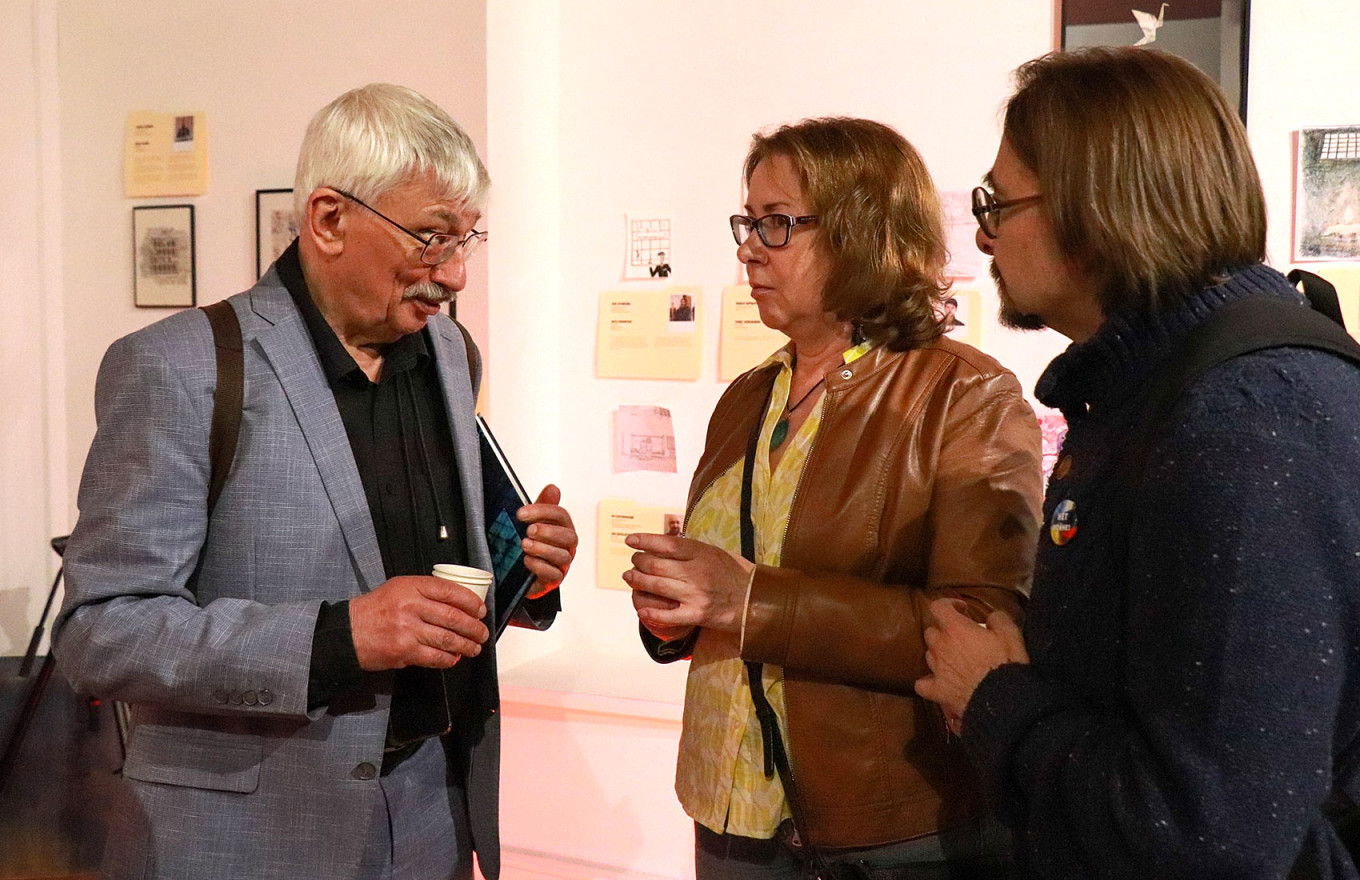
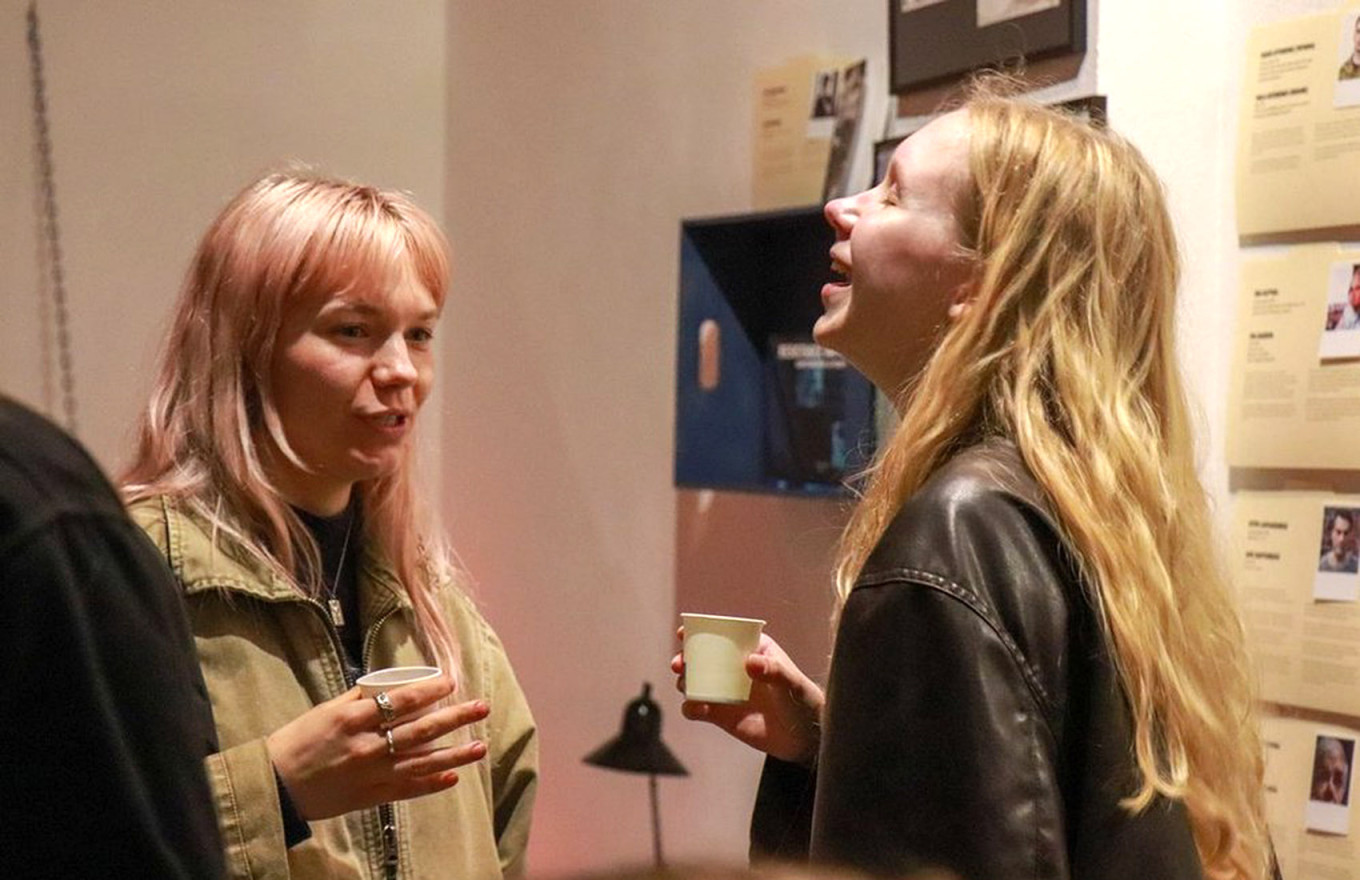
Shapyrko was speaking at “Resistance Imprisoned,” a new exhibition at Strasbourg’s Ritsch-Fisch Galerie dedicated to Russian and Ukrainian political prisoners held by the Kremlin.
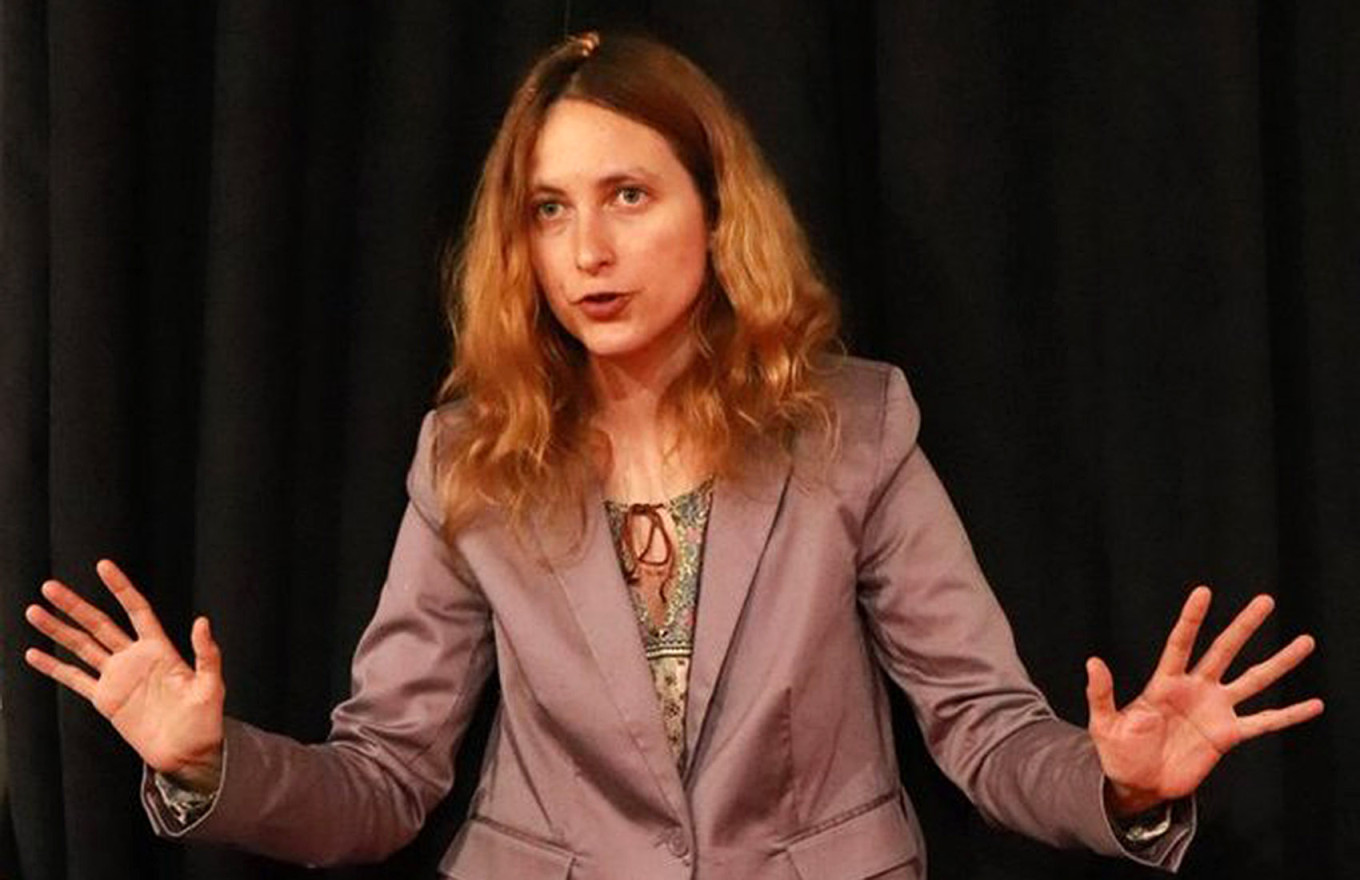
“We wanted to show solidarity and highlight both Russian political prisoners and Ukrainian civilians and prisoners of war,” said Pussy Riot founder Nadya Tolokonnikova, who curated the exhibition.
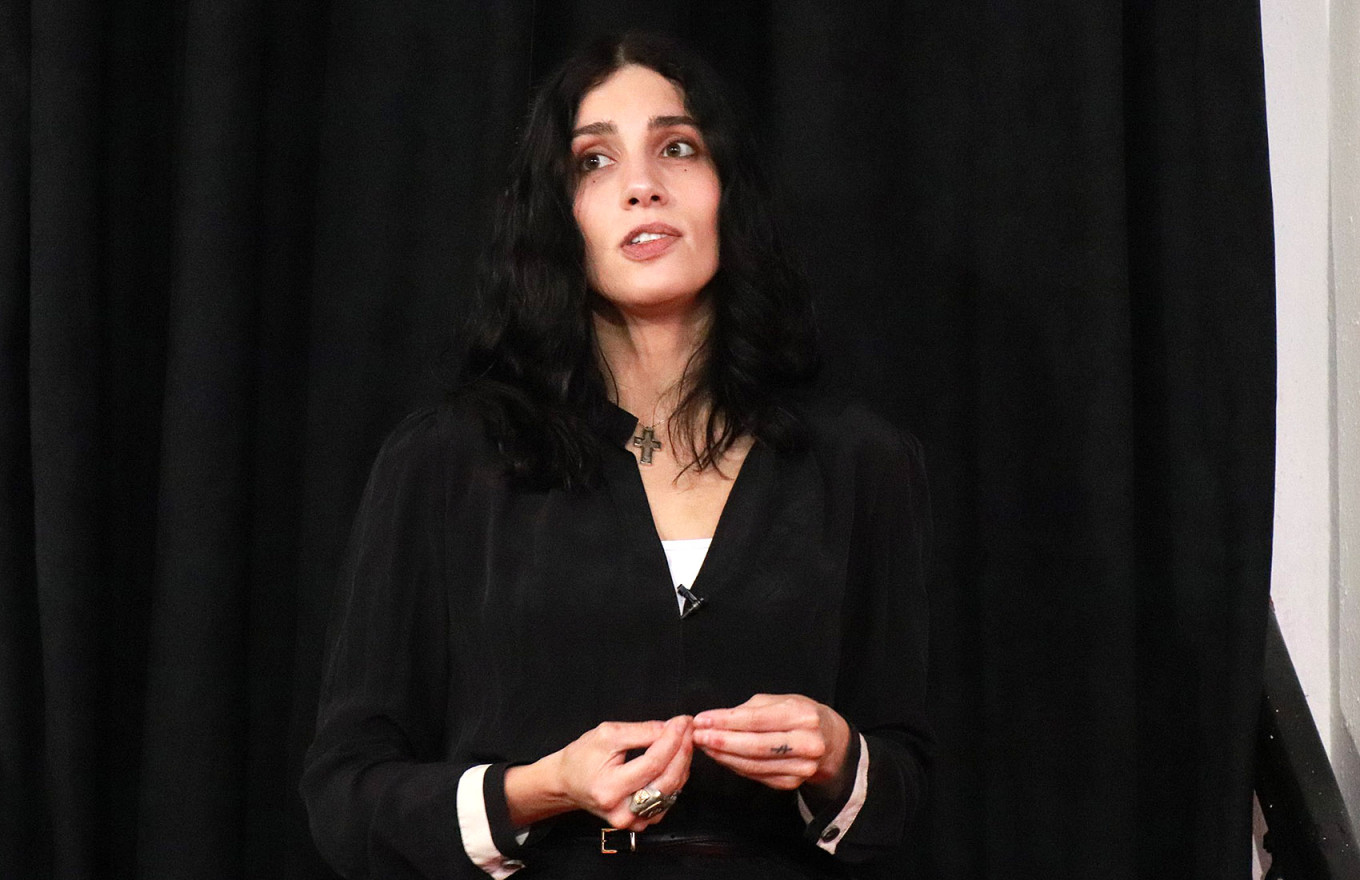
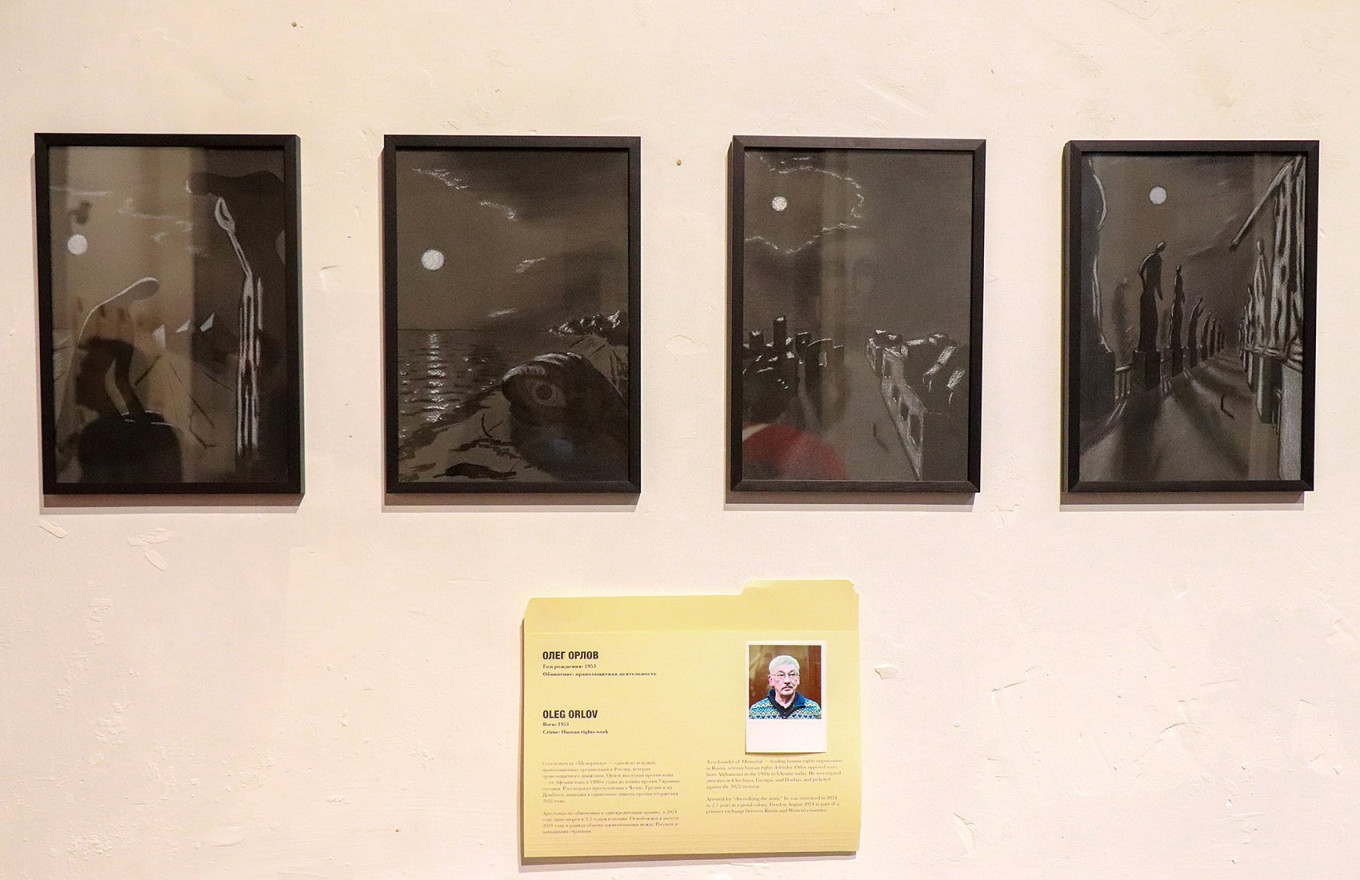
The exhibition features around 50 works and personal accounts created by current or former political prisoners, including artists, activists and politicians jailed for anti-war protests, as well as Ukrainian soldiers and civilians imprisoned in Russia.
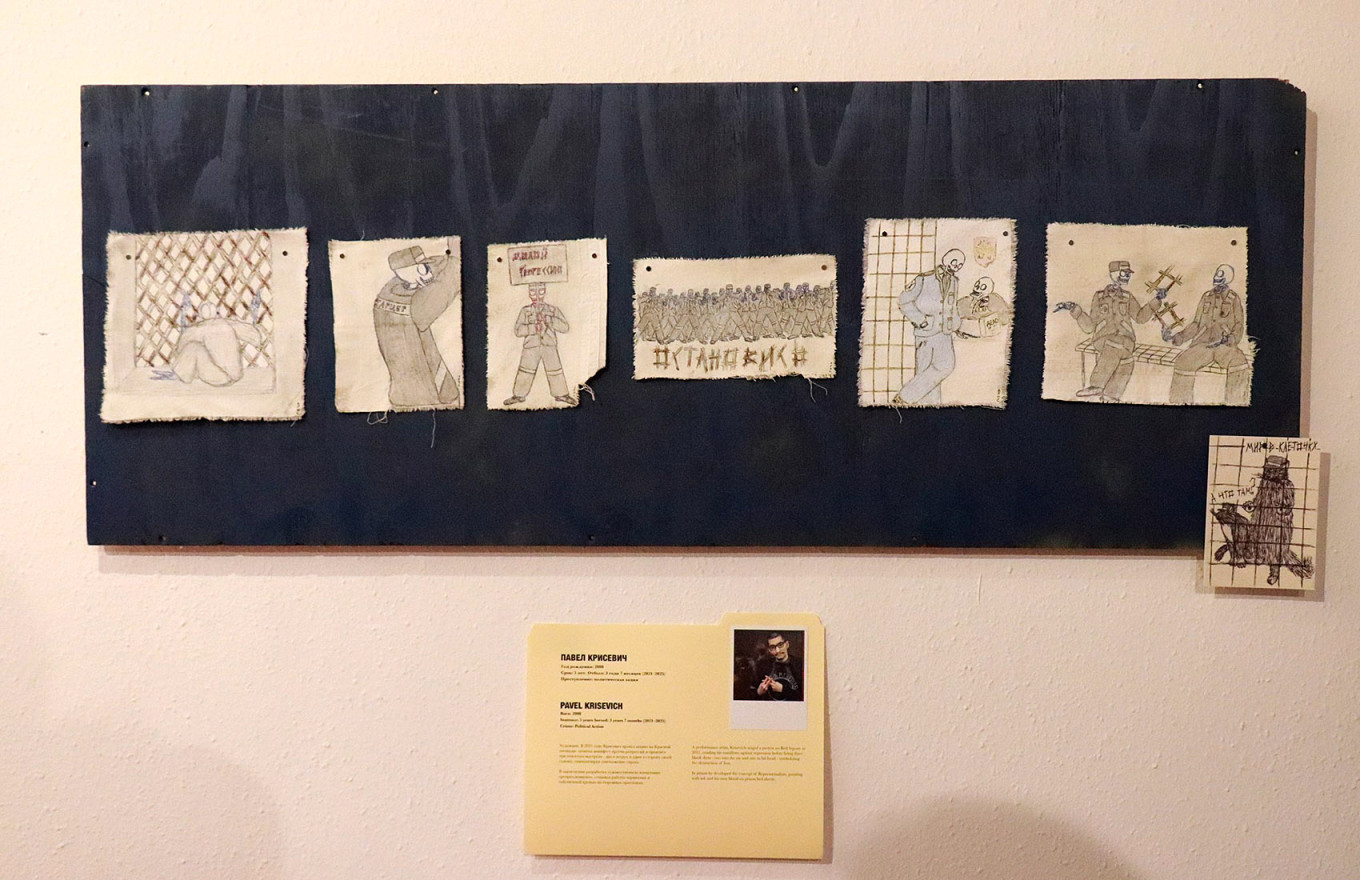
Several of the artists whose works are on display have since been released. Among them is performance artist Pavel Krisevich, who spent nearly four years behind bars and created works using ink and his own blood on prison bedsheets.
Also featured is Alexandra Skochilenko, the artist imprisoned for replacing supermarket price tags with anti-war messages in 2022. She was later released as part of a 2024 prisoner exchange between Moscow and the West.
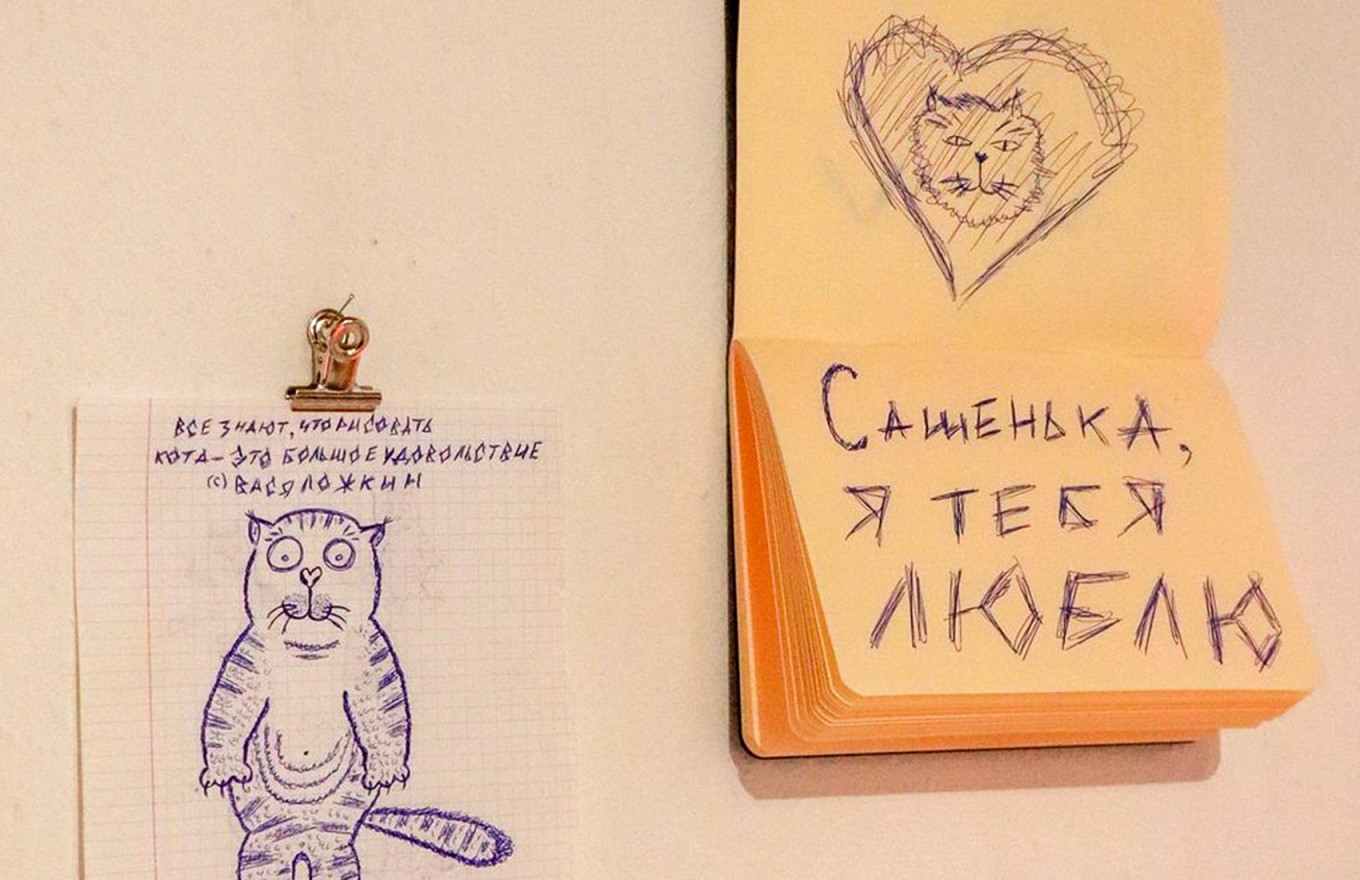
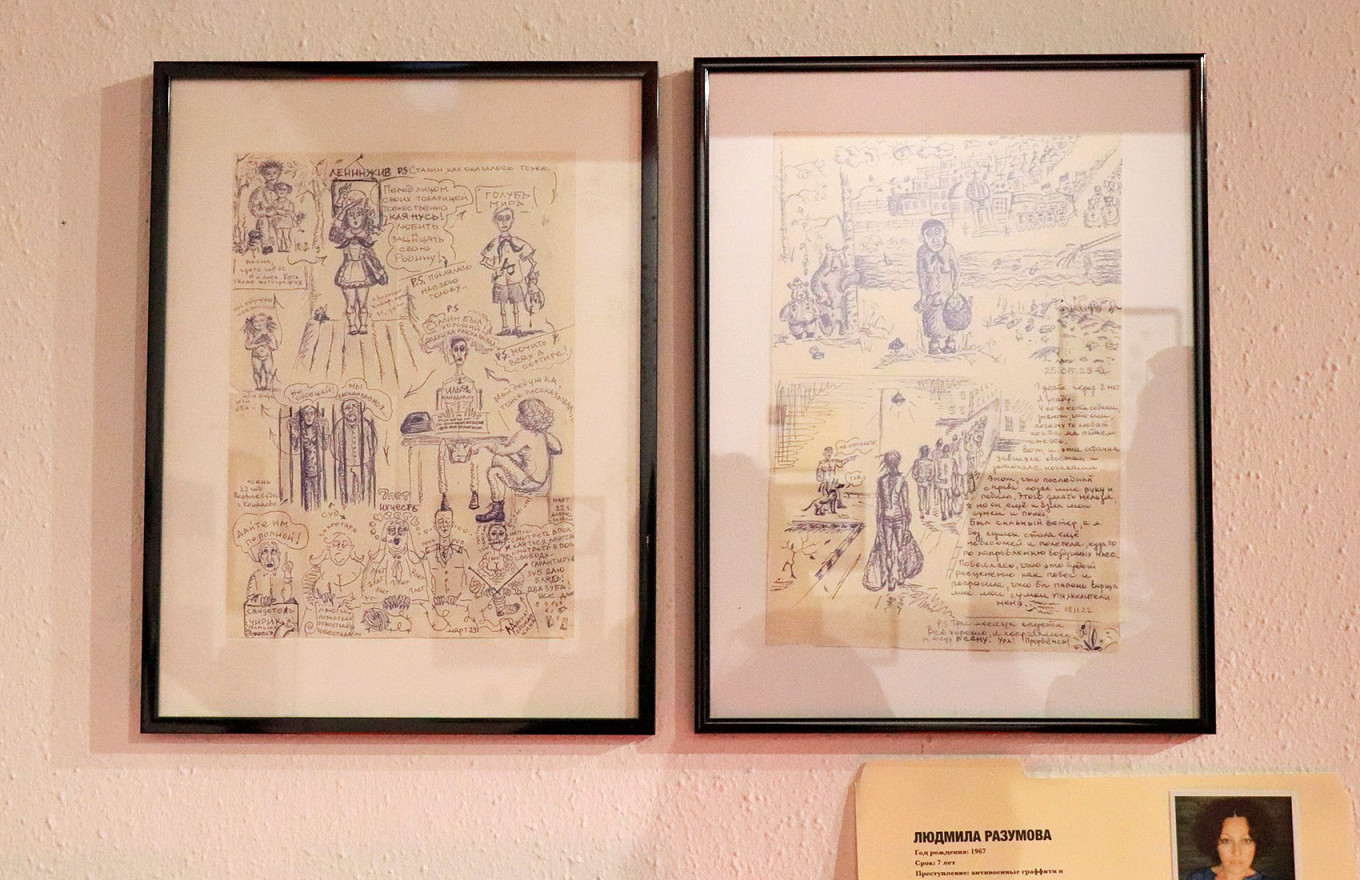
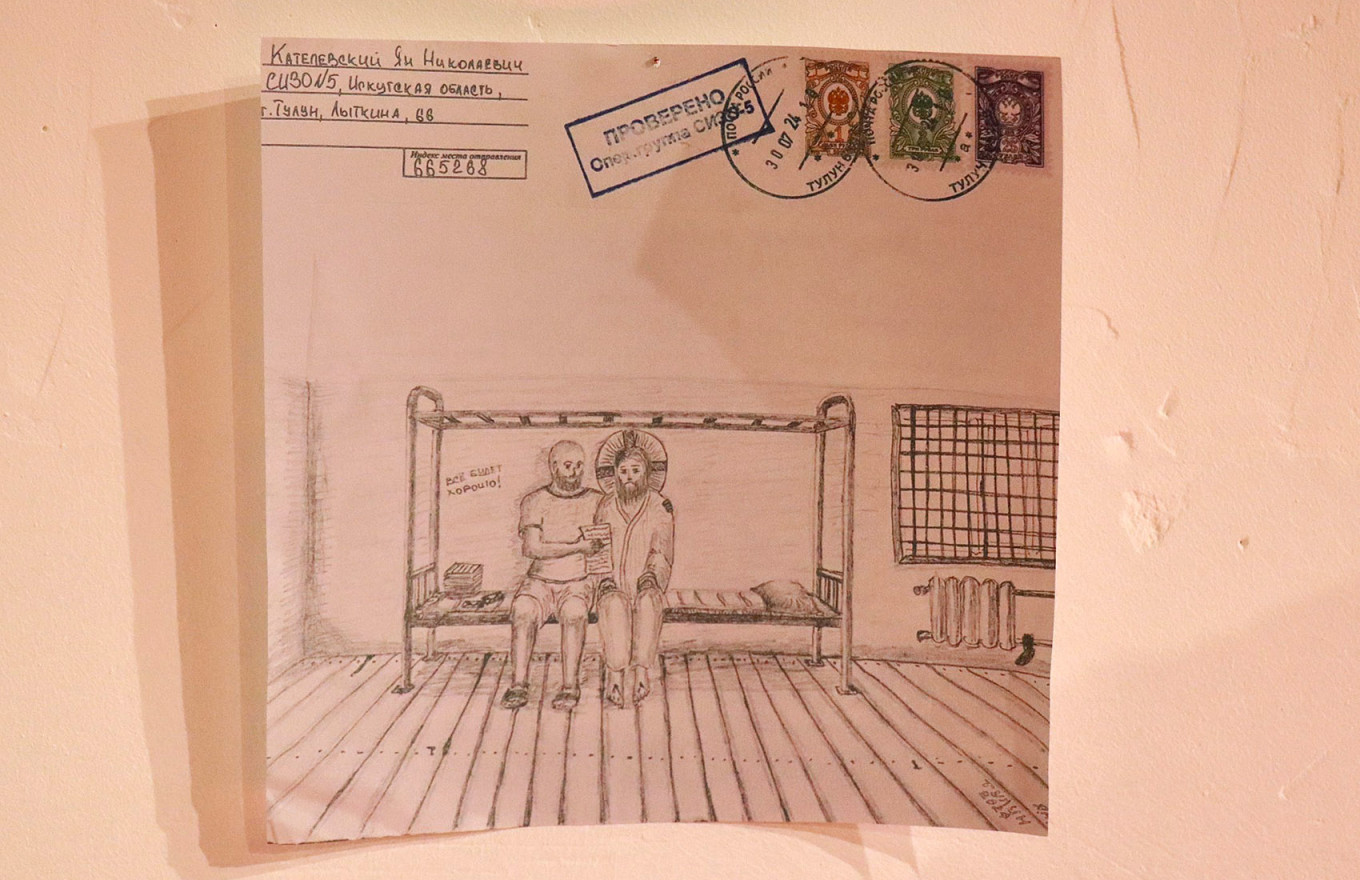
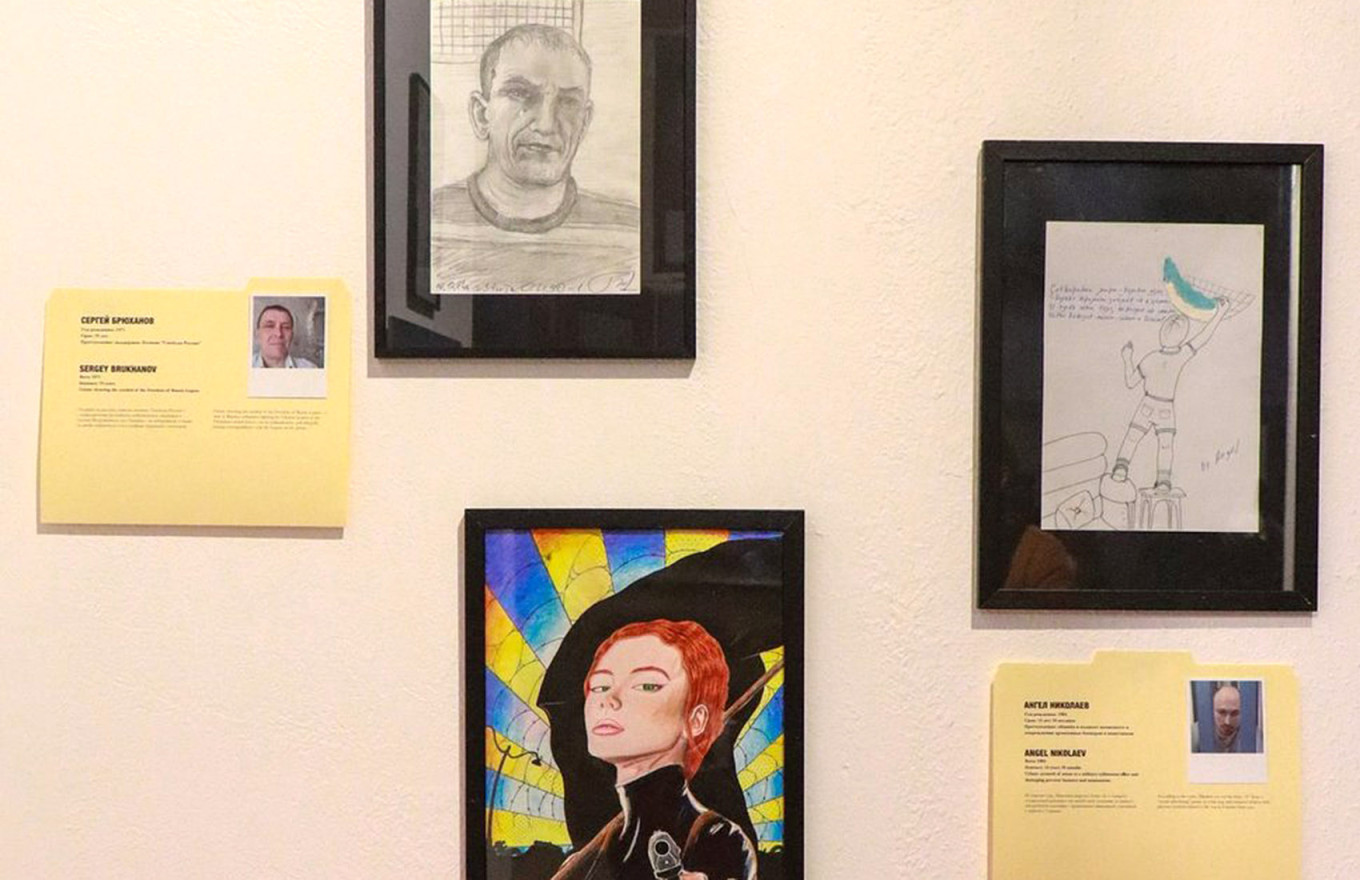
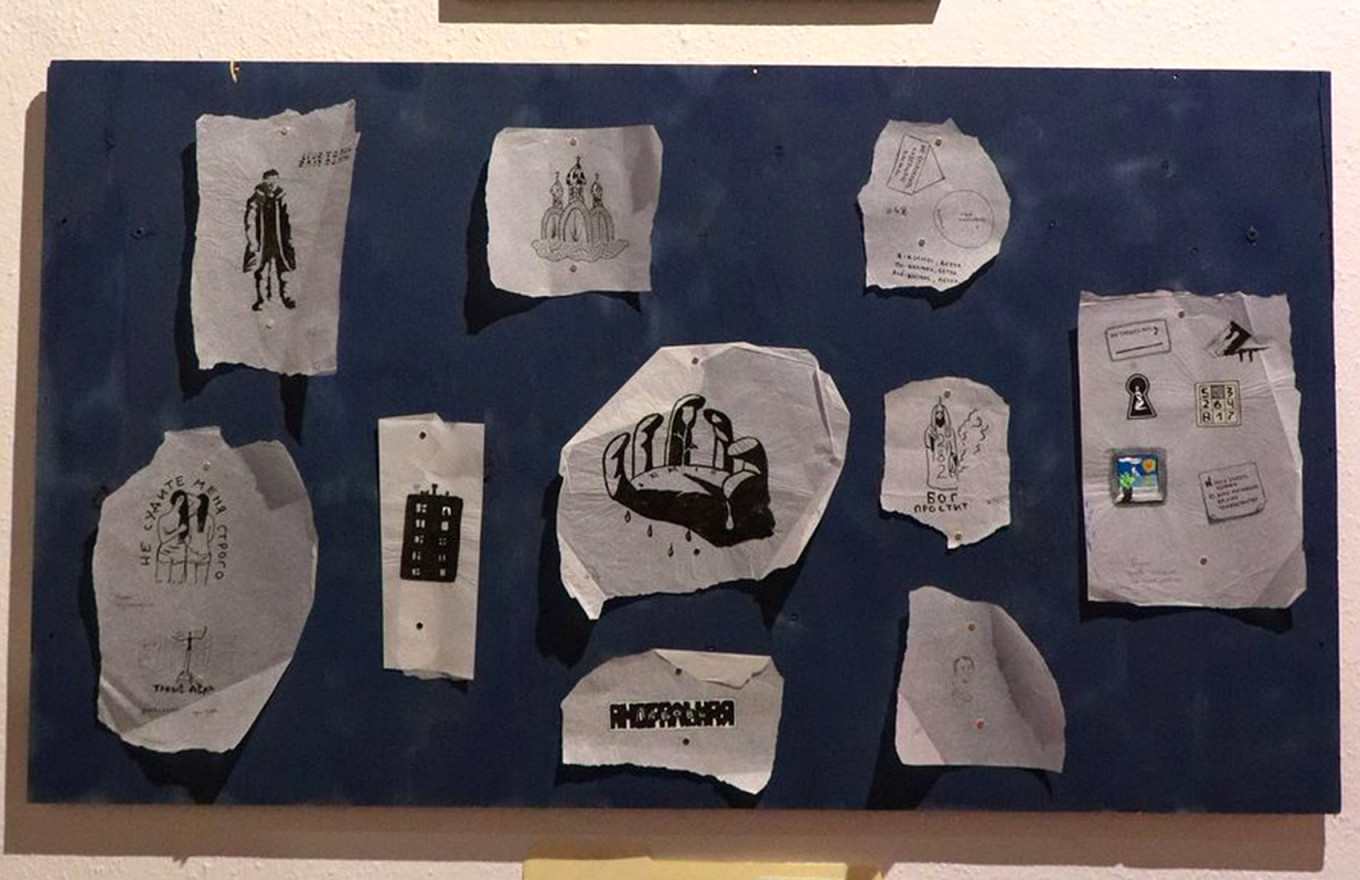
Another political prisoner represented in the exhibition is Yegor Balazeikin, who at age 16 threw Molotov cocktails at two military recruitment offices in what he said was an anti-war protest. He was sentenced to six years in prison and remains behind bars.
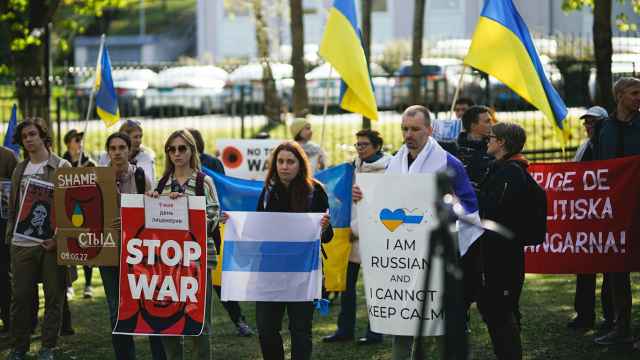
“We wanted to show that those imprisoned who spoke out against the Putin regime, against the war in Ukraine and supported Ukraine in any ways, are our own prisoners of war,” Tolokonnikova told The Moscow Times.
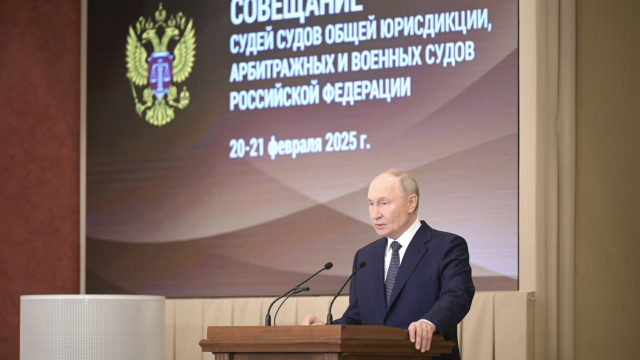
“Putin declared a war against such people,” said Tolokonnikova, who herself served time in a penal colony after Pussy Riot’s 2012 “Punk Prayer” protest against President Vladimir Putin in Moscow’s Christ the Savior Cathedral.
Rights groups have repeatedly criticized the harsh conditions political prisoners face in Russian prisons, including repeated placement in punishment cells, limited access to medical care and restricted contact with their families.
Tolokonnikova said the exhibition was also aimed at improving conditions for prisoners by drawing international attention to their cases.
“From my own experience, I know that the more people talk about you while you are in prison, the more protection you have,” she said.
Memorial currently recognizes 1,534 people as political prisoners in Russia, including 469 imprisoned for supporting Ukraine.
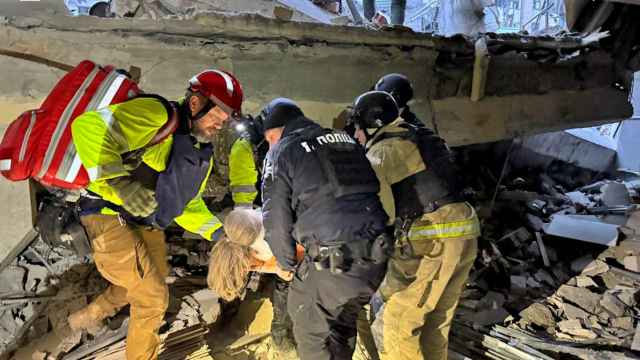
Ukrainian President Volodymyr Zelensky said in February that around 7,000 Ukrainian citizens were being held in Russian prisons.
“Politically motivated unlawful criminal prosecution of Ukrainian prisoners of war, as well as the politically motivated and unlawful detention of Ukrainian civilians in occupied territories, has also reached massive proportions,” Memorial said.
The group said at least 39 Ukrainian citizens had been sentenced to life imprisonment in Russia.
For families like Shapyrko’s, one of the main demands remains prisoner exchanges. Russia and Ukraine regularly conduct swaps and had exchanged 675 prisoners of war and civilians as of last month.
“The numbers are still low. We don't know whether [my son] will be exchanged, whether we will be able to get him back,” Shapyrko said at one of the rare public events where Russian opposition figures and Ukrainian civil society members have engaged in dialogue since the war began.
Another speaker in Strasbourg was Alona Kasianiuk, who spoke about her brother Ihor Kim, a Ukrainian soldier sentenced to 27 years in prison for defending Mariupol in 2022 as part of the Azov Battalion alongside Artemenko.
The Azov Battalion was formed in 2014 as a far-right volunteer paramilitary group fighting Russian-backed separatists in eastern Ukraine, but was later restructured and integrated into Ukraine’s National Guard. Moscow has repeatedly cited Azov’s early far-right links to justify its stated goal of the “denazification” of Ukraine.
Russia has aggressively prosecuted captured members of the Azov regiment, handing down lengthy prison sentences. Memorial said the decision to designate Azov as a terrorist organization was “clearly aimed primarily at enabling show trials of Ukrainian servicemen.”
Kasianiuk said her brother suffered severe shrapnel injuries to his shin, as well as kidney problems and a concussion.
“He needs medical care. Now we only want to get him out of there right now,” she said.
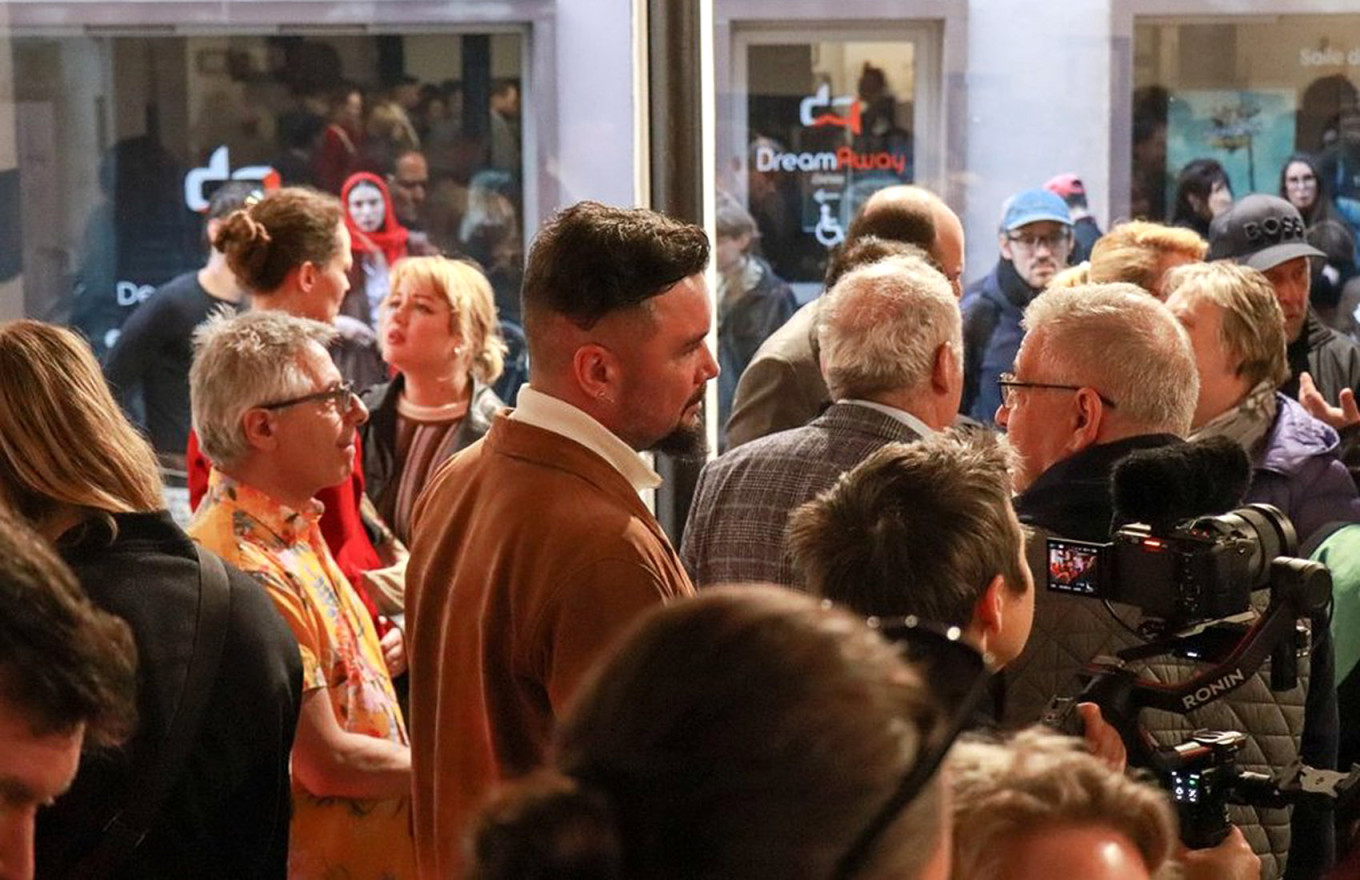
While Tolokonnikova acknowledged that Russia was unlikely to respond directly to media attention around political prisoners, she said the exhibition organizers hoped Western governments could be pushed to increase pressure on Moscow.
“If we can convince [Western] voters that this is an important issue, we can move things off the deadlock,” she said, referring to possible exchanges.
“We have seen prisoner exchanges take place in the past,” Tolokonnikova said.
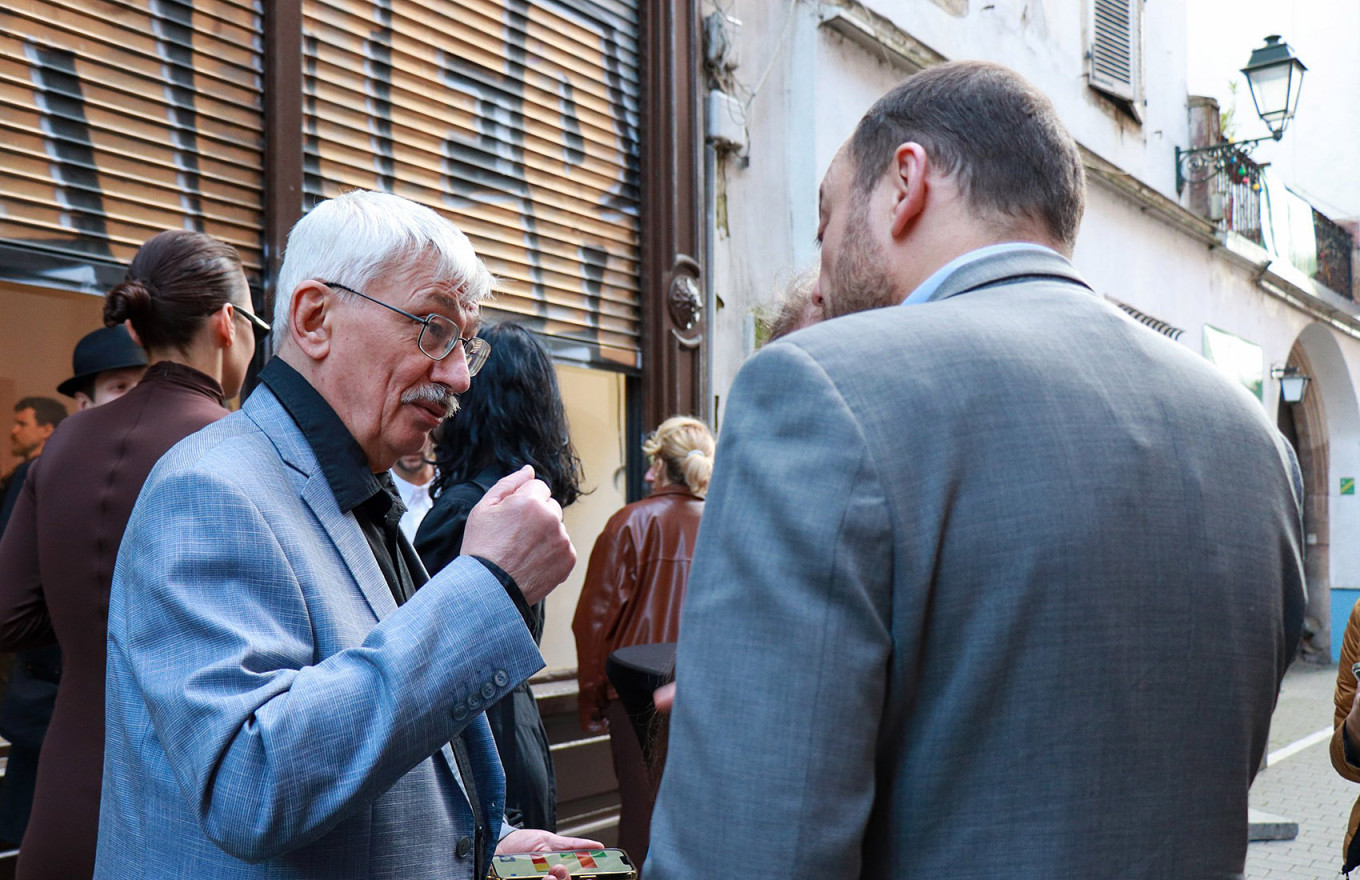
Several former political prisoners released in earlier swaps, including veteran rights defender Oleg Orlov and opposition politician Vladimir Kara-Murza, attended the exhibition opening, she noted.
“So there is a light at the end of the tunnel, although it is quite narrow,” she said.
“Resistance Imprisoned” runs through May 31 at Ritsch-Fisch Galerie in Strasbourg, France. More information here.
A Message from The Moscow Times:
Dear readers,
We are facing unprecedented challenges. Russia's Prosecutor General's Office has designated The Moscow Times as an "undesirable" organization, criminalizing our work and putting our staff at risk of prosecution. This follows our earlier unjust labeling as a "foreign agent."
These actions are direct attempts to silence independent journalism in Russia. The authorities claim our work "discredits the decisions of the Russian leadership." We see things differently: we strive to provide accurate, unbiased reporting on Russia.
We, the journalists of The Moscow Times, refuse to be silenced. But to continue our work, we need your help.
Your support, no matter how small, makes a world of difference. If you can, please support us monthly starting from just $2. It's quick to set up, and every contribution makes a significant impact.
By supporting The Moscow Times, you're defending open, independent journalism in the face of repression. Thank you for standing with us.

Remind me later.