Russian e-book platforms and online retailers have begun attaching warnings about drug-related content to works by classic Russian authors including Alexander Pushkin, Nikolai Gogol and Ivan Turgenev under a new law banning so-called “drug propaganda,” the exiled outlet Vyorstka reported.
The labels have appeared on major services including LitRes, MTS-owned KION Strоки and on some product listings on Ozon, Vyorstka said.
Under the legislation that took effect on March 1, literature, films, media and online content deemed to promote narcotics must be sold with a warning label.
Critics say the law risks sweeping up canonical works of Russian and world literature that contain even passing references to drugs.
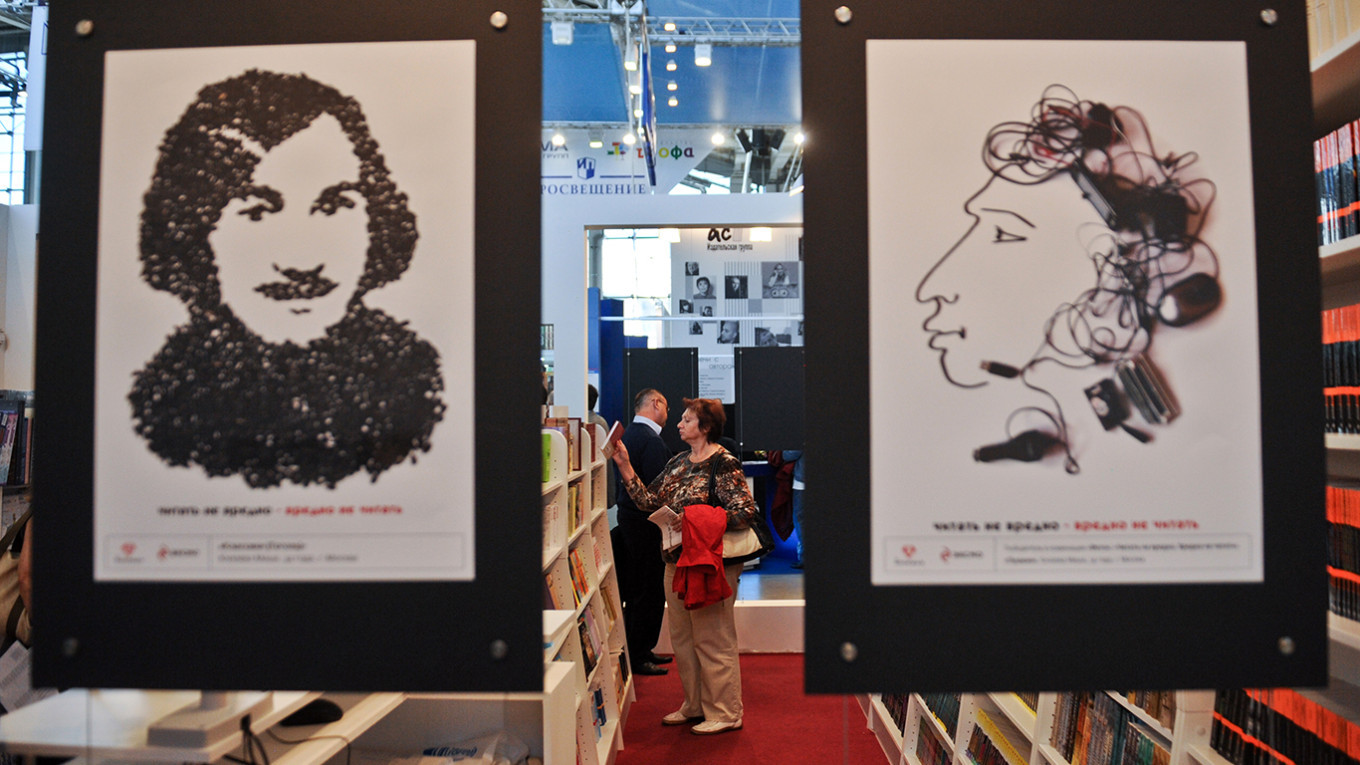
Among the flagged works is a collection of Pushkin’s poems written between 1814 and 1836. Gogol’s stories “The Nose,” “Viy” and “The Overcoat” were also marked, as were Turgenev’s “Asya” and “Fathers and Sons.”
Warnings were also added to collections of children’s stories by Leo Tolstoy, as well as “The Master and Margarita,” “The White Guard” and “Morphine” by Mikhail Bulgakov.
In some cases, the labels may stem from a single mention of narcotic substances in the text or from erroneous automated classification.
In “The White Guard,” for example, morphine appears only as a medical treatment used for a wounded character, rather than as recreational drug use.
None of the works identified by Vyorstka were included on an earlier list of books that the Russian Book Union had recommended for such labeling.
Previously, senior lawmaker Pavel Krasheninnikov, who heads the State Duma committee on state building, had said that Russian and foreign literary classics would not fall under the law.
The legislation defines “drug propaganda” as distributing information about the production, storage, transport and sale of narcotics, where to obtain them, or portraying drug use as attractive or socially acceptable behavior.
Fines for violations range from 2,000 rubles to 1.5 million rubles ($26 to about $19,950).
The law requires labels for works in which narcotics, psychotropic substances or drug-containing plants are considered an “integral part of the artistic concept justified by the genre.”
Publications released before Aug. 1, 1990, are exempt from the requirement.
Read this article in Russian at The Moscow Times' Russian service.
A Message from The Moscow Times:
Dear readers,
We are facing unprecedented challenges. Russia's Prosecutor General's Office has designated The Moscow Times as an "undesirable" organization, criminalizing our work and putting our staff at risk of prosecution. This follows our earlier unjust labeling as a "foreign agent."
These actions are direct attempts to silence independent journalism in Russia. The authorities claim our work "discredits the decisions of the Russian leadership." We see things differently: we strive to provide accurate, unbiased reporting on Russia.
We, the journalists of The Moscow Times, refuse to be silenced. But to continue our work, we need your help.
Your support, no matter how small, makes a world of difference. If you can, please support us monthly starting from just $2. It's quick to set up, and every contribution makes a significant impact.
By supporting The Moscow Times, you're defending open, independent journalism in the face of repression. Thank you for standing with us.

Remind me later.