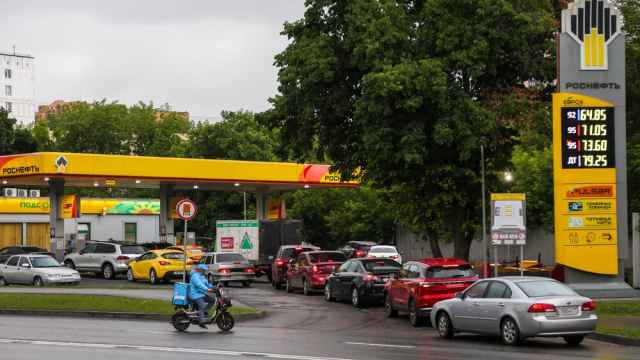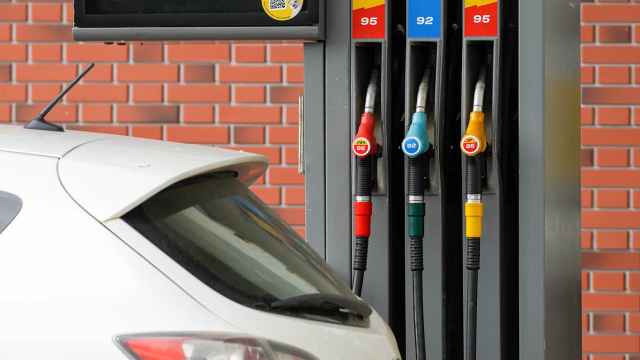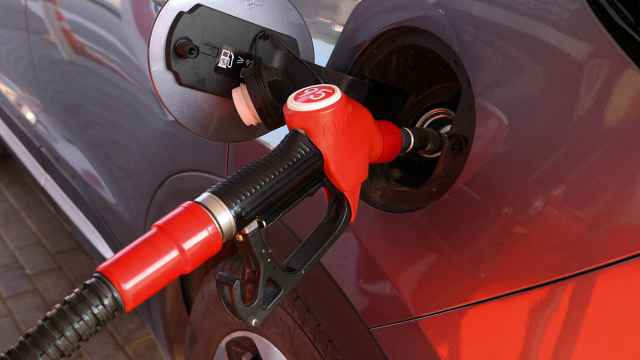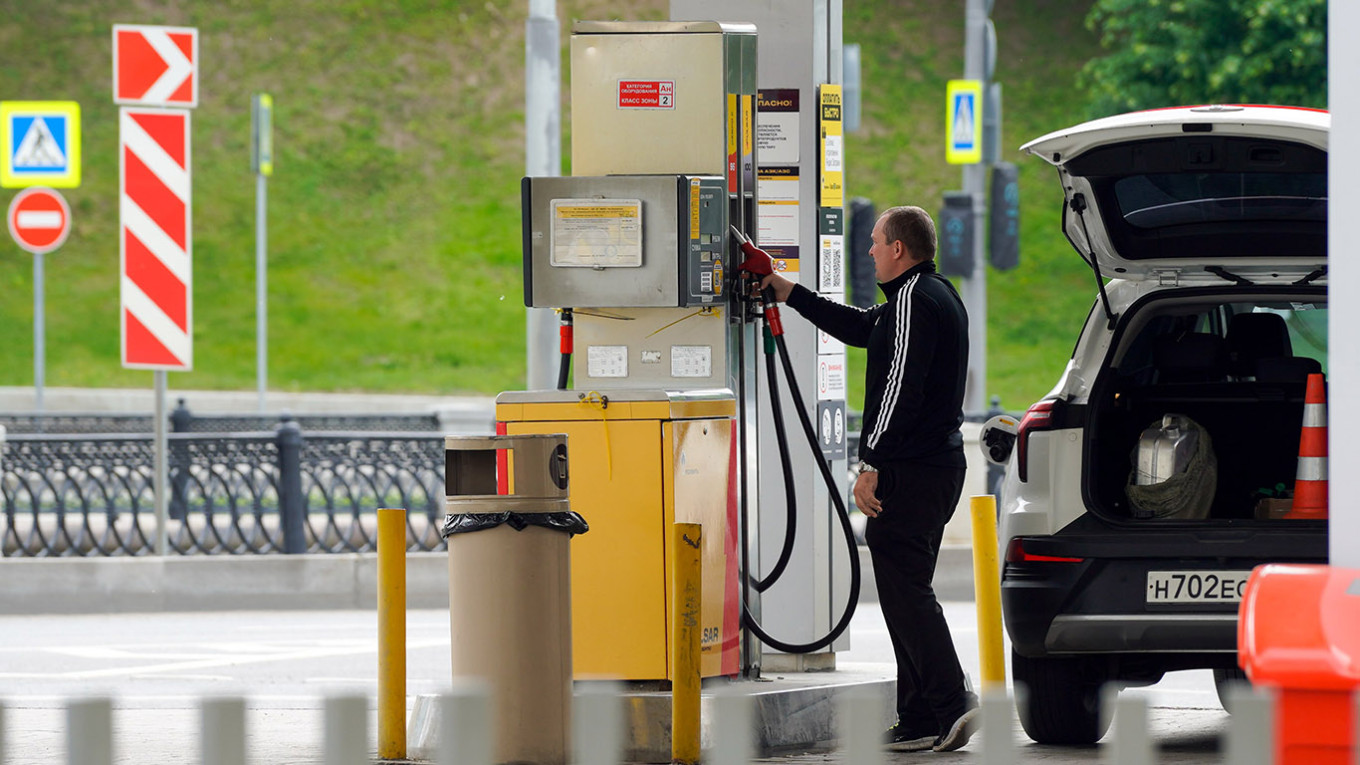
Some gas stations in Moscow and regions in northern Russia have begun introducing limits on fuel purchases following months of sustained Ukrainian drone attacks against major oil refineries across the country.
Msk1.ru, a Moscow-based news outlet, reported that Lukoil gas stations in the Russian capital and surrounding region have capped gasoline sales at 100 liters (26.42 gallons) per driver.
Gazprom’s gas stations are also restricting customers to purchases of 100-150 liters (26.42-39.63 gallons) for both regular gasoline and diesel, a customer service representative said.
The measures would appear to be aimed more at preventing panic buying and hoarding given that the fuel tanks of most passenger vehicles hold less than that limit.
ORTK, which operates 36 gas stations across Moscow and the Moscow region, limited gasoline sales to 60 liters (15.85 gallons) per driver and diesel to 100 liters (26.42 gallons) as of Saturday. ORTK told Msk1.ru that the restrictions will remain in place until further notice.
“We aren’t the only ones doing this,” a spokesperson for the company was quoted as saying.
On Monday, the General Fueller gas station chain introduced 20-liter purchase limits at all of its 23 locations in Moscow, the Moscow region and the neighboring Tver and Yaroslavl regions.
Drivers in St. Petersburg reported similar sale caps ranging from 50 to 95 liters per driver, according to the local news outlet Fontanka. Industry experts told Fontanka that “supply chain disruptions” were to blame for the rationing measures.
Purchases of 20 liters per driver were also introduced in the nearby republic of Karelia, according to the exiled news outlet Govorit NeMoskva. Some drivers returning from the neighboring Murmansk region reported long lines at gas stations.
The Moscow Times could not verify that report.
Meanwhile, the western exclave of Kaliningrad has seen gasoline prices rise by nearly 4 rubles to 69.9 rubles per liter ($3.6 per gallon) over the past two months. Govorit NeMoskva reported price increases of less than 1 ruble in Moscow and some Ural Mountain regions, suggesting that while rationing is being introduced at some gas stations, prices remain largely unchanged.
Annexed Crimea has seen some of the strictest gasoline rationing in recent weeks, with Kremlin-backed authorities there introducing hard caps and vouchers in late May. One of the peninsula’s largest gas station chains temporarily suspended the distribution of gasoline vouchers on Monday, with local officials claiming they would resume on Wednesday afternoon.
Amid a fuel shortage in southwestern Russia’s Belgorod region, the regional economic development minister defended a ban at Rosneft gas stations on filling portable containers with AI-92 gasoline, describing it as a “safety measure.”
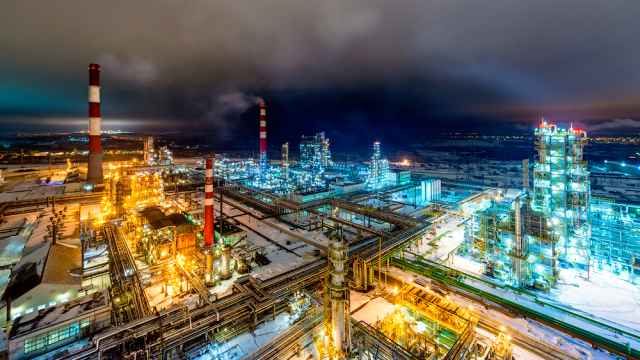
Ukraine has ramped up attacks against Russian oil refineries and terminals in a bid to deprive the Kremlin of windfalls from surging oil prices. The attacks have halted or scaled back production at facilities that account for around one-quarter of the country’s total refining capacity and more than 30% of its gasoline output, according to Reuters.
Sources told the news outlet RBC that Russian government officials are discussing the possibility of increasing gasoline, diesel and jet fuel prices by 1.5 rubles to help finance air defense systems at oil refineries.
The Kremlin acknowledged last month that gasoline production had decreased “in some areas” of the country, but said it saw “no risks” of nationwide shortages. Russia’s Energy Ministry has said that supply in the domestic gasoline market remains “stable and under control.”
A total ban on gasoline exports remains in force across Russia through July 31 to prevent shortages and rising prices.
A Message from The Moscow Times:
Dear readers,
We are facing unprecedented challenges. Russia's Prosecutor General's Office has designated The Moscow Times as an "undesirable" organization, criminalizing our work and putting our staff at risk of prosecution. This follows our earlier unjust labeling as a "foreign agent."
These actions are direct attempts to silence independent journalism in Russia. The authorities claim our work "discredits the decisions of the Russian leadership." We see things differently: we strive to provide accurate, unbiased reporting on Russia.
We, the journalists of The Moscow Times, refuse to be silenced. But to continue our work, we need your help.
Your support, no matter how small, makes a world of difference. If you can, please support us monthly starting from just $2. It's quick to set up, and every contribution makes a significant impact.
By supporting The Moscow Times, you're defending open, independent journalism in the face of repression. Thank you for standing with us.

Remind me later.