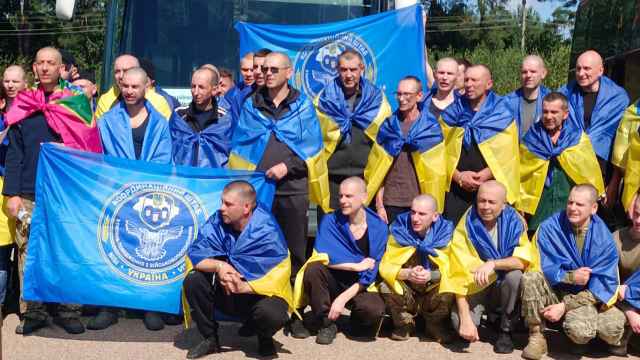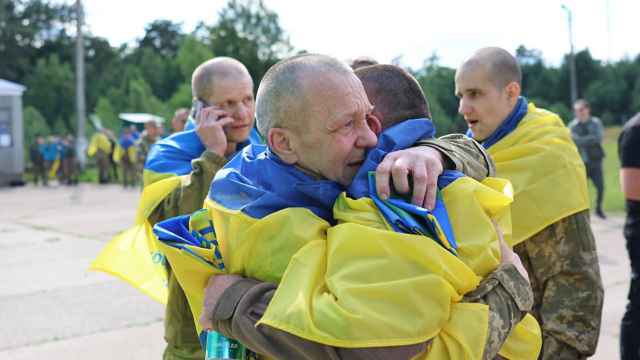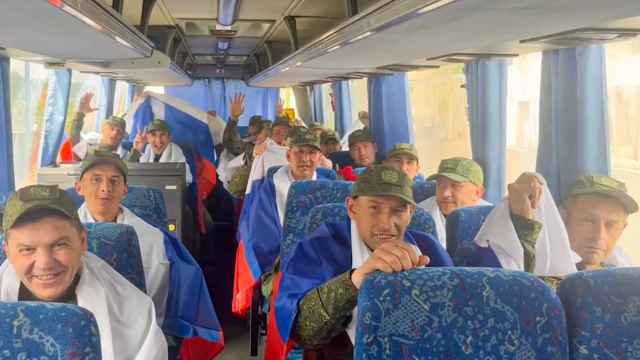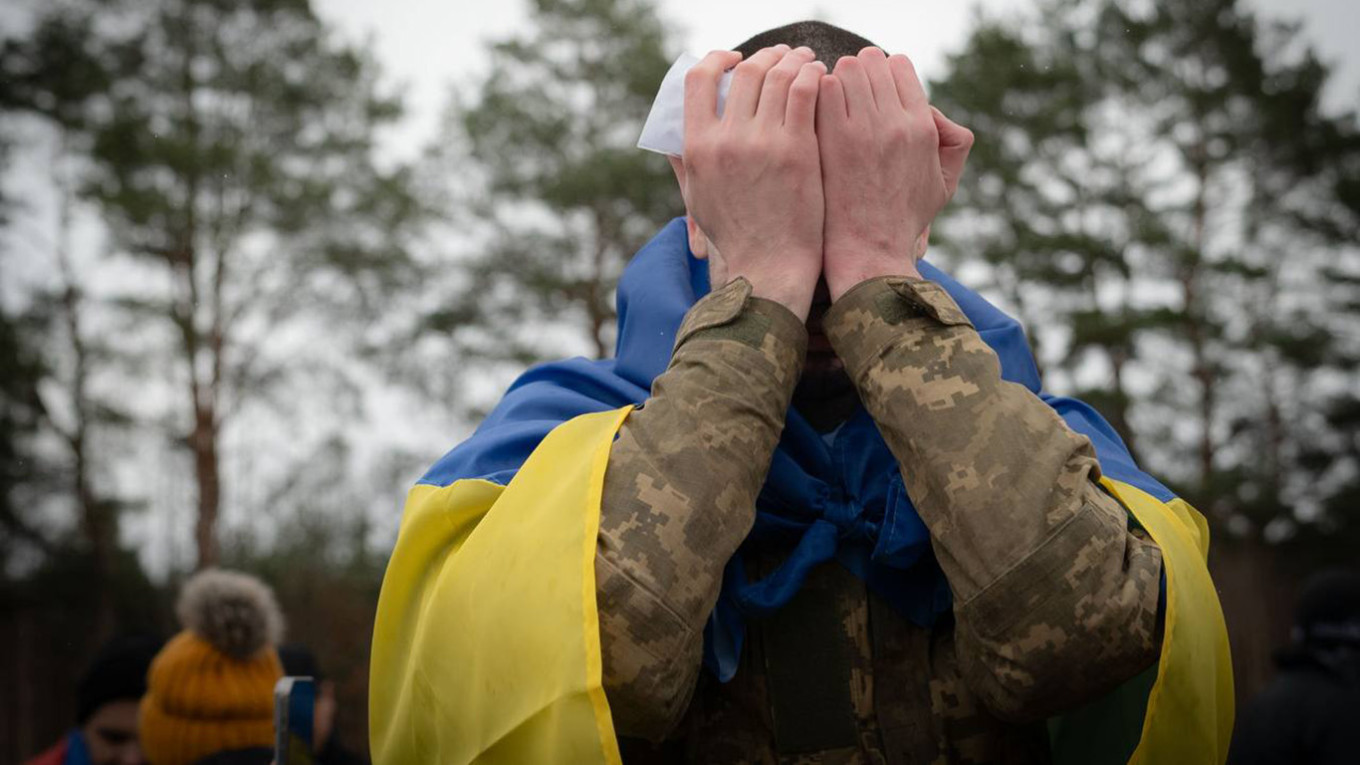
Ukraine and Russia released hundreds of prisoners of war on Friday, with officials in Kyiv saying that the exchange was a “continuation” of a swap held earlier this month.
Russia’s Defense Ministry told state media that both sides released 193 POWs. It said the Russian soldiers would be sent to Belarus to undergo mental health and medical evaluations.
Ukrainian President Volodymyr Zelensky shared photos of the released soldiers, whom Ukraine’s Coordination Headquarters for the Treatment of Prisoners of War identified as soldiers between the ages of 24 and 60, some of them with injuries.
“Most of those released were illegally held in Chechnya. Criminal cases were fabricated against them in violation of the Geneva Convention,” the Coordination Headquarters said.
Friday’s exchange follows a “175-for-175” swap on April 11, which was brokered by the United Arab Emirates just ahead of a brief Orthodox Easter truce. That deal also included the return of the remaining seven residents of Russia’s Kursk region who had been held by Kyiv following the 2024 Ukrainian incursion of the border region.
Russian Human Rights Commissioner Tatiana Moskalkova and her Ukrainian counterpart, Dmytro Lubinets, have maintained a rare open channel of communication to verify the status of POWs and detained civilians, even as broader diplomatic efforts to end the war remain frozen.
Last month, Russia and Ukraine released 500 POWs each in a two-day exchange mediated by the United States and the UAE. The warring sides have carried out dozens of exchanges of prisoners and fallen soldiers since last spring.
Talks to end the conflict, now in its fifth year, have stalled since the United States and Israel launched their war against Iran in February.
A Message from The Moscow Times:
Dear readers,
We are facing unprecedented challenges. Russia's Prosecutor General's Office has designated The Moscow Times as an "undesirable" organization, criminalizing our work and putting our staff at risk of prosecution. This follows our earlier unjust labeling as a "foreign agent."
These actions are direct attempts to silence independent journalism in Russia. The authorities claim our work "discredits the decisions of the Russian leadership." We see things differently: we strive to provide accurate, unbiased reporting on Russia.
We, the journalists of The Moscow Times, refuse to be silenced. But to continue our work, we need your help.
Your support, no matter how small, makes a world of difference. If you can, please support us monthly starting from just $2. It's quick to set up, and every contribution makes a significant impact.
By supporting The Moscow Times, you're defending open, independent journalism in the face of repression. Thank you for standing with us.

Remind me later.