
News about the deportation of anti-war Russians and deserters from Germany has stirred up concern in the emigre community about their future in a country they thought offered safety.
Last week, the website Ekho published a long piece claiming that Germany has begun deporting anti-war Russians. The details of the cases vary — from a student who arrived more than 10 years ago to a recent deserter — but all received orders to leave. Some were even put on planes and removed before their voluntary departure deadlines expired.
The situation was presented in dark tones, with imagery familiar to those who remember the U.S.S.R. of Solzhenitsyn’s stories — black vans outside apartment buildings, footsteps on the stairwell.
I even found myself arguing seriously with friends who thought alarm bells should be ringing before it’s too late: soon, even the remaining avenues could be shut down, people who already received humanitarian visas might face rejection, extensions will be denied, and all of us could face deportation to Russia.
I disagree.
The problem exists, and people need to know about it to be prepared. But if we look at the situation calmly and focus on facts rather than emotions, the picture looks different from what Echo suggests.
A significant portion of these deportations have no relation to anti-war persecution but standard migration procedures. People entered on tourist visas, tried to legalize their status through freelance work or employment, were refused, received orders to leave and then faced non-renewal of their grace periods. The link between deportation and anti-war views is not always clear.
Descriptions of inspections and actions by German migration authorities are presented as extraordinary when they are largely standard enforcement practices. In some cases, deportations did not even occur: some applicants were granted asylum, others stayed for family reasons and some are still appealing decisions.
Cases that do involve a genuine risk of persecution after deportation are mixed with stories about expired documents or failed attempts to change their status. The case of a deserter facing criminal prosecution deserves special attention and protection — not conflation with routine bureaucratic refusals.
This does not mean there is no problem at all. When Germany effectively shut down its humanitarian visa program, my colleagues and I were among those raising the issue publicly and in discussions with German officials.
But if we want to maintain a reasonable relationship with policymakers, excessive alarmism is counterproductive.
Migration policy is indeed tightening. This should be expected, as there is public demand in Germany for stricter migration controls and right-wing populists are actively exploiting it. The current coalition is forced to respond to avoid losing the next electoral cycle. If the Alternative for Germany party comes to power, the situation will become genuinely alarming.
In trying to draw attention to the problem, it is important not to replace analysis with panic.
For example, the outlet Genau recently published a balanced account from someone who went through the asylum process. Their sober conclusion was that officials neither will nor want to examine personal circumstances deeply: “Officials at BAMF review your application and reject it in 99% of cases. Whether you tried to overthrow Putin or not — they don’t even look into it.”
For them, there is little difference between fleeing war in Russia or fleeing Islamists in Syria.
The number of deportations is rising. Russians are not the only ones affected. Russians made up just 0.55% of all deportations —126 people — according to official data for 2025.
Should the rights of deported individuals be defended? Absolutely. If you are at risk, you should seek help from human rights organizations or carefully build your own defense if you do not qualify for such support.
Accusing Germany of specifically deporting anti-war Russians would be an exaggeration.
Yes, a number of anti-war Russians are among those at risk. But that does not mean Germany is running a targeted campaign against people opposed to the Kremlin or the war.
There is also an uncomfortable truth: the proportion of genuinely anti-war Russians in the diaspora is relatively small.
The harsh truth is that beyond a small number of highly visible artists, politicians and journalists, most Russians living here in Europe, at best, apolitical.
Does this reduce the risks for those facing deportation? Of course not. Many of them would likely face screening, pressure, and, for men of conscription age, draft notices and other surprises from the state.
But that is precisely why it is important not to replace careful analysis with alarmism. There is another issue that must be addressed directly.
Human rights groups are doing everything they can to help those at risk: preparing cases, finding solutions and building legal defenses. At the Anti-war Committee’s Consular Initiative, we verify individuals who were genuinely politically active in Russia and publicly opposed the war.
But this is not only a reason to demand urgent help from politicians and activists. It is also a reason for each of us living in Europe to ask ourselves the uncomfortable question of whether our anti-war stance is truly noticeable.
In some cases, it is easy to see why German officials did not recognize the risks we face. For some individuals, even I struggle to identify any clear antiwar activity. Perhaps the problem lies not only with officials, but with us.
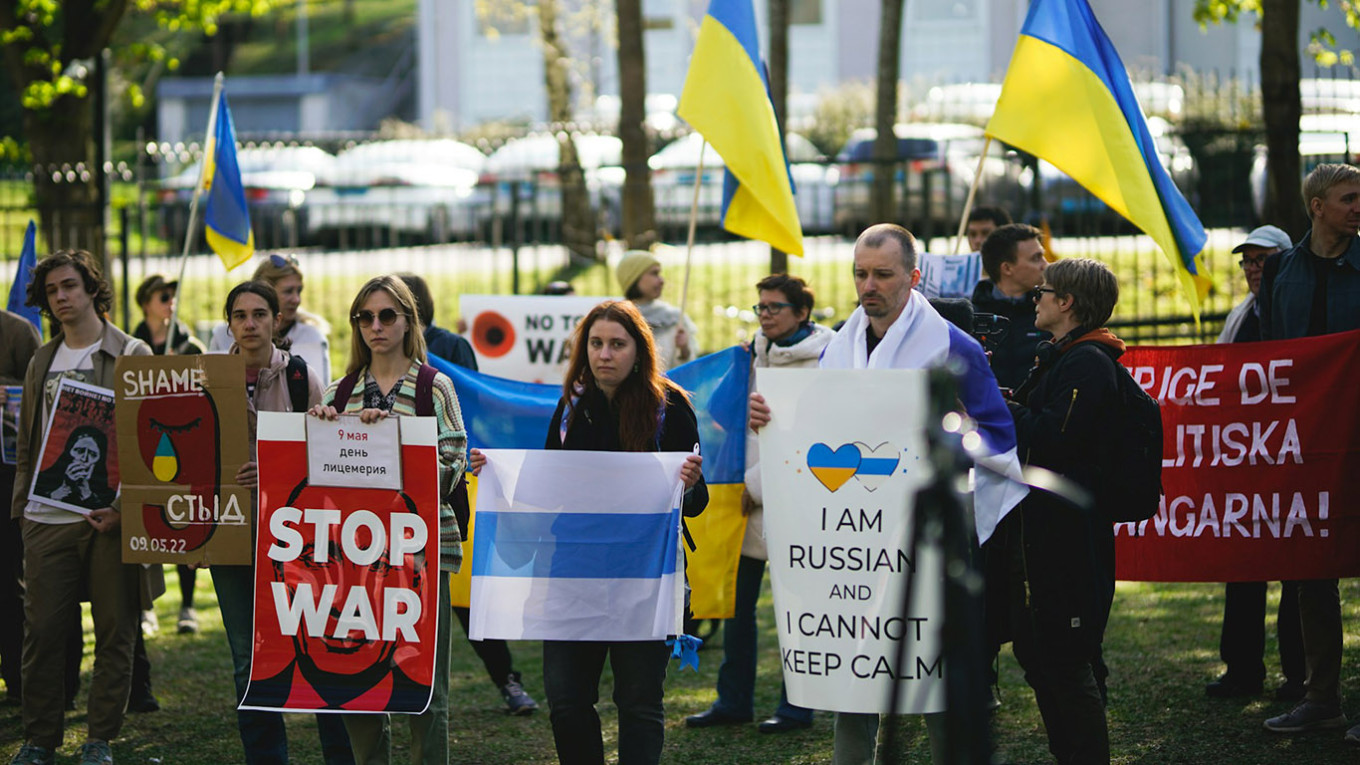
How many people attended anti-war protests last year? The most recent one barely gathered a thousand participants. How many take part in even low level acticism likepickets, letters to political prisoners or offering practical support? At best, a few dozen.
In contrast, look at recent protests in Iran.
If German officials truly saw a visible anti-war Russian community, it would be easier to demonstrate the polital risks emigres face. On the Day of Mourning marking the war’s anniversary, only 200 or so Russians gathered at the Tränenpalast in Berlin. 200 out of a city of millions. On the anniversary of Alexei Navalny’s murder, even fewer came.
If we are truly anti-war Russians, perhaps that needs to be demonstrated not only on paper.
There are many ways to support those who continue to oppose Putin.
The names of political prisoners are listed on the Memorial website. There is OVD-Info, who provide legal aid to people facing repression. There are political parties like Rassvet and Yabloko still operating inside Russia. There is the Anti-War Committee — and Ilya Yashin has proposed creating a political party.
Deportations will increase this year not only because of stricter policy, but also because of a backlog of cases. Many people have lived in Germany for years with uncertain status. Some decisions date back to before the war — or even before the pandemic.
These people need, at a minimum, support and legal guidance.
Politically, solutions should be pursued that allow people to leave voluntarily or relocate to third countries. This is not easy because hardline voters could see this as a concession and there is always a risk of abuse. But it is still a direction worth pursuing.
Alarmism is effective at attracting attention. But it should not be directed only at bureaucrats, though there are plenty of problems there.
It is equally important to look inward. The more visible, organized and active the anti-war Russian diaspora becomes, the greater the chance it will be taken seriously.
A Message from The Moscow Times:
Dear readers,
We are facing unprecedented challenges. Russia's Prosecutor General's Office has designated The Moscow Times as an "undesirable" organization, criminalizing our work and putting our staff at risk of prosecution. This follows our earlier unjust labeling as a "foreign agent."
These actions are direct attempts to silence independent journalism in Russia. The authorities claim our work "discredits the decisions of the Russian leadership." We see things differently: we strive to provide accurate, unbiased reporting on Russia.
We, the journalists of The Moscow Times, refuse to be silenced. But to continue our work, we need your help.
Your support, no matter how small, makes a world of difference. If you can, please support us monthly starting from just $2. It's quick to set up, and every contribution makes a significant impact.
By supporting The Moscow Times, you're defending open, independent journalism in the face of repression. Thank you for standing with us.

Remind me later.