Moldova’s Foreign Ministry on Tuesday summoned Russia’s ambassador to Chisinau after a strike on a hydroelectric plant in western Ukraine earlier this month allegedly contaminated the Dnestr River, which flows through both countries.
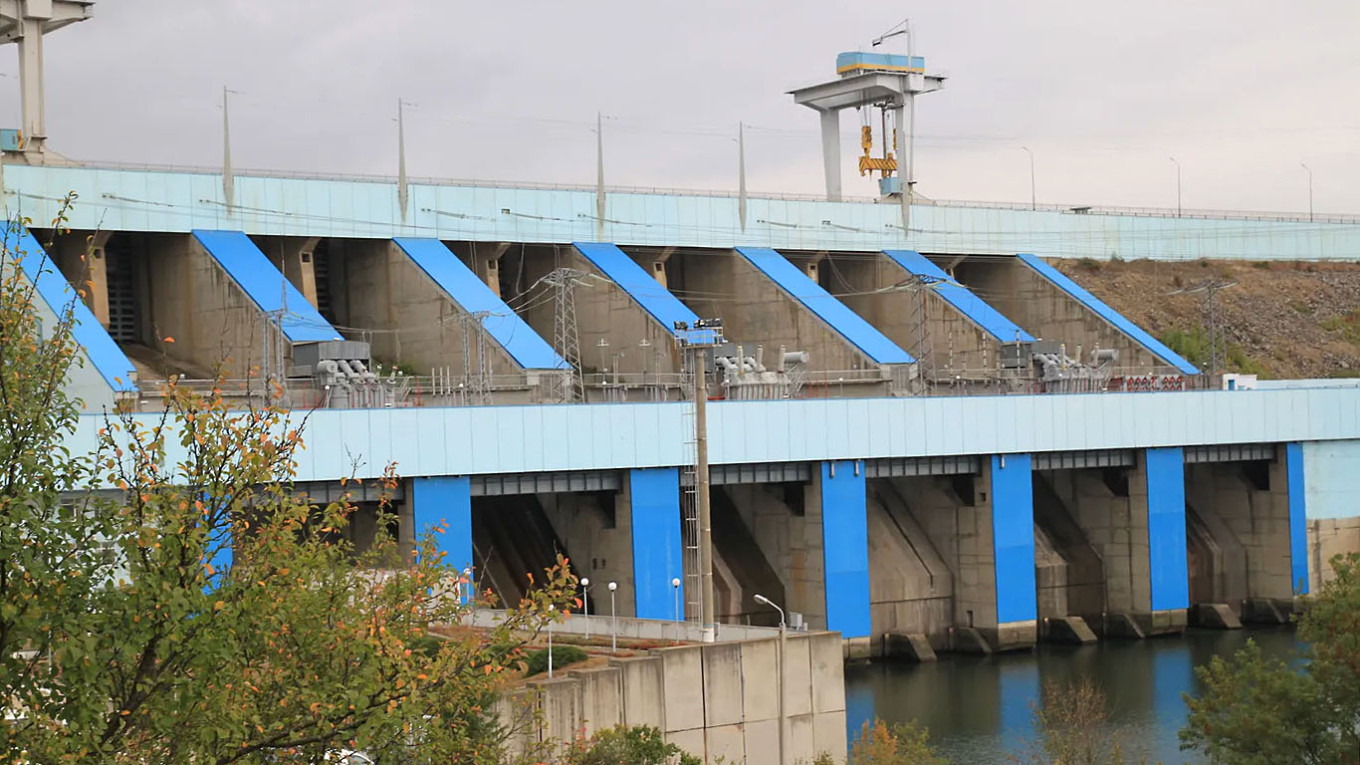
Law enforcement authorities in Moldova are investigating whether a March 7 drone attack on the Dnestr Hydroelectric Power Plant, located in Ukraine’s Chernivtsi region, spilled petroleum products into the waterway.
While Russia’s military has not claimed responsibility for the attack, Ukrainian President Volodymyr Zelensky accused Russia of targeting energy infrastructure that day, including in the Chernivtsi region.
“The Republic of Moldova strongly condemns this attack… creating major risks for the environment and the security of Moldova’s water supply,” Moldova’s foreign ministry said in a statement on Tuesday.
Moldovan media reported that the ministry presented Russian Ambassador Oleg Ozerov with a sample of contaminated water collected from the river.
Russia’s Embassy in Chisinau has not yet commented on the incident.
On Sunday, the Moldovan government issued an environmental alert after contamination was detected in the Dnestr River. Cities and towns in the north of the country, including Balti, which has a large Russian-speaking population, have been without water for several days.
Ukraine first reported contamination of the river on March 10 near the town of Lyadova, calling the incident a “manifestation of Russia’s environmental aggression.”
The pollution quickly moved downstream into Moldova, where emergency teams have installed absorbent barriers.
Authorities urged residents in several communities not to drink, cook with or otherwise use water from the Dnestr River until further notice.
Moldova has asked the EU for help in addressing the water contamination and has deployed its military. Neighboring Romania sent specialists and equipment to provide assistance.
A Message from The Moscow Times:
Dear readers,
We are facing unprecedented challenges. Russia's Prosecutor General's Office has designated The Moscow Times as an "undesirable" organization, criminalizing our work and putting our staff at risk of prosecution. This follows our earlier unjust labeling as a "foreign agent."
These actions are direct attempts to silence independent journalism in Russia. The authorities claim our work "discredits the decisions of the Russian leadership." We see things differently: we strive to provide accurate, unbiased reporting on Russia.
We, the journalists of The Moscow Times, refuse to be silenced. But to continue our work, we need your help.
Your support, no matter how small, makes a world of difference. If you can, please support us monthly starting from just $2. It's quick to set up, and every contribution makes a significant impact.
By supporting The Moscow Times, you're defending open, independent journalism in the face of repression. Thank you for standing with us.

Remind me later.