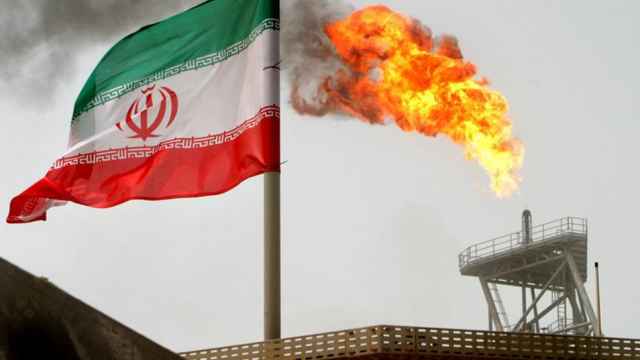
Key members of the OPEC+ oil cartel announced a greater-than-expected increase to production quotas on Sunday following U.S. and Israeli strikes on Iran that triggered retaliation by Tehran across the Middle East.
The eight-member V8 (Voluntary Eight) group in the alliance, which includes key oil producers Saudi Arabia and Russia — as well as several Gulf states bearing the brunt of Tehran's missile strikes — said they had agreed a “production adjustment” of 206,000 barrels per day (bpd).
“This adjustment will be implemented in April,” they said in a statement.
The text did not explicitly mention the outbreak of the Iran conflict, instead citing “a steady global economic outlook and current healthy market fundamentals” as their reasons for the increase.
Before the weekend's meeting, experts had forecast a more modest increase of 137,000 barrels per day.
But Jorge Leon, an analyst at Rystad Energy, warned the agreed increase was potentially not large enough to prevent the Iran conflict causing a spike in oil prices when trading opens on Monday.
Leon pointed to the possibility that Iran could target the Strait of Hormuz, a key waterway through which around nearly a quarter of the world's seaborne oil supplies, in retaliation.
Iran's Revolutionary Guards have contacted ships to announce the strait was closed. On Sunday, Iranian state TV said an oil tanker in the strait was struck while attempting to “illegally” pass through and was sinking. It showed footage of a burning tanker at sea.
“If oil cannot move through Hormuz, an extra 206,000 barrels per day does very little to ease the market,” Leon said, arguing that “logistics and transit risk matter more than production targets right now.”
The OPEC+ move “is unlikely to calm markets,” he said.
“Prices will respond to developments in the Gulf and the status of shipping flows, not to a relatively small increase in output.”
Besides Russia and Saudi Arabia, the V8 group within OPEC+ includes Kuwait, Oman, Iraq and the UAE, all of which were targeted by Iranian attacks for a second day on Sunday.
Algeria and Kazakhstan are also part of the group.
A Message from The Moscow Times:
Dear readers,
We are facing unprecedented challenges. Russia's Prosecutor General's Office has designated The Moscow Times as an "undesirable" organization, criminalizing our work and putting our staff at risk of prosecution. This follows our earlier unjust labeling as a "foreign agent."
These actions are direct attempts to silence independent journalism in Russia. The authorities claim our work "discredits the decisions of the Russian leadership." We see things differently: we strive to provide accurate, unbiased reporting on Russia.
We, the journalists of The Moscow Times, refuse to be silenced. But to continue our work, we need your help.
Your support, no matter how small, makes a world of difference. If you can, please support us monthly starting from just $2. It's quick to set up, and every contribution makes a significant impact.
By supporting The Moscow Times, you're defending open, independent journalism in the face of repression. Thank you for standing with us.

Remind me later.