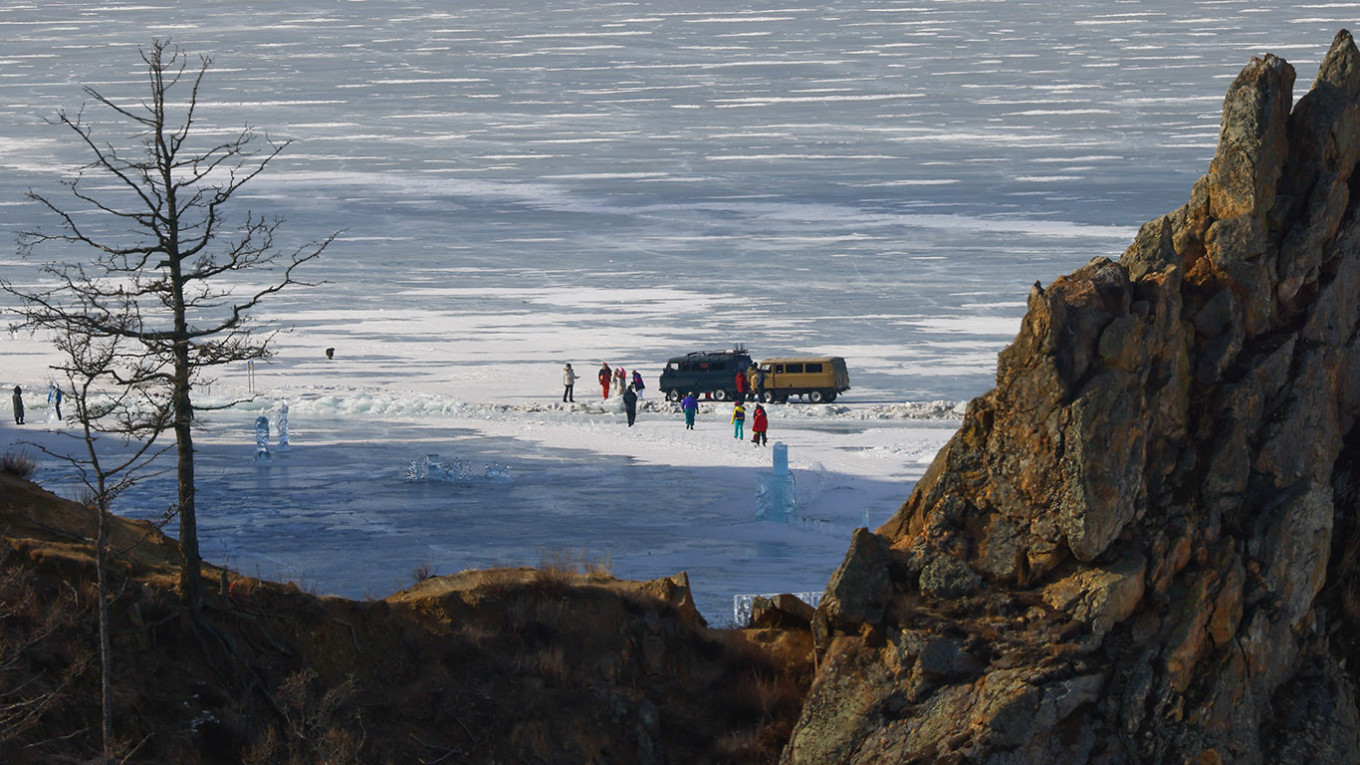
A group of Chinese tourists drowned in eastern Siberia’s Lake Baikal on Friday after their van fell through an ice crevasse, marking the second deadly incident at the popular tourist destination this year.
Rescue divers recovered seven bodies after a UAZ van carrying nine people, including a Russian driver and Chinese tourists, plunged into Baikal, the world’s deepest lake.
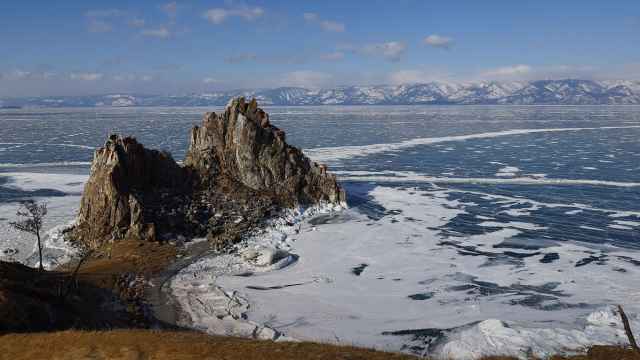
Irkutsk region Governor Igor Kobzev said one tourist managed to climb out of the vehicle. The incident occurred around the northern tip of Olkhon Island, known as Cape Khoboy.
Kobzev said the Chinese Consulate General in Irkutsk was informed about the deaths.
The Investigative Committee, Russia’s top investigative body, opened a criminal probe into negligence and safety violations resulting in death. Unconfirmed reports suggested the Russian driver operated tours at Lake Baikal without a license.
Lake Baikal, a UNESCO World Heritage site, freezes over between January and April, featuring exceptionally clear and thick ice that attracts visitors from all over the world. Ice roads to Olkhon Island typically operate during the high season between February and March, when the ice becomes thick enough to support heavy vehicles.
Governor Kobzev said this year’s ice road has not yet been officially opened.
At least 11 tourists are believed to have died at Lake Baikal so far in 2026, according to Russian media reports.
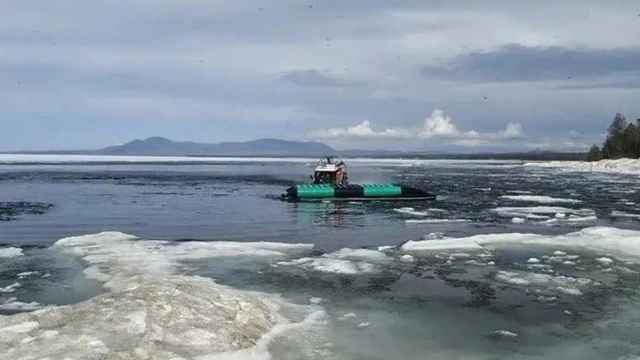
In late January, one Chinese tourist was killed when a van flipped over on the ice. China’s Consulate General in Irkutsk urged travelers to avoid crossing the frozen lake in heavy vehicles and instead ride on hovercrafts.
The driver of the van in the January crash was arrested on charges of safety violations resulting in death.
A Message from The Moscow Times:
Dear readers,
We are facing unprecedented challenges. Russia's Prosecutor General's Office has designated The Moscow Times as an "undesirable" organization, criminalizing our work and putting our staff at risk of prosecution. This follows our earlier unjust labeling as a "foreign agent."
These actions are direct attempts to silence independent journalism in Russia. The authorities claim our work "discredits the decisions of the Russian leadership." We see things differently: we strive to provide accurate, unbiased reporting on Russia.
We, the journalists of The Moscow Times, refuse to be silenced. But to continue our work, we need your help.
Your support, no matter how small, makes a world of difference. If you can, please support us monthly starting from just $2. It's quick to set up, and every contribution makes a significant impact.
By supporting The Moscow Times, you're defending open, independent journalism in the face of repression. Thank you for standing with us.

Remind me later.