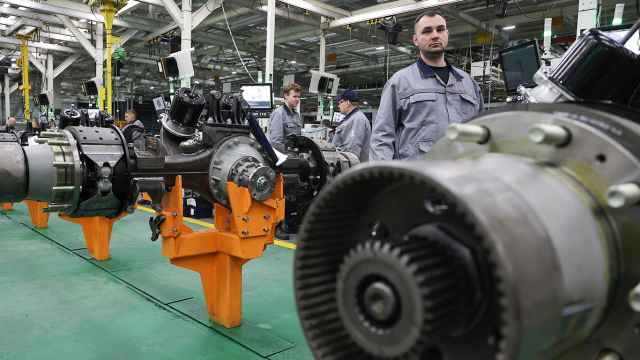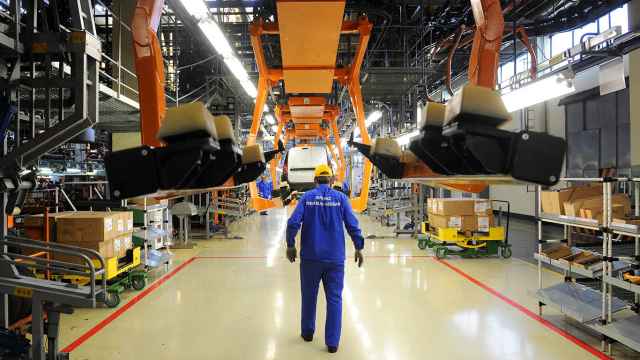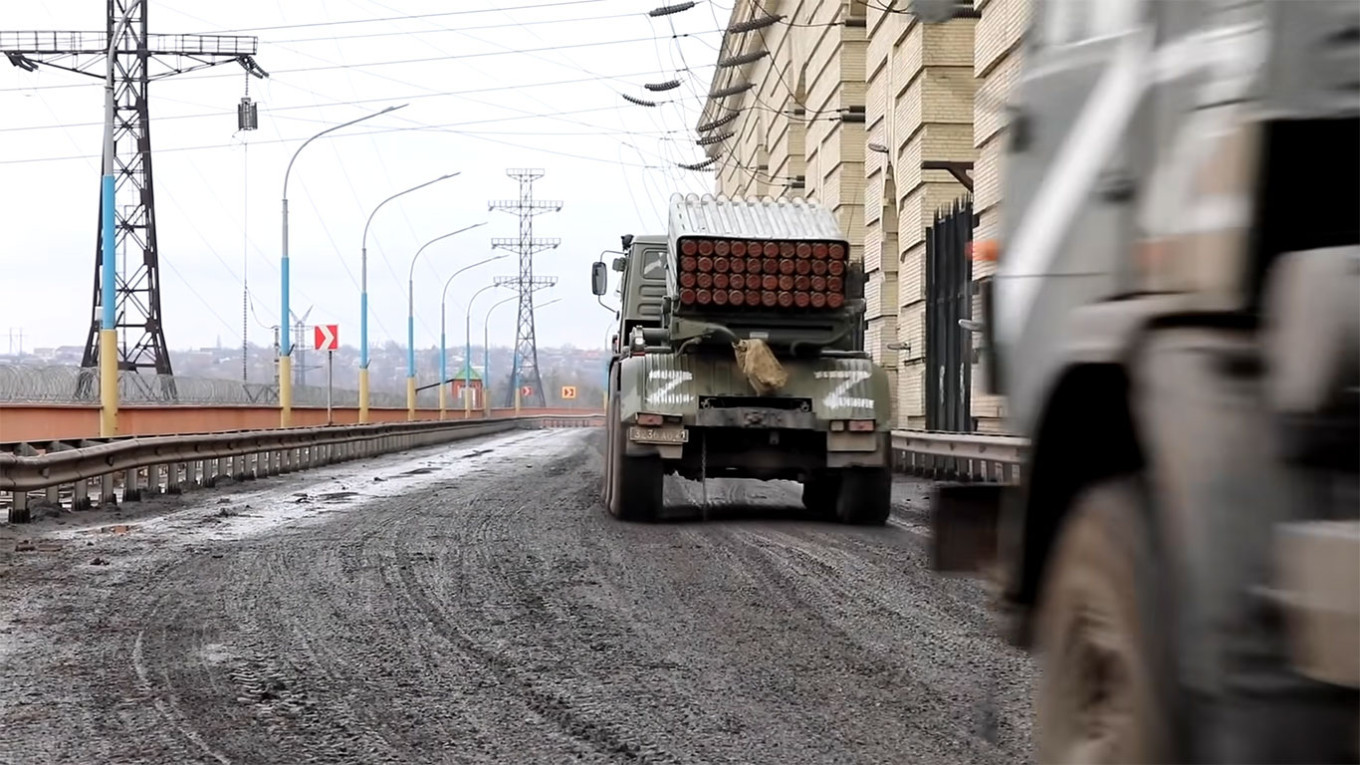
Russia’s largest truckmaker Kamaz is increasingly relying on state defense orders, with nearly half of its output last year apparently going to non-commercial customers, according to company data and vehicle registration statistics.
The company said truck sales rose 9% in 2024 to 38,400 units from 35,400 a year earlier, while its market share jumped to 33% from 18%.
However, fewer than 20,000 new Kamaz vehicles of all types — including buses — were registered with Russia’s traffic police (GIBDD), almost half the reported sales volume and down 19.5% year-on-year.
Primary registrations of Kamaz vehicles have been declining since 2022, according to data compiled by Avtostat and Electronic Passport JSC. At the same time, the gap between reported sales and registrations has widened sharply.
Such discrepancies existed before the invasion of Ukraine but were far smaller.
In 2021, Kamaz reported sales of 44,600 trucks “on domestic and foreign markets,” while Avtostat recorded 36,400 Kamaz vehicles registered in Russia — a difference of 18.4%, broadly within a typical 15-20% range.
An auto industry analyst said the gap could be explained by exports and timing differences in registrations. Kamaz has not disclosed precise export volumes, though previously published data suggested that at least 80% of its vehicles were sold domestically.
Trucks may also remain in storage at factories or dealerships before being registered, creating statistical lags between production, sales and registration figures.
This divergence has grown markedly since 2022, however.
For that year, Kamaz reported production of 43,800 vehicles, while Avtostat data showed registrations of 31,500 units — down nearly 12% year-on-year and implying a 28% gap.
In 2023, Kamaz said it sold 41,700 trucks, while Avtostat recorded 28,200 registrations. In 2024, the company reported sales of 35,350 vehicles, compared with 24,800 registrations.
Based on the difference between reported sales and civilian registrations, non-market deliveries accounted for nearly 48% of output last year. In 2025, that figure rose by 80% to a record level, with 18,300 Kamaz vehicles not appearing in registration data.
“Half of current production now goes on ‘black plates’,” one Kamaz dealer said, referring to military registration plates.
Another dealer said the deliveries were not limited to frontline needs, pointing to the broader expansion of Russia’s Armed Forces.
Defense Minister Andrei Belousov said last year that five divisions, 13 brigades and 30 regiments had been formed, with four more divisions, 14 brigades and 39 regiments due to be created this year.
At the same time, civilian demand has weakened.
The Institute for Economic Forecasting of the Russian Academy of Sciences (INP RAN) said 14 sectors accounting for 48% of manufacturing output were in decline.
Read this story in Russian at The Moscow Times’ Russian service.
A Message from The Moscow Times:
Dear readers,
We are facing unprecedented challenges. Russia's Prosecutor General's Office has designated The Moscow Times as an "undesirable" organization, criminalizing our work and putting our staff at risk of prosecution. This follows our earlier unjust labeling as a "foreign agent."
These actions are direct attempts to silence independent journalism in Russia. The authorities claim our work "discredits the decisions of the Russian leadership." We see things differently: we strive to provide accurate, unbiased reporting on Russia.
We, the journalists of The Moscow Times, refuse to be silenced. But to continue our work, we need your help.
Your support, no matter how small, makes a world of difference. If you can, please support us monthly starting from just $2. It's quick to set up, and every contribution makes a significant impact.
By supporting The Moscow Times, you're defending open, independent journalism in the face of repression. Thank you for standing with us.

Remind me later.