
Thursday marked the expiration of the Treaty on the Reduction of Strategic Offensive Arms, the last major agreement between Russia and the United States on controlling nuclear arsenals.
This is not merely the end of yet another international treaty. It effectively draws a line under more than half a century during which the two largest nuclear powers attempted to keep their strategic rivalry within a framework of mutual limitations, transparency and a certain level of trust.
The modern arms control system was born out of fear of the consequences of an uncontrolled arms race. After the Cuban Missile Crisis of 1962, when the U.S.S.R. and the U.S. came within a step of using nuclear weapons, both sides came to realize that technological advances in strategic forces were outpacing political mechanisms for managing them. As well as implementing new rules, new norms had to be created.
The first such step was the 1963 Moscow Treaty banning nuclear tests in the atmosphere, outer space and underwater. Signed by the Soviet Union, the U.S. and Britain shortly after the Cuban Missile Crisis, it became the first international agreement to impose real limits on nuclear activity. Most countries worldwide joined the treaty by the mid-1960s.
The next major milestone was the 1967 Treaty on Principles Governing the Activities of States in the Exploration and Use of Outer Space, which narrowed potential avenues for the arms race by prohibiting the placement of nuclear weapons in space or Earth’s orbit.
Together, these agreements and others builta foundation that made it possible to move toward more complex and technically detailed treaties. They fostered an atmosphere of limited trust, institutionalized dialogue between the superpowers and the principle that even amid intense geopolitical rivalry, states can — and must — establish rules to reduce the risk of global catastrophe.
The first serious step toward limiting the arms race between the U.S.S.R. and the U.S. was the 1972 Interim Agreement on Certain Measures with Respect to the Limitation of Strategic Offensive Arms (SALT I), which capped the number of strategic delivery systems at the levels that existed at the time of signing.
The Anti-Ballistic Missile Treaty also enshrined the principle that neither side should possess the capability to fully protect itself from a retaliatory strike, effectively legalizing mutually assured destruction.
A true breakthrough came only at the end of the Cold War, when arms control shifted from freezing ceilings to actually reducing arsenals. After intermediate-range weapons were eliminated by a 1987 treaty, the 1991 START I treaty limited strategic arsenals to 6,000 warheads and 1,600 delivery systems per side and created a new verification system. Within several years of the treaty’s entry into force, the combined nuclear arsenals of the superpowers were reduced by roughly one-third.
Momentum continued through the 1990s. However, soon afterward, the Comprehensive Nuclear Test Ban Treaty (CTBT) was stalled and remains so to this day. This reflected rising tensions not only among the great powers but also between emerging players on the global stage like China, Pakistan and India.
The United States signed the treaty but never ratified it. China conditions its ratification on Washington moving first. Russia’s withdrawal of its ratification of the CTBT in 2023 looks like the final nail in the coffin of the international arms control and disarmament process.
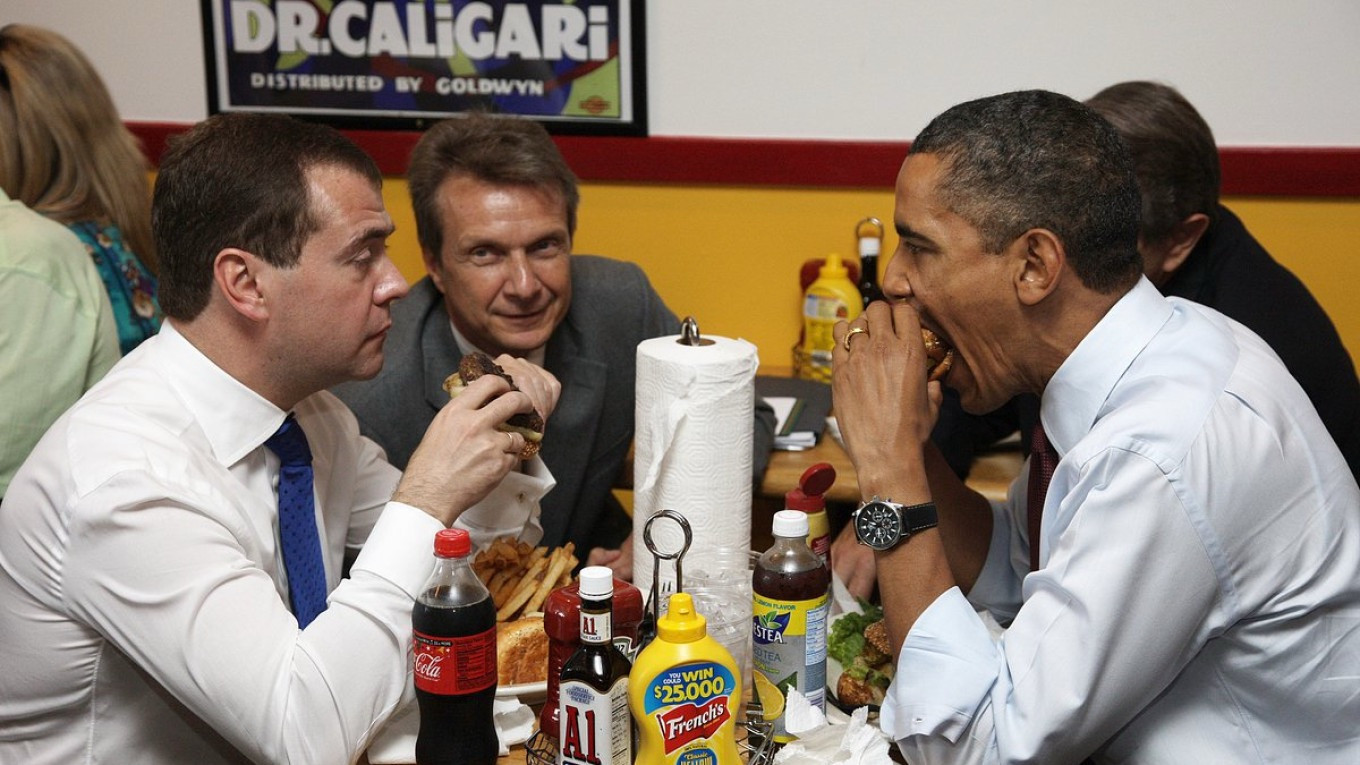
The last agreement was New START, signed in 2010 during President Barack Obama’s “reset” of U.S.-Russia relations, setting clear limits: no more than 1,550 deployed strategic warheads, 700 deployed delivery systems and a further 100 in storage, as well as requiring unprecedented transparency. Over the life of the treaty, the parties exchanged more than 10,000 notifications, maintaining a uniquely high level of mutual awareness of each other’s nuclear forces.
Yet New START emerged at a moment when the arms control system was already eroding. Some of the blame lies at Washington’s door. The U.S.’s 2002 withdrawal from the ABM Treaty was driven less by national security concerns than by the needs of the country’s military-industrial complex. It seriously reinforced Moscow’s suspicions that Washington sought strategic superiority over Russia by depriving it of its sole trump card in great power politics: nuclear parity with the United States.
In 2019, the United States unilaterally withdrew from the Intermediate-Range Nuclear Forces Treaty. In 2023, amid its aggressive war against Ukraine and as part of a policy of nuclear blackmail, Russia effectively suspended participation in New START’s verification systems. The treaty’s expiration in 2026 became the logical conclusion of this process.
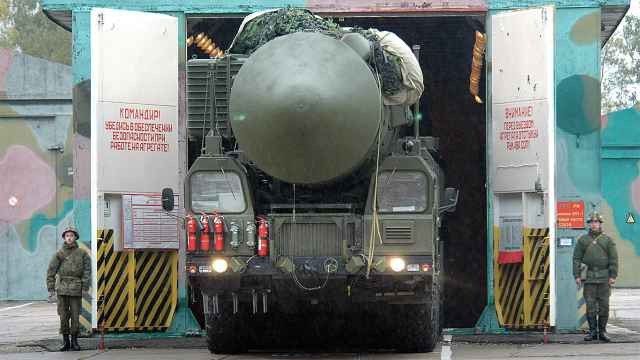
Why is Russia dismantling this system? Nuclear weapons are increasingly becoming a key instrument of foreign policy coercion for the Kremlin, which relies on using explicit or implicit nuclear threats. At the same time, Russia is modernizing its strategic forces, including the deployment of the Avangard hypersonic system, the new Sarmat intercontinental missile, the “unlimited-range” Burevestnik cruise missile, as well as the Poseidon nuclear-powered underwater drone.
Meanwhile, the U.S. is also undertaking the largest modernization of its nuclear triad since the Cold War at an estimated cost exceeding $1.5 trillion over the next two decades.
In Washington, there is a growing belief that bilateral treaties with Russia are losing relevance in the face of China’s rapidly expanding nuclear potential.
Today, the global nuclear balance remains relatively stable in quantitative terms but is becoming increasingly unpredictable. According to international estimates, the world has about 12,200 nuclear warheads. Roughly 9,600 are in military stockpiles, about 3,900 are deployed and around 2,100 are maintained at high operational readiness. Russia possesses approximately 5,580 warheads, while the United States has about 5,240. Together, the two countries continue to control roughly 90% of the world’s nuclear potential.
The disappearance of New START means the loss of several critically important security mechanisms at once. For the first time in decades, the largest nuclear powers are left without legally binding limits on strategic weapons. The inspection and information-exchange system that allowed both sides to track each other’s real capabilities is ending. Uncertainty about strategic plans and the pace of nuclear modernization is increasing. Cold War history shows that it was precisely the lack of information and misinterpretation of an adversary’s intentions that most often triggered crises.
The most likely scenario in the coming years is a gradual return to an arms race, though it will likely differ from the Cold War. Non-strategic nuclear weapons, which are largely unregulated by international agreements, may play an especially important role.
In theory, a multilateral control system involving China, France and Britain is possible, but the political conditions for this do not yet exist. China trails a distant third in global nuclear ranking and has little interest in transparency, especially while trust among the major powers remains extremely low.
Arms control never eliminated geopolitical rivalry, but it kept it within manageable bounds. The disappearance of this system as the strategic environment becomes more uncertain does not mean an immediate increase in nuclear arsenals. It signals a far more dangerous transformation — to a world where the key factor is no longer the balance of power, but the balance of uncertainty.
That uncertainty is the condition that led to the most acute crises of the nuclear age.

A Message from The Moscow Times:
Dear readers,
We are facing unprecedented challenges. Russia's Prosecutor General's Office has designated The Moscow Times as an "undesirable" organization, criminalizing our work and putting our staff at risk of prosecution. This follows our earlier unjust labeling as a "foreign agent."
These actions are direct attempts to silence independent journalism in Russia. The authorities claim our work "discredits the decisions of the Russian leadership." We see things differently: we strive to provide accurate, unbiased reporting on Russia.
We, the journalists of The Moscow Times, refuse to be silenced. But to continue our work, we need your help.
Your support, no matter how small, makes a world of difference. If you can, please support us monthly starting from just $2. It's quick to set up, and every contribution makes a significant impact.
By supporting The Moscow Times, you're defending open, independent journalism in the face of repression. Thank you for standing with us.

Remind me later.