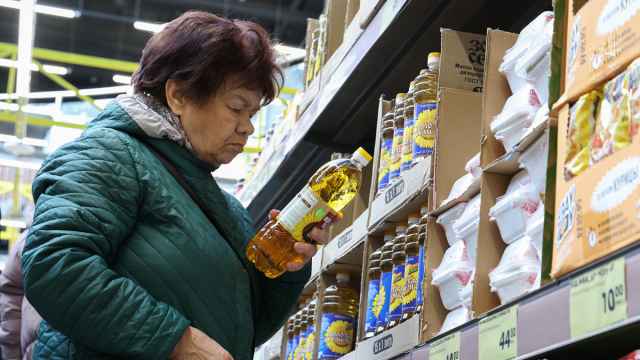

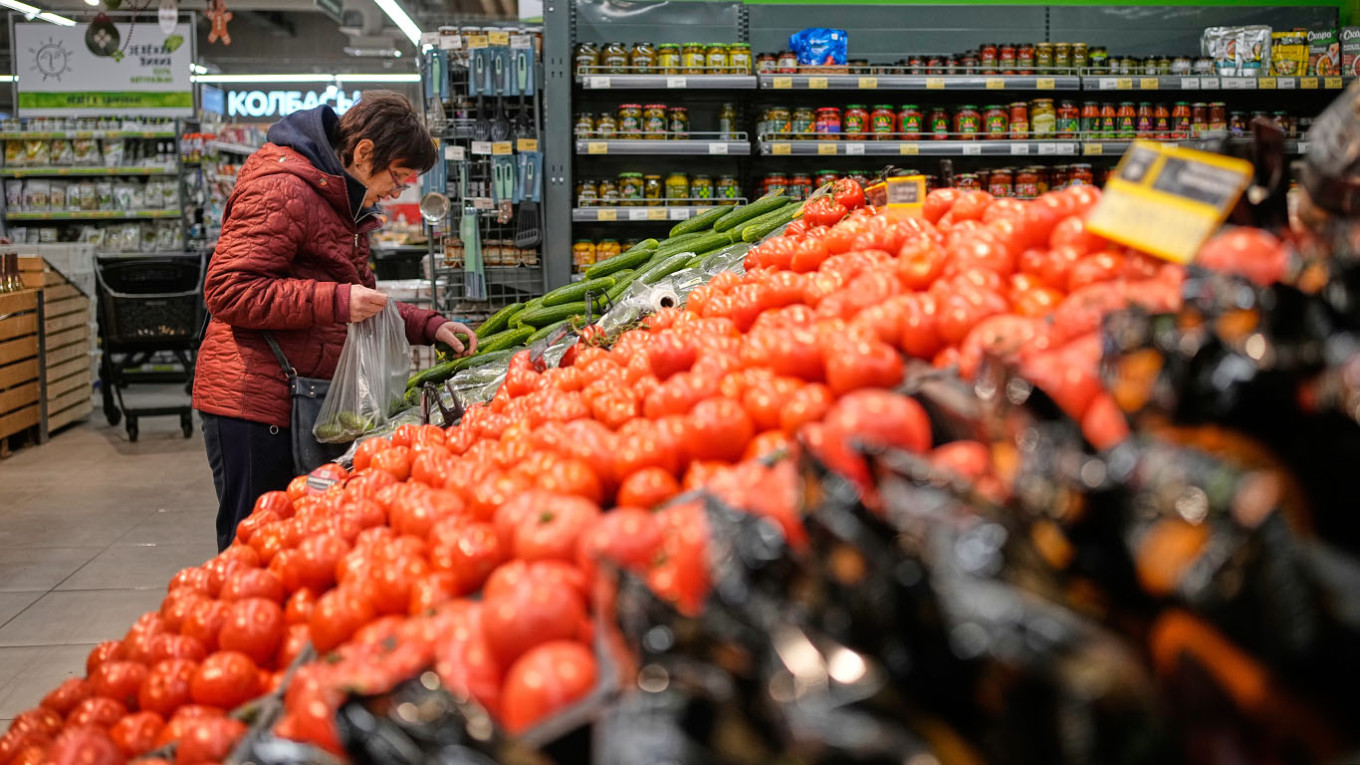
For one woman from Moscow, shopping for groceries these days has become something of a competition.
Amid a wider rise in grocery prices, she has started doing her shopping later in the evenings, when shops put discount stickers on meat and dairy products nearing their expiration dates.
She’s not the only one.
“Now I can even spot those old ladies circling around when the stickers [with discounts] are put on. We don’t like each other,” the woman joked, asking to remain anonymous.
A growing number of Russians are complaining about the rising cost of living, saying that increases in everything from utilities to food and alcohol are putting mounting strain on their wallets.
Social media has been flooded in recent weeks with videos showing shoppers comparing current prices with those of last year.
While some experts say the rising prices are the predictable result of seasonal factors and new tax changes, others point to pressure on the economy caused by Russia’s war on Ukraine and surging defense spending.
“What’s subjective about prices if you can check how much a pack of butter cost a year ago and how much it costs now, while my salary hasn’t changed?” the woman from Moscow said.
State statistics agency Rosstat says inflation stood at 5.6% at the end of 2025, while average prices for goods and services rose 4.2% in 2025.
The Central Bank has said that average wages are outpacing these increases, rising by 15% in 2025 and exceeding 100,000 rubles ($1,306) per month in 19 regions.
But there is a wide gap between these official figures and people’s lived experiences. A survey by the Public Opinion Foundation conducted for the Central Bank said perceived inflation — a measurement of how ordinary Russians experience rising prices — now stands at 14.5%.
And amid a global affordability crisis, the International Monetary Fund estimated Russia’s inflation at 9% in 2025 — more than double the global average of 4.1%.
Yelizaveta, a mother of several children from Moscow who heads a department at a Russian company, said she has recently switched to strict budgeting and started choosing the cheapest options when shopping for her family in response to the increasing prices.
“I’ve become more attentive to discounts,” Yelizaveta, 42, told The Moscow Times, adding that she now shops at the Pyaterochka grocery chain instead of the more expensive Perekrestok.
“There are certain products I just can’t give up, but apart from those exceptions, I look at the price first,” she said, adding that her family of five spends around 10,000 rubles ($130) a week on groceries.
Yelizaveta said she has stopped using beauty salons altogether and that paying for her children’s educational and extracurricular activities has become “almost impossible.”
Russians spend around 12,000-12,500 rubles ($156-195) per person per month on groceries in small towns and rural areas, 14,500-15,000 rubles ($188-195) in large cities and up to 18,000 rubles ($234) in Moscow, a 2025 study said.
Families in larger cities, where incomes are higher, typically spend a smaller share of their budget on food. While Muscovites spend 23.5% of their salaries on groceries, this share rises to 29% in cities with over 1 million people and 37.5% in small towns and villages, the study said.
This leaves poorer and rural households most vulnerable to minor price increases.
Economist Vladislav Zhukovsky said public-sector workers and pensioners were particularly affected because wages, pensions and social benefits are indexed to the official inflation rate rather than the real inflation rate.
One pensioner from Moscow said that, in her view, prices have risen “at least threefold.”
Another pensioner from the republic of Kalmykia’s capital Elista said he noticed that “prices have risen for all food products and some services, like haircuts.”
He told The Moscow Times that his family has stopped going out to eat and that goods like meat and fish have become less affordable.
Zhukovsky said that a wider shift toward cheaper staples like grains and vegetables drives prices higher in those categories as well.
Rosstat data shows that items like lemons and coffee saw steep price rises in 2025, with per-kilogram prices up 31.8% and 25.8% respectively. Rents increased 22.1%.
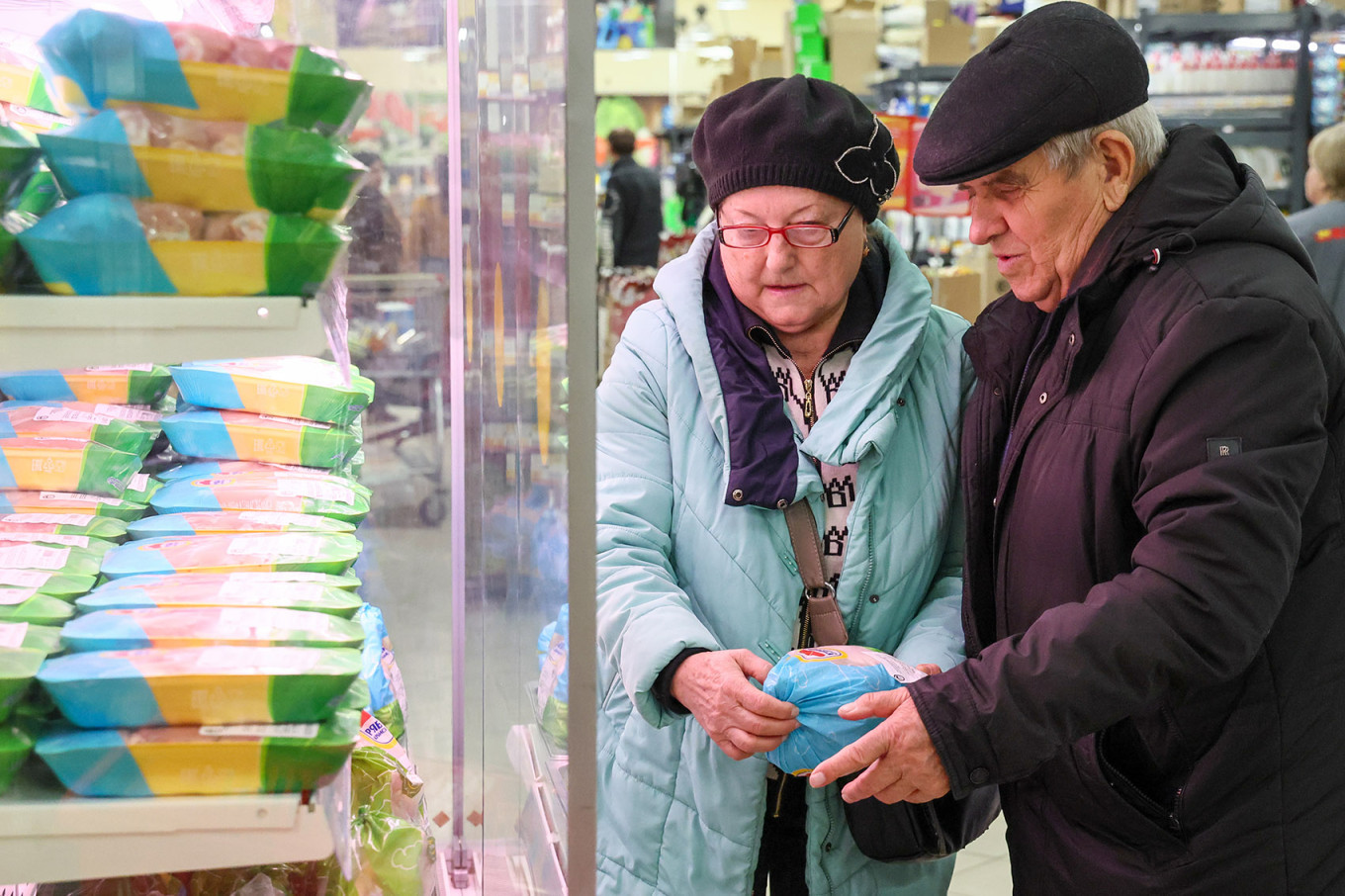
At the same time, some food prices have fallen sharply. Vegetable prices dropped by an average of 14.7%, including cabbage (-27.6%), potatoes (-21.5%) and eggs (-20%) between January and December 2025.
Prices spiked in early January, when consumer prices rose 1.26% between Jan. 1 and 12. That is more than six times the increase recorded in the final tracked week of December, when Rosstat reported that consumer price growth had slowed to 0.2%.
According to Rosstat data, the largest price increases last month were seen in fruits and vegetables like cucumbers (34.4%), tomatoes (19.4%), potatoes (10.3%), carrots (8.3%) and cabbage (7.6%).
The anti-war economic project Prices Today reported that cucumbers recorded the sharpest increase of any product last month, rising 23.5%. Only seven of 108 product categories tracked by the project saw prices fall in January, including semolina flour, buckwheat, pearl barley, millet, peas, salt and sugar.
As ordinary Russians have taken to the internet to decry the price increases since the new year, officials have moved to downplay the concerns.
The Economic Development Ministry blamed the spike on the rise in value-added tax from 20% to 22% that took effect on Jan. 1.
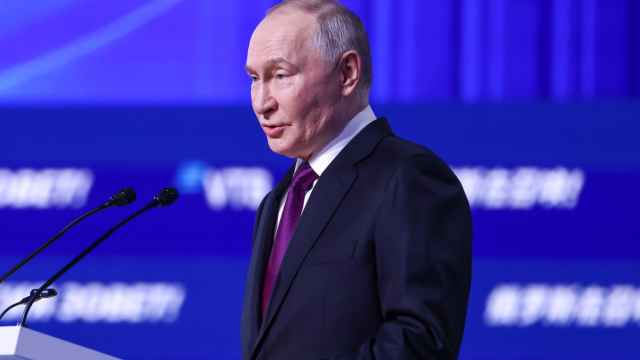
President Vladimir Putin said Tuesday that the January inflation was “expected” and linked it to the tax adjustments, adding that inflation should fall back to around 5% by the end of the year.
The Central Bank, which has kept the key rate above 16% since December 2023, said this week that it would keep interest rates high to combat inflationary pressure.
According to economist Dmitry Nekrasov, January inflation is typically among the highest of the year due to seasonal factors including annual tariff revisions.
“A 2% increase in VAT effectively leads to a direct price increase of the same 2% for some goods,” said Nekrasov, a former deputy head of the Federal Tax Service’s analytical department.
He said he did not believe that Western sanctions were behind the latest increases.
Economist Yegor Susin agreed that “although January inflation may appear formally high, it hardly seems extraordinary.”
Zhukovsky, however, said price growth reflects deeper structural problems including the war, record military spending and a budget deficit that reached 5.65 trillion rubles ($73.4 billion) last year.
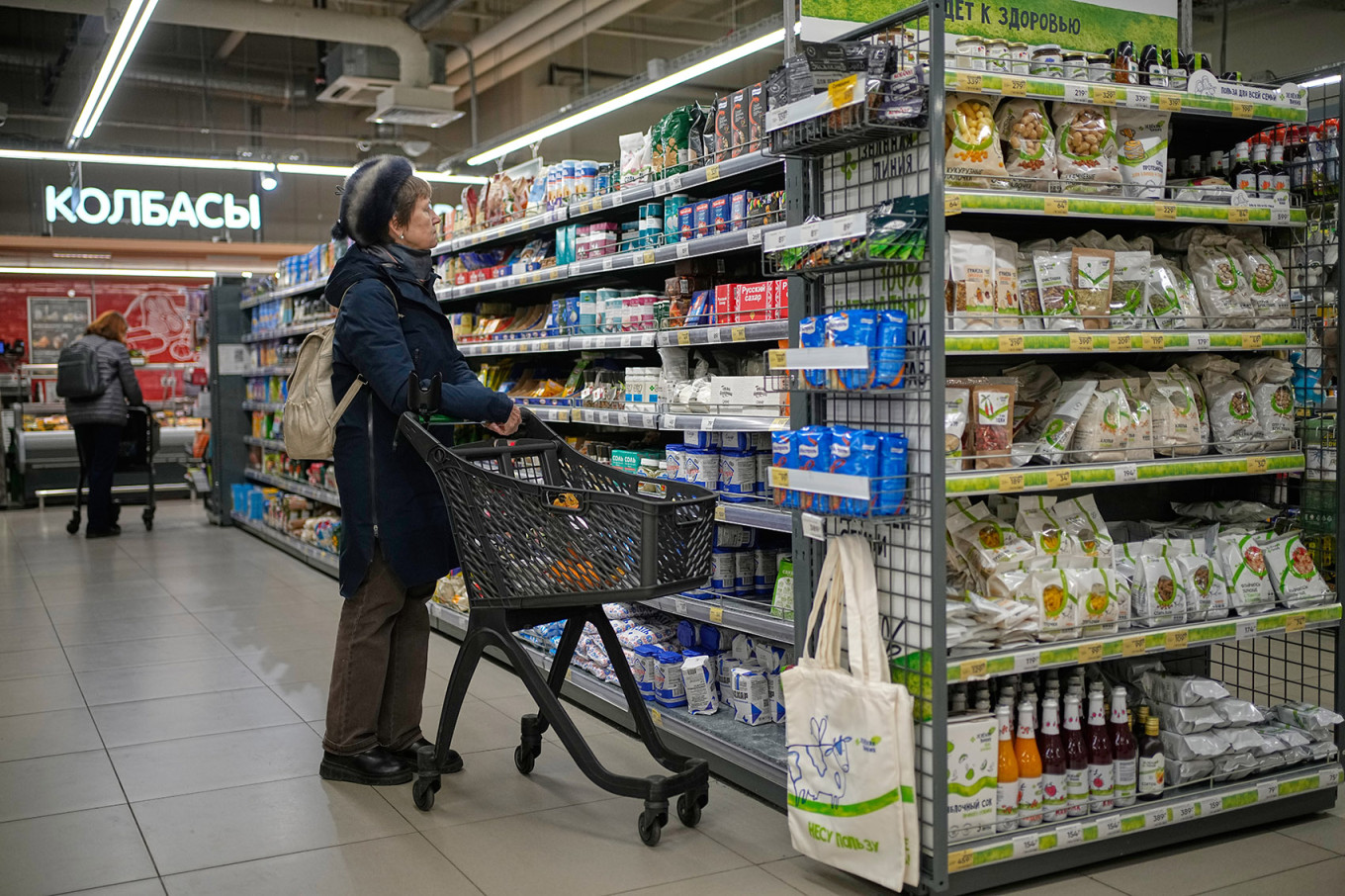
Authorities have raised taxes on consumers, households and small and medium-sized businesses to cover the shortfall, Zhukovsky told The Moscow Times.
“There are also the expansion of the money supply not backed by goods, record military spending and the diversion of labor and other resources away from civilian production into the defense sector, while military output is burned on the battlefield rather than reaching store shelves,” he said.
Western sanctions have reduced competition and limited imports, he added, creating a situation in which “there is a lot of money but few goods.”
The January spike was the result of previous statistical manipulation and the artificial suppression of price growth, he explained.
“Prices are now adjusting like a compressed spring being released,” he said.
Economists are divided on what comes next.
Nekrasov said the factors behind the January surge were temporary and that inflation should ease in the spring.
Zhukovsky was more pessimistic, predicting that inflation would continue rising through 2026.
“As long as the war continues, resources will keep being diverted from civilian sectors. The defense industry will continue to expand, while the supply of civilian goods will not,” he said. “As a result, the budget deficit will be increasing, taxes will continue to rise, businesses will suffer losses and prices will keep going up.”
A Message from The Moscow Times:
Dear readers,
We are facing unprecedented challenges. Russia's Prosecutor General's Office has designated The Moscow Times as an "undesirable" organization, criminalizing our work and putting our staff at risk of prosecution. This follows our earlier unjust labeling as a "foreign agent."
These actions are direct attempts to silence independent journalism in Russia. The authorities claim our work "discredits the decisions of the Russian leadership." We see things differently: we strive to provide accurate, unbiased reporting on Russia.
We, the journalists of The Moscow Times, refuse to be silenced. But to continue our work, we need your help.
Your support, no matter how small, makes a world of difference. If you can, please support us monthly starting from just $2. It's quick to set up, and every contribution makes a significant impact.
By supporting The Moscow Times, you're defending open, independent journalism in the face of repression. Thank you for standing with us.

Remind me later.