
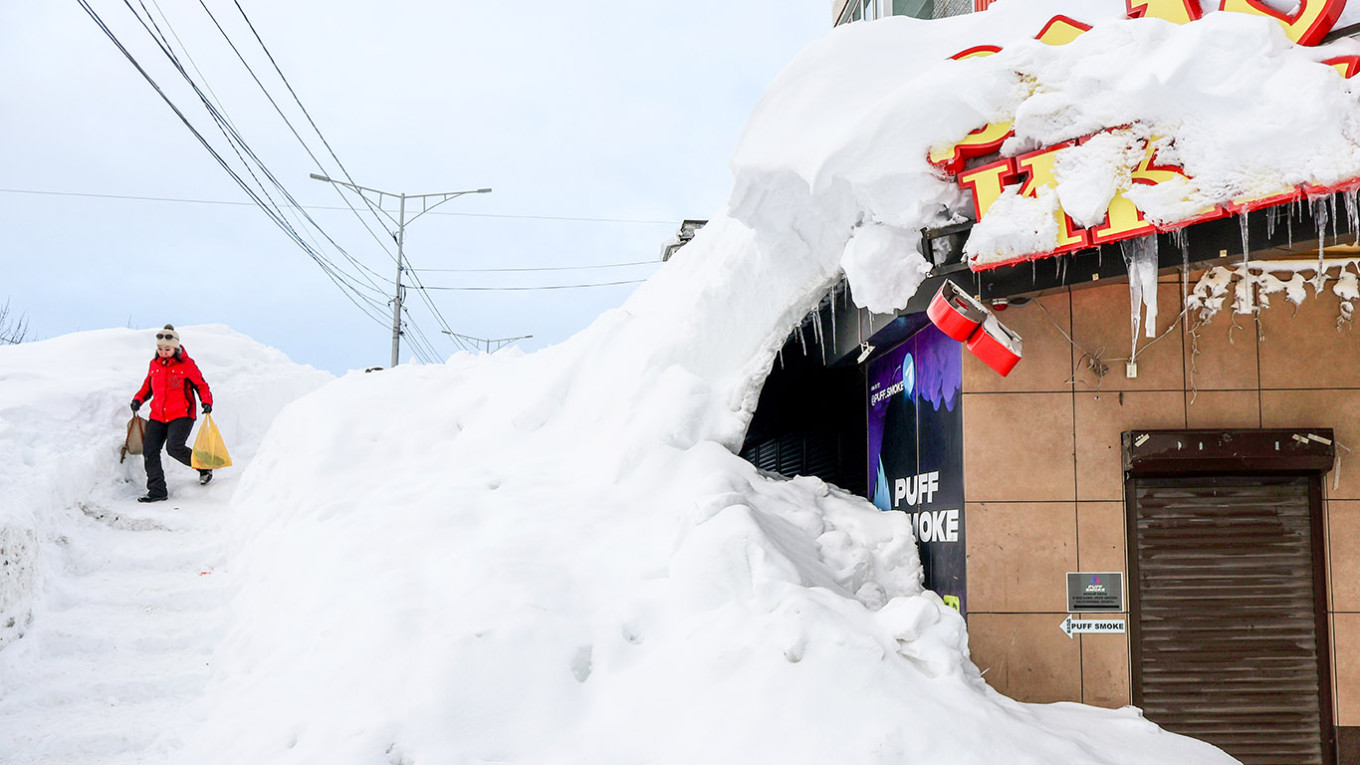
The chaos caused by recent extreme snowstorms across Russia has laid bare the hypocrisy of President Vladimir Putin’s regime when it comes to protecting its own people. The invasion of Ukraine was justified as a defense against imaginary threats posed by Ukraine and the West. In contrast, the real dangers posed by climate change to the Russian people are largely ignored.
Extreme winter weather caused by the climate crisis is becoming an increasingly frequent challenge in Russia. Yet aging infrastructure and a state budget overwhelmingly focused on the war make it even harder for Russians to cope.
Climate change is often associated with warming — and indeed, heat waves, forest fires, droughts floods and melting permafrost are already becoming routine across Russia.
But as the planet warms, extreme cold events are also likely to become more unpredictable and severe.
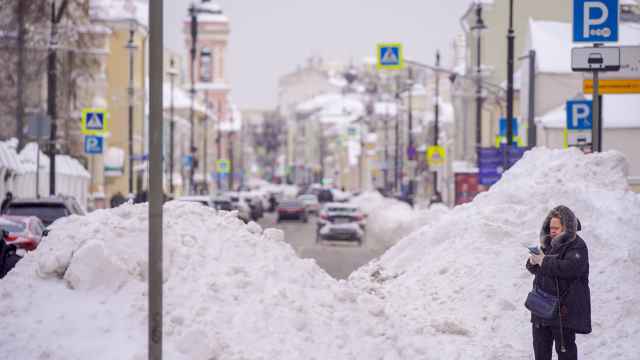
In the past month alone, we have seen the most significant snowfall since 2001 in Kaliningrad, the heaviest snowfall in 30 years in Kamchatka and the most significant snowfall in over 200 years in Moscow, followed by extremely low temperatures unseen for decades.
These events have led to airport closures, massive traffic jams, road blockages, a state of emergency and blackouts in the Krasnodar and Murmansk regions caused by snowfall and power lines icing over.
The winter of 2025-2026, with its cold-weather events that hit Russia as never before, should be a wake-up call.
Despite widespread climate skepticism and denialism, it is evident that a changing climate is a real threat to Russia. The country is warming faster than the global average, which makes it especially vulnerable to climate-related shocks. Given the enormous inequality in Russia, those most affected will be the poor, rural and Indigenous communities, who have no influence over either the fossil fuel industries or the war in Ukraine.
Climate skeptics and climate denialists are wrong. The majority of Russians will not benefit from climate change. Rising temperatures will not lead to more bountiful harvests or lower energy consumption. On the contrary, unpredictable climate events will bring greater chaos to agriculture, transport, logistics and energy systems.
What was already clear years ago to Indigenous communities, like the Sami on the Kola Peninsula, where I lived for 20 years, is now evident to citydwellers detached from nature.
For the Sami, delayed snowfalls followed by unseasonably warm periods have made traditional reindeer herding in the tundra more difficult. In recent years, we have had less snow, which means more ice, making reindeer more vulnerable to injuries.
This pattern of melting and freezing makes for a more challenging winter than a regular cold and snowy one.
For infrastructure, that could mean icy roads and railways, powerline breakouts like what happened in Murmansk, more injuries and more disease. In agriculture, unexpected thaws and freezes can devastate winter crops.
Russian authorities are incredibly unprepared for the challenges of a changing climate. Across the country, 40% of utility networks have experienced severe wear and tear, a figure that rises to 80% in some regions. In Murmansk, two out of the five transmission towers that collapsed were 60 years old, and two others were near the end of their 40-year lifespan.
Putin wasted the richest years of Russia’s modern history by enabling the profiteering of oligarchs rather than investing in infrastructure. What we have in Russia now is a legacy of the Soviet era, with neither proper maintenance nor improvement having been done in the decades since the end of the U.S.S.R.
Today, both political focus and the budget are in the wrong place: on the war against Ukraine, not on the fight against climate change. Most regional adaptation plans are mere formalities. If Putin genuinely cared about Russia’s security, he would invest in robust infrastructure and climate resilience measures.
The country’s overly centralized energy system is another problem. Again, in Murmansk, its reliance on the Kola nuclear power plant and the fact that only a single power line connects the world's largest Arctic city to the broader Russian energy grid is at least partly responsible for the blackout as temperatures plunged below minus 20 degrees Celsius. A network of interconnected small-scale renewable energy sources, which environmental groups in the region have demanded, could have been a much better fit for that remote city.
The climate crisis brings not just rising temperatures, but unpredictability. It is no longer unusual for some parts of Russia to experience snowfall only once a month or even once in many years. When snow finally does fall, public services are caught unprepared. In a country renowned for bitter winters, the chaos caused by this winter’s snowstorms is both embarrassing and revealing of governmental dysfunction.
In our climate lawsuit against Russia filed in 2022, we referred to over 55,000 premature deaths caused by the heat wave that struck Russia in 2010. Winter extremes also have deadly consequences. In Kamchatka, at least two people died in avalanches, and in the Krasnodar region, 14 people were hospitalized due to accidents. The exact number of casualties will only be known later.
The harsh reality of a changing climate also complicates the Kremlin’s Arctic ambitions. Melting ice, disrupted water and wind flows and extreme weather threaten the viability of Arctic transport routes.
As the 40th anniversary of the Chernobyl disaster approaches, it’s worth remembering that Russia is neither equipped nor prepared to tackle catastrophic events in the Arctic. While Rosatom is increasing the number of floating nuclear reactors in the region, we have seen how even the late 2024 oil spill in the southern Black Sea was poorly managed. A serious accident in the Arctic with oil or nuclear materials would have long-lasting consequences and could undermine Russia’s ability to operate there.
The snowstorms and other extreme winter weather events across Russia and the globe are yet another reminder that we are facing a major threat to our civilization that no country can solve on its own.
Let’s take it as a wake-up call to stop fighting our neighbors and finally confront the challenge that will define the future of Russia and the planet alike.
A Message from The Moscow Times:
Dear readers,
We are facing unprecedented challenges. Russia's Prosecutor General's Office has designated The Moscow Times as an "undesirable" organization, criminalizing our work and putting our staff at risk of prosecution. This follows our earlier unjust labeling as a "foreign agent."
These actions are direct attempts to silence independent journalism in Russia. The authorities claim our work "discredits the decisions of the Russian leadership." We see things differently: we strive to provide accurate, unbiased reporting on Russia.
We, the journalists of The Moscow Times, refuse to be silenced. But to continue our work, we need your help.
Your support, no matter how small, makes a world of difference. If you can, please support us monthly starting from just $2. It's quick to set up, and every contribution makes a significant impact.
By supporting The Moscow Times, you're defending open, independent journalism in the face of repression. Thank you for standing with us.

Remind me later.