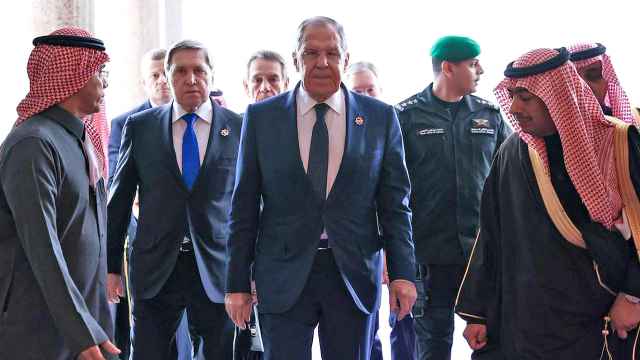

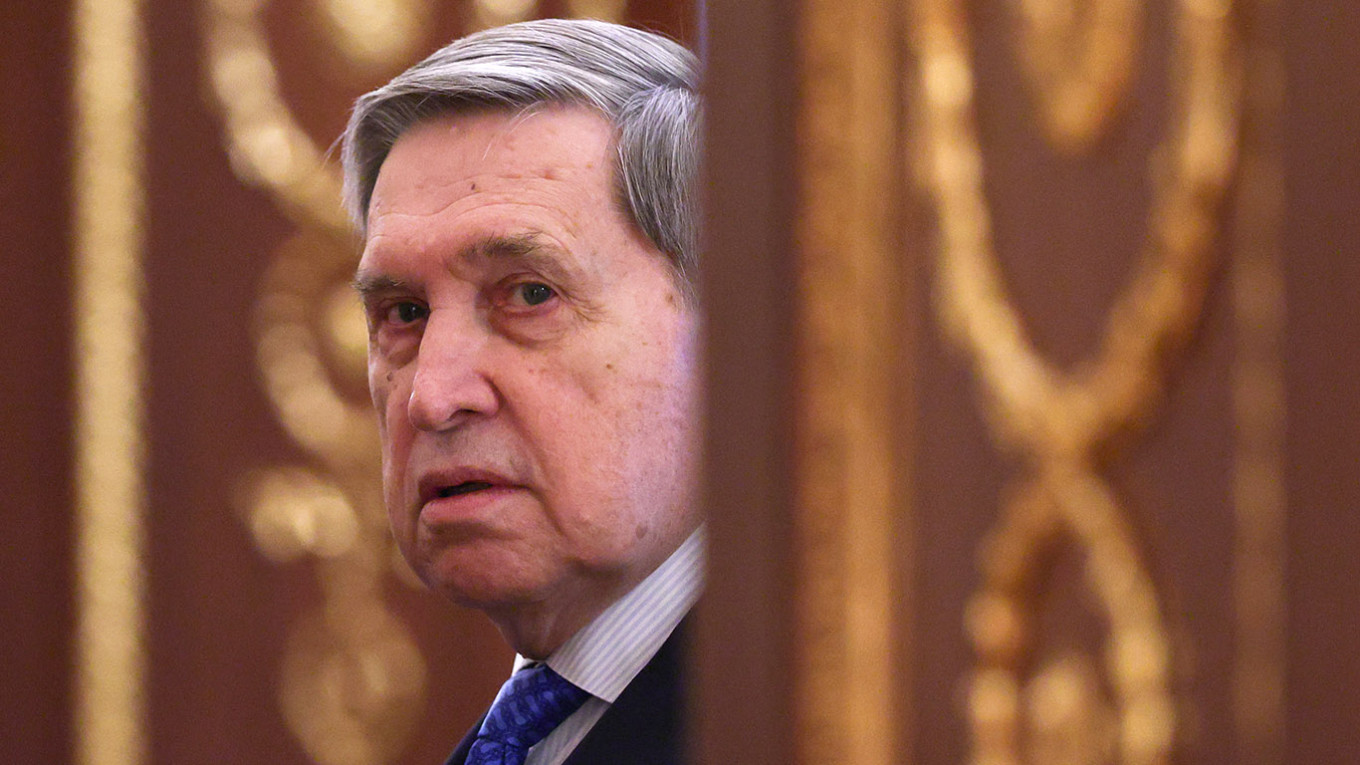
Yury Ushakov wanted Spanish ham and porridge made with low-fat milk.
The request vexed his aides. They were in Mongolia, for one, where neither item was easy to find on short notice. And they had bigger concerns, like making sure this brief state visit in the fall of 2014, shortly after the annexation of Crimea, where President Vladimir Putin would sign a series of trade deals, ran smoothly.
If the Kremlin’s senior foreign policy adviser didn’t get his way, the result would be a “catastrophe,” said former Russian diplomat Boris Bondarev, who helped prepare the visit.
For him, it was a telling window into the priorities of one of Putin’s closest confidants.
“Guys, you’re in Mongolia, there is no jamón here,” Bondarev recalled telling Ushakov’s aides when they asked for his help. “It’s not Moscow, it’s not New York.”
That didn’t matter.
“They were not concerned about the political substance of the visit,” Bondarev continued. “They were mostly concerned about the menu that Ushakov likes to get in his hotel room.”
More than a decade later, the political substance of Ushakov’s job is a matter of global importance — and intrigue.
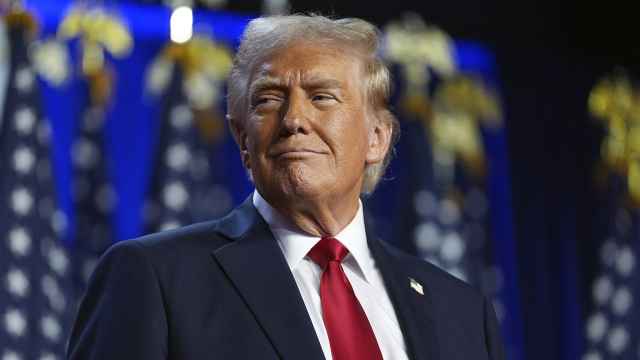
Round-faced with cropped gray hair and fluent in English and Danish, the 78-year-old career diplomat has emerged as one of the Kremlin’s key intermediaries with the Trump administration in negotiations to end the war in Ukraine.
Analysts and those who knew him say that Ushakov has eclipsed Foreign Minister Sergei Lavrov to become Russia’s most powerful foreign policy adviser.
A consummate professional to foreign counterparts and a demanding boss to subordinates, sources told The Moscow Times that Ushakov is a man who plays his cards close to his chest. His insider knowledge of Washington politics has afforded the former ambassador to the U.S. a high degree of trust with Putin, they said.
While the extent of his power is opaque, one thing is clear: few people have more direct access to Putin.
Ushakov, whose formal title is “aide to the president,” is often seen at Putin’s side during high-stakes diplomatic engagements, and his frequent post-meeting comments to the press have made him something of a translator for the Russian president’s foreign policy aims.
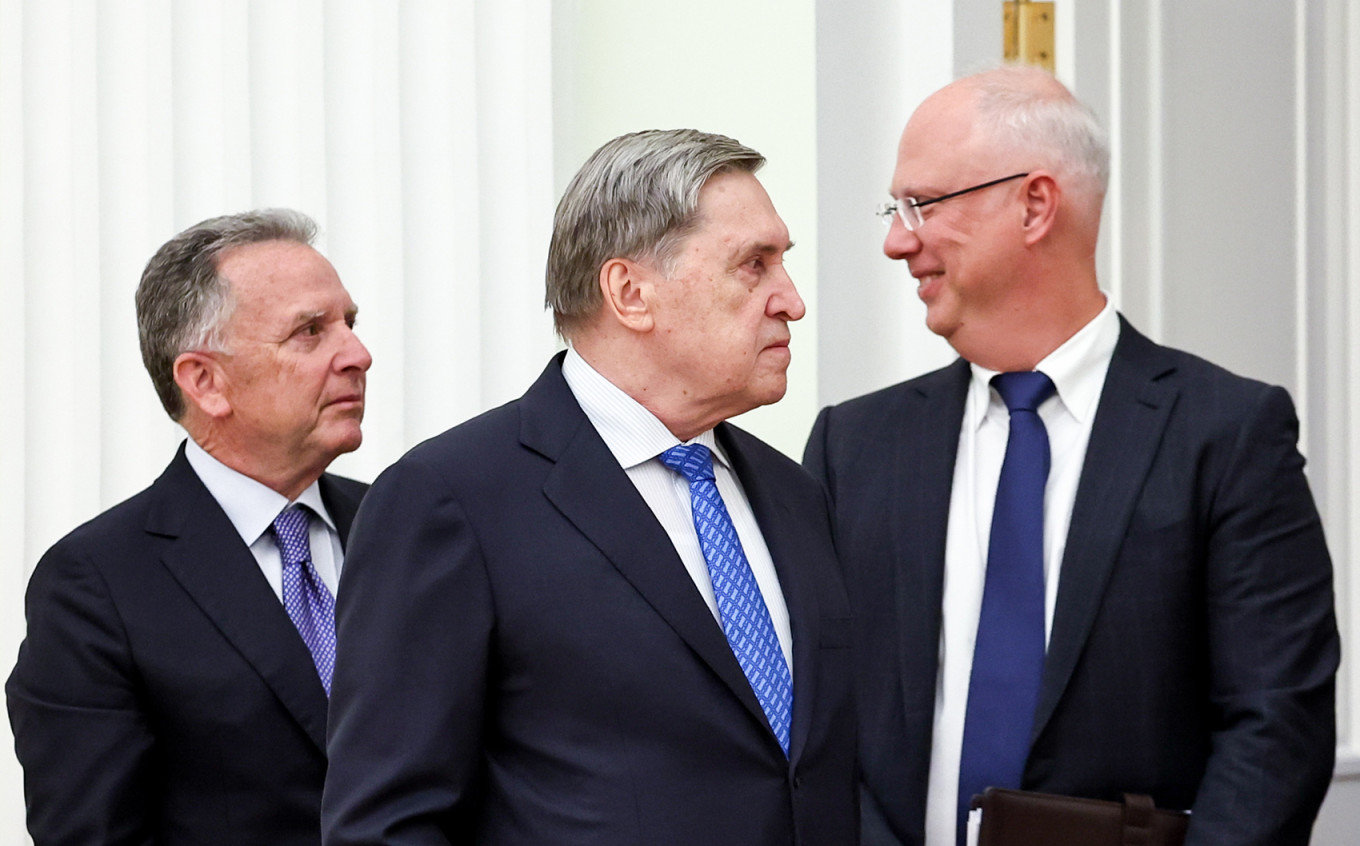
Kremlin spokesman Dmitry Peskov did not respond to emailed questions about Ushakov’s role, but one of his main duties is obvious: spinning the Kremlin’s narrative. Mere days before the full-scale invasion of Ukraine, Ushakov dismissed fears over Russia’s military buildup as “hysteria.”
While many details of his biography remain unclear, some basic facts are apparent. Ushakov was born in Moscow in 1947. Educated at the elite Moscow State Institute for International Relations, he entered the diplomatic service as a young man and never left.
One of his first postings out of school was at the Soviet Embassy in Copenhagen, Denmark. Back in the U.S.S.R., he wrote a dissertation for a Ph.D. granted in 1977 titled “The problem of European détente in the foreign policy of the Nordic countries.”
Ushakov left Denmark for good and returned home to a newly independent Russia in 1992. He was given charge of a department overseeing Russia’s relations with Western political organizations including the European Union, NATO and OSCE.
These experiences amounted to a padded resume even before, at the decade’s end, Ushakov received a star-making promotion.
The Kremlin’s man in Washington
When Ushakov, newly appointed by President Boris Yeltsin as Moscow’s ambassador to the U.S., arrived in Washington in January 1999, he was met by a full workload.
The recent U.S. bombing of Iraq had enraged Moscow so much that it recalled its previous ambassador, Yuly Vorontsov. The week prior, Washington sanctioned three Russian scientific organizations for allegedly helping Iran develop its nuclear program.
“Our relations are going through a tricky period, a complicated period,” he said in a TV interview shortly before leaving Moscow. “But nevertheless America for us has the greatest importance and everyone in Moscow understands this.”
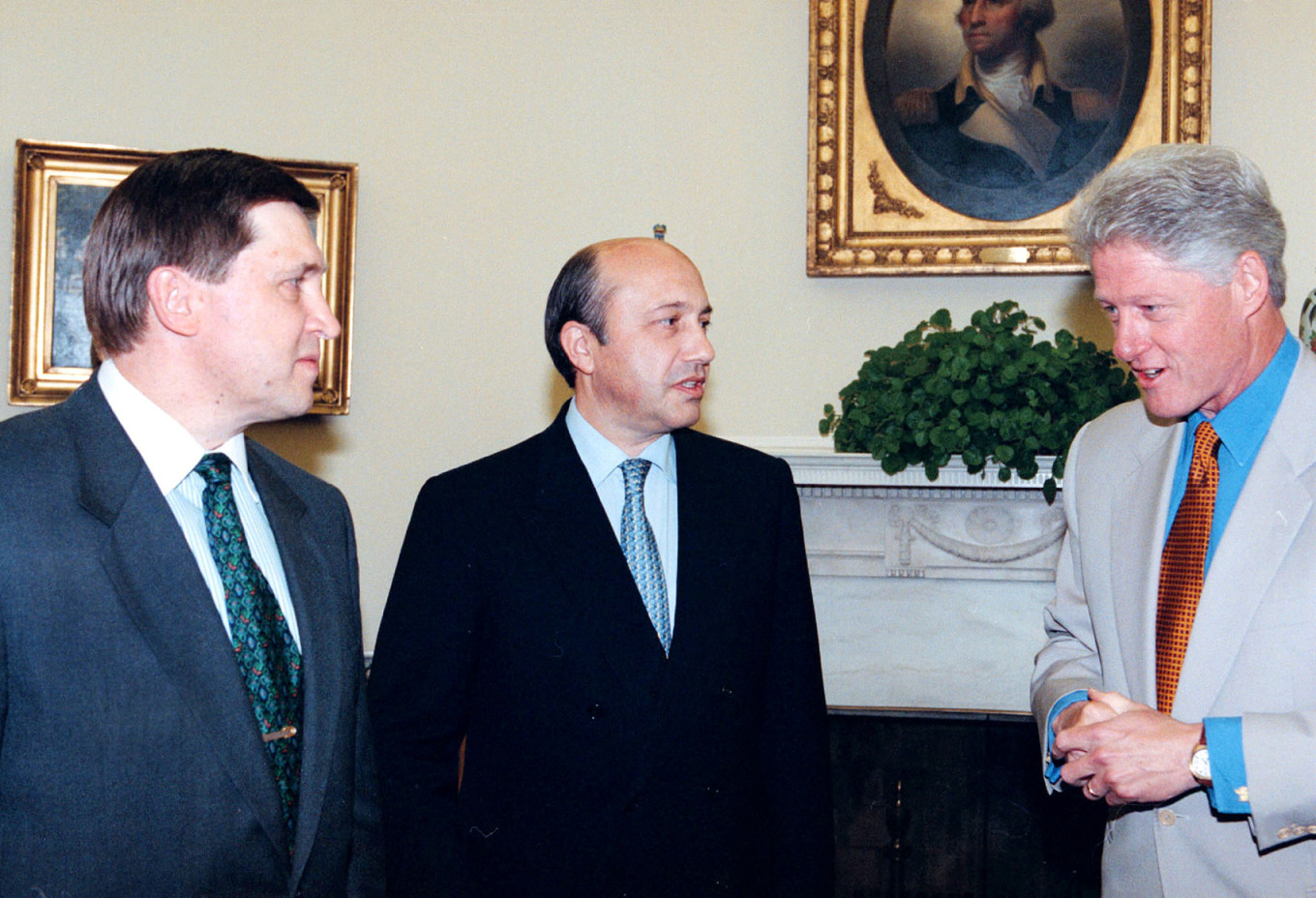
As U.S.-Russia relations steadily worsened under President George W. Bush’s administration, Ushakov proved a steady and well-connected intermediary.
He became a familiar presence in Washington’s diplomatic and policy circles, attending think-tank events, hosting lavish embassy receptions and cultivating ties across government and business.
On summer weekends, he and his wife retreated to a three-story cottage on Maryland’s eastern shore where, in a nearby lodge, a wall mural depicted cheerful Russian and American sailors toasting their drinks.
Once, he and former Congressman Charles Taylor danced with a group of Russian students visiting North Carolina’s Brevard College.
Angela Stent, a Russia expert who worked in the State Department’s Office of Policy Planning and on the National Intelligence Council in the 2000s, met Ushakov in the early days of his ambassadorship. Like others interviewed for this story, she recalled Ushakov as professional and mild-mannered, curious but not over-bearing.
“He was viewed as someone who certainly played his cards close to his vest, but was someone who was approachable,” Stent said.
“Ushakov was not one of the more voluble ambassadors,” she continued. “By the time [later ambassadors] came, relations were worse and it was more adversarial, but Ushakov was quiet-spoken.”
“He had good contacts,” Stent added. “He was well received.”
Ushakov’s sourcing in Washington was so good, in fact, that it sometimes startled his associates.
At a Christmas party in late 2003, Stent recalled, Ushakov congratulated her on accepting a senior government post — before the news had become public.
“My understanding then was that he had pretty good access to people,” Stent said.
It was around this time that the U.S. may have taken an interest in having good access to Ushakov, too. In the 2000s, Oleg Smolenkov, later discovered to be a spy for Washington, worked in the embassy under Ushakov and later joined him in Moscow to work on Putin’s foreign policy team. It’s unclear if Smolenkov — whose intelligence reportedly shed light on Russian meddling efforts in the 2016 U.S. presidential election — was already spying at the time.
While many associates from his days in Washington recall Ushakov’s gentlemanly demeanor, Bondarev said he had a reputation among fellow Russian diplomats as being difficult to work with.
“He is known for being extremely rude, capricious and unpredictable,” Bondarev told The Moscow Times.
Contrasting him with the foreign minister, Bondarev said that “Lavrov from the beginning was considered to be very polite, a very well-mannered man who never raises his voice and was a good boss. And Ushakov was totally the opposite.”
As ambassador, Ushakov was hopeful about the future of U.S.-Russia relations, people who knew him said. He was particularly interested in the lucrative potential of business deals between the two countries.
In an article for Politico published last summer, Toby Gati, a former Russia analyst in the Clinton administration who knew Ushakov during his time in Washington, wrote that the ambassador “believed then that better business relations would better advance Russia’s interests.”
Today, Russia is again employing a business-forward strategy in engaging Washington — this time in talks to end the war in Ukraine.
The Wall Street Journal reported in November that Russian officials have spoken with American counterparts of rare-earth mining contracts, rights to extract natural gas and joint business ventures in the Arctic during peace talks on Ukraine.
“We can transition investment trust into a political role,” Kirill Dmitriev, a key negotiator on the Russian side, said in an interview.
Darkening skies
By 2008, Putin, constitutionally barred from another consecutive presidential term, orchestrated a power-sharing agreement in which he would become prime minister. In an effort to retain control over Russia’s foreign affairs, he created a new foreign policy post in his cabinet and brought in Ushakov to fill it.
After 10 years, the man who once joked that “only God and Mr. Putin” knew how long he would serve as U.S. ambassador was back in Moscow at the latter’s request.
His return coincided with a chill in relations with the West as Russian troops invaded Georgia in a brief war in late 2008 and, a few years later, Moscow annexed Crimea from Ukraine.
Former associates say Ushakov grew more guarded after moving into the Kremlin.
“[The] more time he spent there … the more I watched his view of the United States evolve, increasingly influenced not only by a distinctly darker view of America, but also by domestic concerns, particularly as Russia entered a period of turmoil around parliamentary elections in 2011,” Gati wrote for Politico.
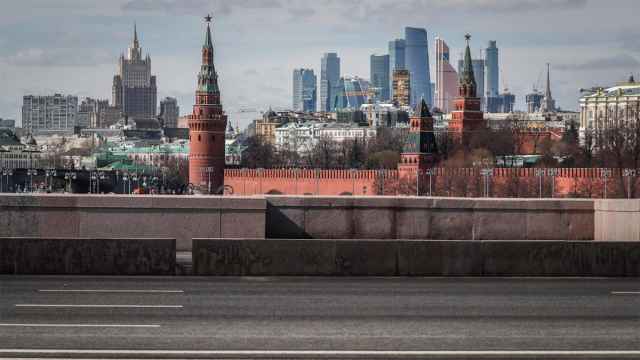
Andrew Kuchins, the former head of Russia programs at the Carnegie Endowment and Center for Strategic and International Studies, maintained a professional relationship with Ushakov in the 2000s. In an interview with The Moscow Times, he recalled one of his last conversations with the Kremlin aide, when he interviewed him about U.S.-Russia relations in his office on Moscow’s historic, tree-lined Staraya Square in 2016.
“There were considerably more restrictions on, I think, what he felt comfortable to say,” Kuchins said of how the meeting compared to his previous interactions with Ushakov.
“He kind of went through the litany of reasons from the Russian perspective for the deterioration of the U.S.-Russia relationship,” Kuchins added, noting that Ushakov was pessimistic about the future of those relations.
Ushakov is different from others in Putin’s inner circle, Kuchins said. He is neither an ideologue, nor one of the siloviki — the powerful military and intelligence veterans who make up the core of political power in the Kremlin.
That might be why his rhetoric diverged from theirs so greatly during his and Kuchins’ meeting.
“He was not spouting the line about the ‘illegal coup’ in Ukraine in 2014, and he just wasn’t saying things that were part of the Kremlin talking points about the Ukraine war,” Kuchins said.
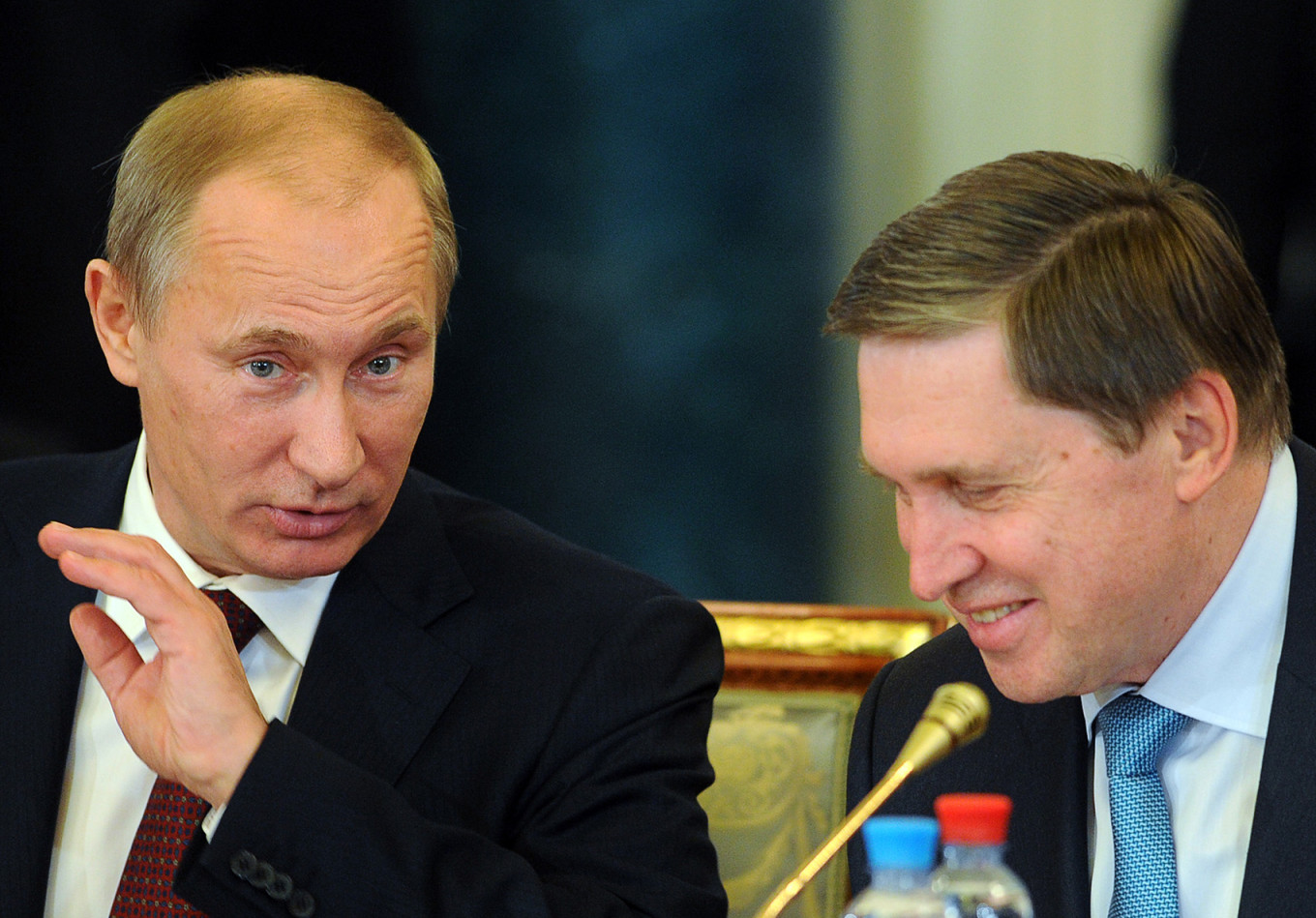
Today, Ushakov’s time is largely spent trying to maximize Russia’s diplomatic advantage in the conflict.
Publicly, he is the explainer of Putin’s intentions. Ushakov regularly speaks with reporters after talks with the American side, giving dry, monotone summaries of outcomes couched in diplomatic jargon.
A more candid look into his role came last fall, when Bloomberg published a leaked call between Ushakov and White House special envoy Steve Witkoff in which Witkoff appeared to coach his Russian counterpart on how Putin could best ingratiate himself with Trump.
Ushakov had been passed over for the position of foreign minister back in 2004, according to three sources, including Bondarev. But the Witkoff call was a window into what analysts told The Moscow Times has evolved into an even more powerful role.
“Ushakov has been key to the backchannel communication between Russia and the United States during the war in Ukraine,” said Sergey Radchenko, a historian and professor at the Johns Hopkins School of Advanced International Studies.
“It seems clear to me that he plays a much greater role in the formulation of Russia’s foreign policy than, say, Lavrov, who has more or less been sidelined from key decisions,” he said.
Radchenko said that Ushakov fills a role in the Kremlin akin to the U.S. national security adviser. Leonid Brezhnev had Andrei Alexandrov-Agentov, Mikhail Gorbachev had Anatoly Chernyaev — and Putin has Ushakov.
These advisers “have immediate access to the top leadership, and thus serve as crucial interlocutors, in particular in crisis situations,” Radchenko said.
While Lavrov is charged with overseeing Russia’s foreign policy broadly, Ushakov handles matters in which Putin needs to be “directly involved,” said Bondarev. This includes backchannel communication with Western officials.
“He must be aware of everything that goes on in [Russia’s] foreign policy, that goes to Putin, that requires Putin’s personal attention,” he said. “So he’s there to help Putin with that because Lavrov, being a minister, cannot also be Putin’s assistant.”
It appears to be a lucrative job. A 2022 investigation by investigative outlet Metla found that Ushakov’s family owns millions of rubles worth of real estate in luxurious Moscow high rises and a fleet of expensive vehicles.
Perhaps most perplexing about Ushakov is that, despite his lofty position, he remains a largely inscrutable figure — and that is likely by design, those who know him believe.
Adding to his mystery, they also said they find it difficult to square the cautious but hopeful diplomat they once knew with the person now playing a key role in Putin’s war effort.
“I know that at some level, he’s very disappointed with what’s happened with U.S.-Russia relations,” said Kuchins. “And I think he’s too thoughtful and reflective not to understand where at least a significant part of the blame goes for that.”
A Message from The Moscow Times:
Dear readers,
We are facing unprecedented challenges. Russia's Prosecutor General's Office has designated The Moscow Times as an "undesirable" organization, criminalizing our work and putting our staff at risk of prosecution. This follows our earlier unjust labeling as a "foreign agent."
These actions are direct attempts to silence independent journalism in Russia. The authorities claim our work "discredits the decisions of the Russian leadership." We see things differently: we strive to provide accurate, unbiased reporting on Russia.
We, the journalists of The Moscow Times, refuse to be silenced. But to continue our work, we need your help.
Your support, no matter how small, makes a world of difference. If you can, please support us monthly starting from just $2. It's quick to set up, and every contribution makes a significant impact.
By supporting The Moscow Times, you're defending open, independent journalism in the face of repression. Thank you for standing with us.

Remind me later.