
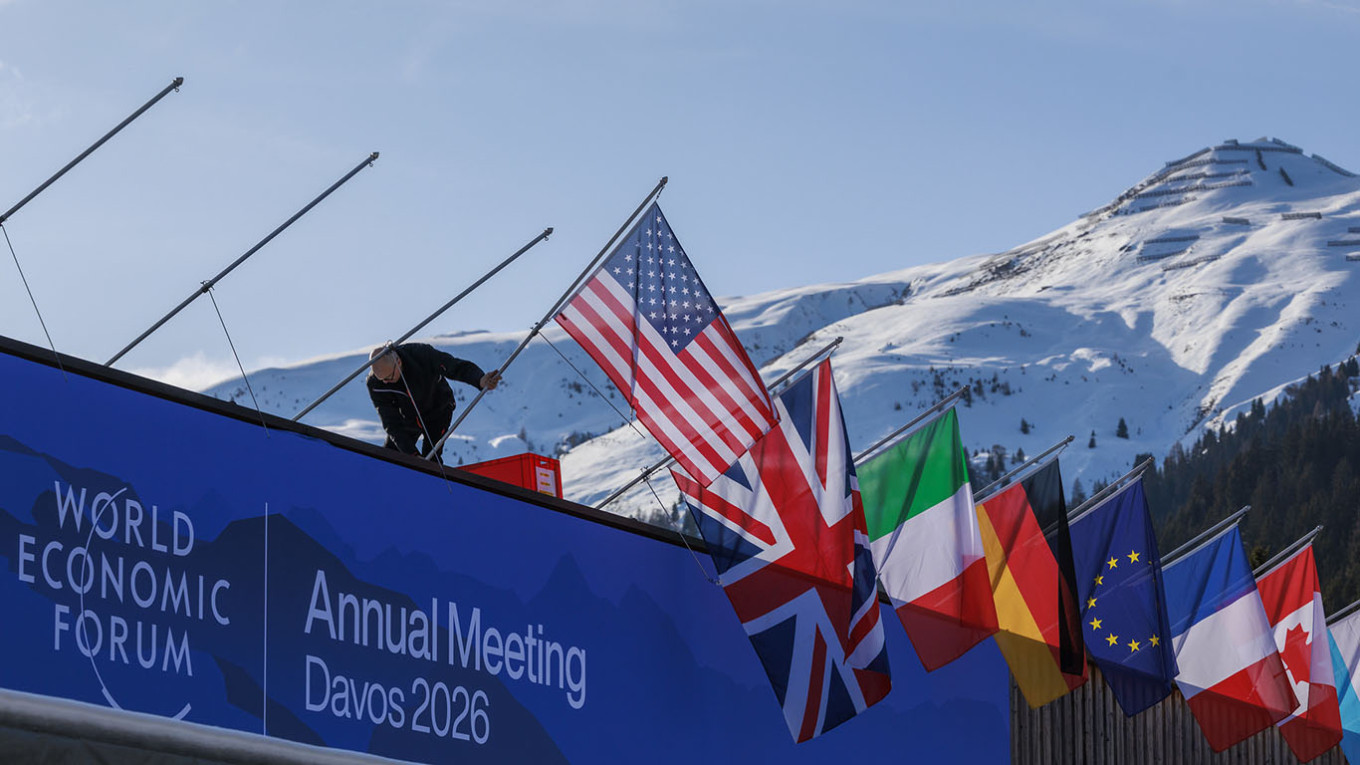
DAVOS, Switzerland — President Donald Trump’s threats to annex Greenland and impose punitive tariffs on European countries who oppose him are set to dominate the annual World Economic Forum meeting this week.
But although the U.S. leader’s demands to control the mineral-rich Arctic island have pushed Russia’s full-scale invasion of Ukraine out of the spotlight, the war and its economic fallout will remain high on the agenda at the gathering of world leaders.
“Europe was anxious when Trump was elected. It’s even more anxious now, largely because of Greenland,” a former U.S. diplomat told The Moscow Times, speaking on condition of anonymity.
Trump is attending this year’s meeting in person after appearing by video appearance last year just days after his inauguration. He is due to address the forum on Wednesday afternoon.
“What Trump does will be the top story,” the diplomat said.
As the first full day of events got underway in Davos on Tuesday, Trump shared text messages from French President Emmanuel Macron and NATO Secretary General Mark Rutte on Truth Social which indicated that European leaders are keen to engage him on Greenland while in Davos.
A sizable U.S. delegation is expected to accompany Trump to the Swiss resort town, including special envoy Steve Witkoff and Trump’s son-in-law Jared Kushner. Both are key players in his administration’s efforts to engage Moscow in talks aimed at ending the war in Ukraine.
The U.S. president has also said he may meet Ukrainian President Volodymyr Zelensky in Davos.
Zelensky has suggested he would skip the World Economic Forum to address the aftermath of Russian strikes on Ukraine's energy infrastructure that have left tens of thousands without heating or electricity amid freezing temperatures.
But he said he could make the trip if a “prosperity” agreement with the U.S. that would unlock about $800 billion in reconstruction investment was ready to be signed.
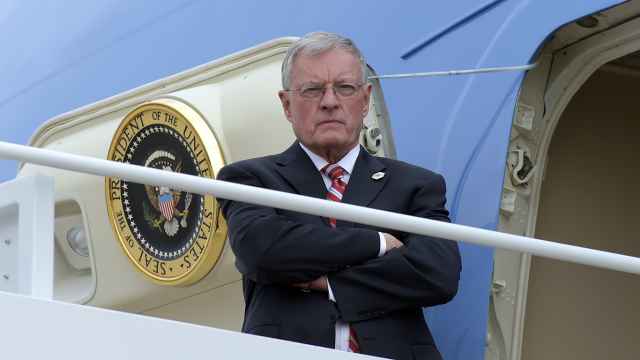
A Ukrainian delegation, including national security chief Rustem Umerov, Kyrylo Budanov and David Arakhamia, just returned from Miami, where they met with Witkoff, Kushner, U.S. Secretary of the Army Dan Driscoll and White House staff member Josh Gruenbaum.
The discussions in Miami reportedly covered the prosperity agreement and security guarantees for Ukraine.
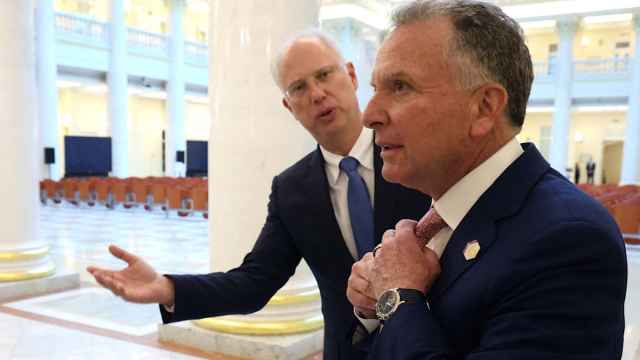
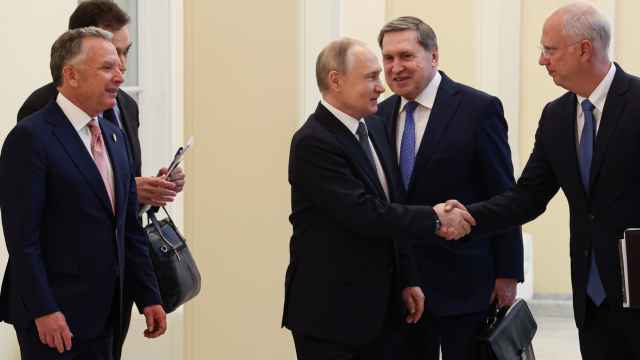
At Davos on the Russian side is Kremlin envoy Kirill Dmitriev, who is expected to meet with Witkoff and Kushner, according to media reports.
Russians have been largely absent from Davos since 2022, when the World Economic Forum froze ties with Moscow over its full-scale invasion of Ukraine.
Before the war, Russian businessmen and oligarchs had been known for hosting lavish parties at the Alpine resort each year.
The former Russia House in Davos, which turned into the "Russia War Crimes House" in 2022, became the CNBC House this year.
Panels focused on the war remain on the agenda.
On Wednesday, a session titled “Can Russia Sustain a Wartime Economy” will feature Belarusian opposition leader Sviatlana Tsikhanouskaya, Moldovan Prime Minister Alexandru Munteanu and Romanian Foreign Minister Oana-Silvia Țoiu, moderated by Alexander Gabuev of the Carnegie Russia Eurasia Center.
Nearby, Ukraine House Davos is hosting a panel on “Europe’s Future Energy Powerhouse: From Destruction to Ukrainian Dominance” featuring Economy, Environment and Agriculture Minister Oleksiy Sobolev, moderated by Lenna Koszarny, CEO of Kyiv-based private equity firm Horizon Capital.
BlackRock CEO Larry Fink and Swiss billionaire André Hoffmann are presiding over the conference of global business leaders, which will meet for the first time without founder Klaus Schwab, who resigned as chairman in 2025.
Trump has tapped BlackRock, the world’s largest asset manager, to design a recovery plan for Ukraine, with further details expected to emerge at Davos, The New York Times reported.
A Message from The Moscow Times:
Dear readers,
We are facing unprecedented challenges. Russia's Prosecutor General's Office has designated The Moscow Times as an "undesirable" organization, criminalizing our work and putting our staff at risk of prosecution. This follows our earlier unjust labeling as a "foreign agent."
These actions are direct attempts to silence independent journalism in Russia. The authorities claim our work "discredits the decisions of the Russian leadership." We see things differently: we strive to provide accurate, unbiased reporting on Russia.
We, the journalists of The Moscow Times, refuse to be silenced. But to continue our work, we need your help.
Your support, no matter how small, makes a world of difference. If you can, please support us monthly starting from just $2. It's quick to set up, and every contribution makes a significant impact.
By supporting The Moscow Times, you're defending open, independent journalism in the face of repression. Thank you for standing with us.

Remind me later.