Russian strikes on Ukraine early Monday killed two people and forced nighttime evacuations into freezing temperatures, a day ahead of Ukrainian allies meeting in Paris to revive diplomatic efforts to stop the fighting.
U.S. President Donald Trump's special envoy Steve Witkoff and son-in-law Jared Kushner will attend the Paris meeting, the latest in a U.S.-led push to end the Russian invasion, which began four years ago next month.
French President Emmanuel Macron is hosting the meeting of the so-called "coalition of the willing" on Tuesday to discuss security guarantees as part of a proposal to end the war between Ukraine and Russia.
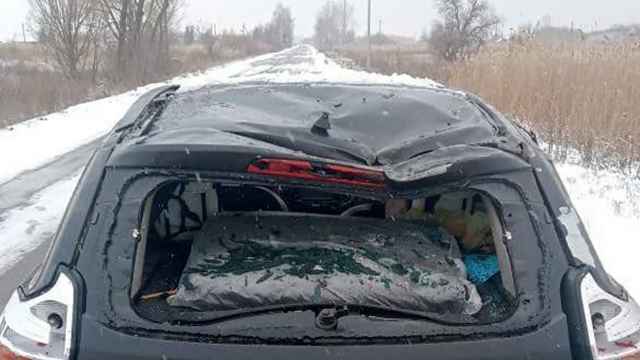
The overnight Russian strikes triggered a fire at a private medical clinic in the capital, killing one person and wounding three others, the authorities said.
Emergency services released images of rescuers removing people on stretchers from a gutted building.
"Doctors and nurses were forced to evacuate the wounded under fire," Ukraine's Prime Minister Yulia Svyrydenko said on X.
"It was a terrible night for us," Margaryta Maliovana, the clinic's CEO, told AFP.
"One person died. A young man, 30-year-old, was killed," she said, adding that there were 26 patients in the clinic at the moment of the strike.
The pre-dawn attack also killed one man in his 70s in the neighboring city of Fastiv, the Kyiv regional governor said.
The strikes caused power outages in the area, with backup systems activated to maintain water and heating supplies, the official said, as temperatures dropped to minus 8 degrees Celsius.
Russia launched a total of 165 drones and at least nine missiles overnight, the Ukrainian air force said.
Paris meeting
European leaders are in Paris Tuesday, seeking a breakthrough on a plan to end the fighting that Kyiv says is "90%" ready.
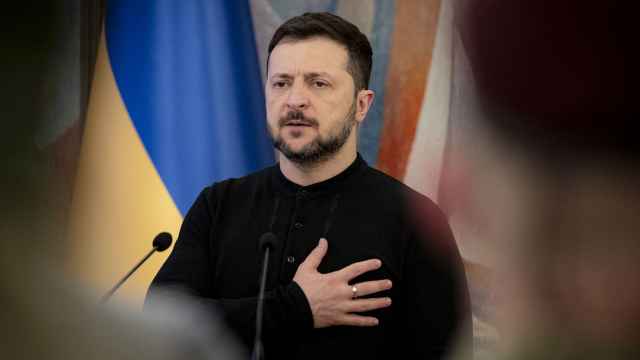
"This week, we will be working with our European and American partners to ensure that Ukraine has the assistance it needs," Ukrainian President Volodymyr Zelensky said Monday.
To lay the groundwork, security advisers from 15 countries, including Britain, France and Germany as well as representatives from NATO and the European Union, gathered in Kyiv over the weekend.
U.S. envoy Witkoff joined the talks virtually, a Ukrainian official told AFP, though the United States' large-scale military attack on Venezuela earlier in the day overshadowed proceedings.
Another preparatory meeting between chiefs of staff is scheduled for Monday.
Diplomatic efforts to end Europe's deadliest conflict since World War II have gained pace in recent weeks, though both Moscow and Kyiv remain at odds over the key issue of territory in a post-war settlement.
Russia, which occupies around 20% of Ukraine, is pushing for full control of the country's eastern Donbas region as part of a deal.
But Kyiv has warned that ceding ground will embolden Moscow and said it will not sign a peace deal that fails to deter Russia from invading again.
On Monday, Russia said it had seized the village of Hrabovske in Ukraine's northeastern Sumy region, from where Kyiv had last month accused Moscow of forcibly relocating dozens of residents.
Trump rejects Putin home strike
Bombarded daily and losing ground, Ukraine has responded with its own drone attacks launched towards Russian territory, targeting in particular energy infrastructure that funds the war effort.
Trump on Sunday dismissed claims by Moscow that Kyiv had launched a drone at one of Russian President Vladimir Putin's residences.
"I don't believe that strike happened," Trump said in response to a reporter's question aboard Air Force One. Kyiv has also rejected the accusation.
Russia invaded Ukraine in February 2022, triggering a conflict that has killed tens, if not hundreds, of thousands, devastated eastern Ukraine and forced millions to flee their homes.
Putin has vowed to press on with his military campaign if his hardline demands are not met at the negotiating table.
Russia in 2025 gained the most ground on the battlefield since the first year of its offensive, according to AFP analysis.
A Message from The Moscow Times:
Dear readers,
We are facing unprecedented challenges. Russia's Prosecutor General's Office has designated The Moscow Times as an "undesirable" organization, criminalizing our work and putting our staff at risk of prosecution. This follows our earlier unjust labeling as a "foreign agent."
These actions are direct attempts to silence independent journalism in Russia. The authorities claim our work "discredits the decisions of the Russian leadership." We see things differently: we strive to provide accurate, unbiased reporting on Russia.
We, the journalists of The Moscow Times, refuse to be silenced. But to continue our work, we need your help.
Your support, no matter how small, makes a world of difference. If you can, please support us monthly starting from just $2. It's quick to set up, and every contribution makes a significant impact.
By supporting The Moscow Times, you're defending open, independent journalism in the face of repression. Thank you for standing with us.

Remind me later.