
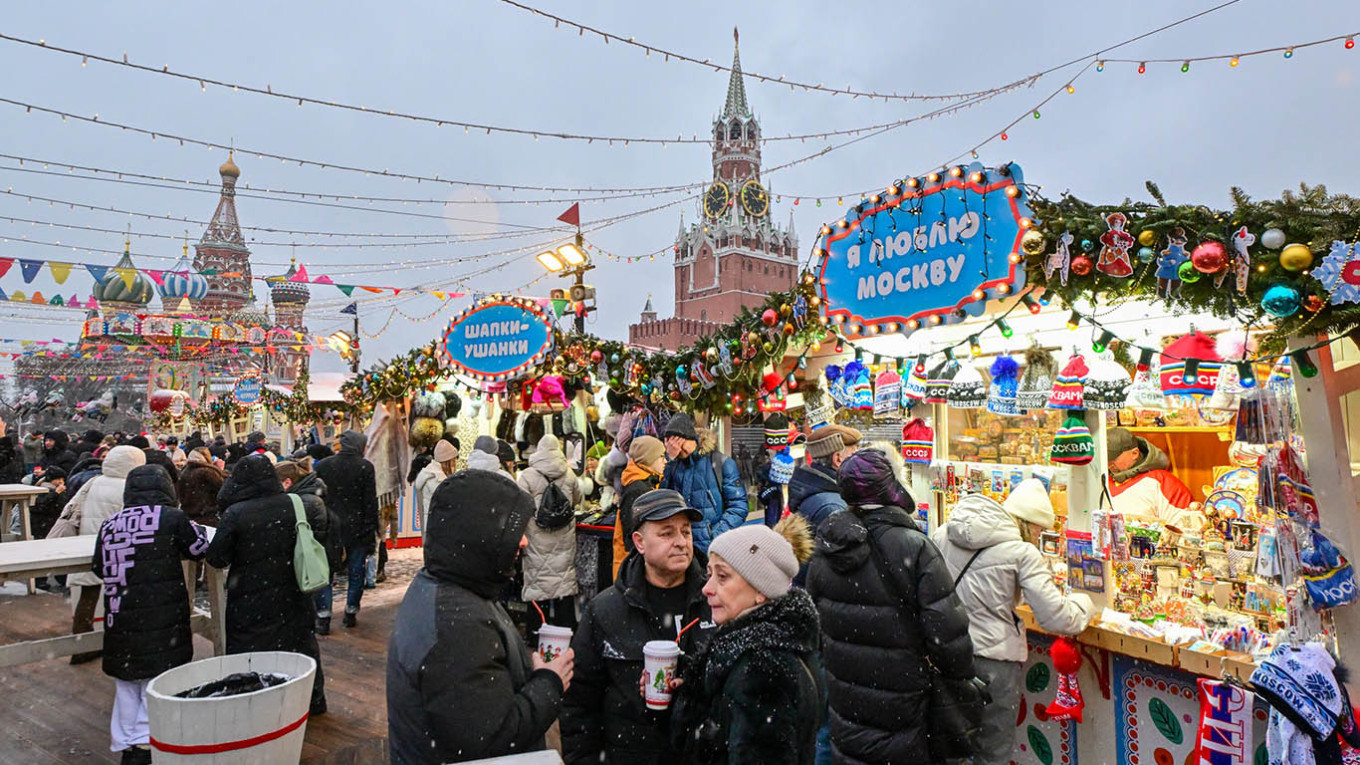
With Western sanctions tightening and military demands on the budget due to the war in Ukraine showing little sign of easing, Russia is likely to slide from a phase of “managed cooling” into outright stagnation in 2026, with any meaningful recovery unlikely before 2027.
The earlier sugar rush from wartime military spending is now fading, and its costs are set to be passed on through higher taxes as revenues fall short amid lower oil prices and continued Western pressure on Russia’s energy exports.
War-driven boom fades
The year 2025 marked the end of Russia’s wartime growth spurt of 2023-24. After two years of expansion of more than 4%, GDP growth for 2025 is expected to slow to around 1% or lower, with the same headwinds likely to persist into 2026.
The economy has largely exhausted the temporary drivers that underpinned growth in 2023 and 2024. In 2023, rapid expansion reflected a rebound from the shock of 2022, when the economy was forced to rapidly reorient toward wartime production.
In 2024, growth rested on a different pillar: a sharp rise in state spending. Federal expenditures increased by roughly a quarter that year, rising to 40.2 trillion rubles ($502.5 billion) from 32.35 trillion rubles ($404.4 billion) in 2023, injecting demand into the economy.
Those drivers were largely absent in 2025, and there is no obvious catalyst to revive growth in 2026.
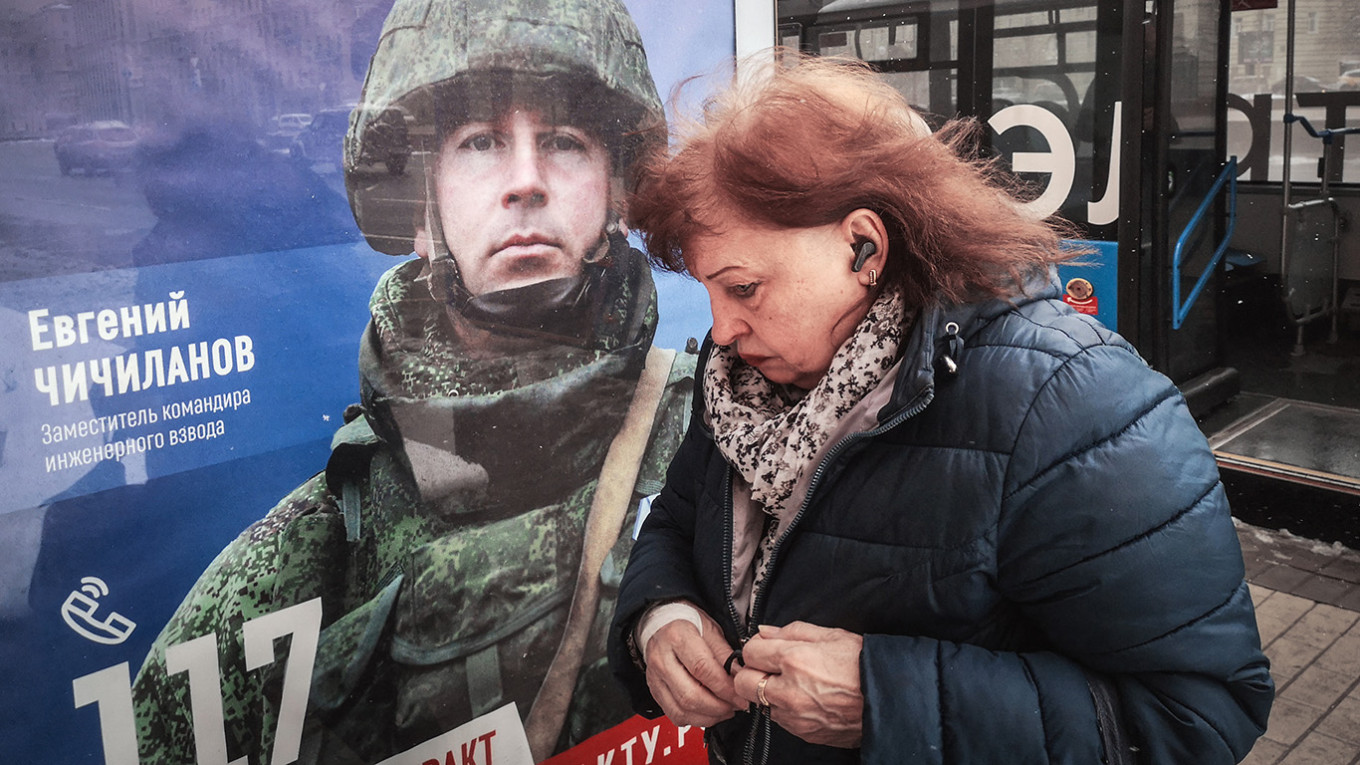
Government spending is projected to reach 42.3 trillion rubles ($528.8 billion) in 2025 and 44.1 trillion rubles ($551.3 billion) in 2026, staying broadly flat after adjusting for inflation.
Combined with interest rates of around 16% aimed at curbing inflation, this points to an economy stuck near stagnation as policymakers in Moscow attempt to balance growth against price stability.
Many analysts now expect GDP growth to hover around 1% in both 2025 and 2026 as a result. The Economic Forecasting Institute of the Russian Academy of Sciences projects growth of 0.7% in 2025 and 1.4% in 2026, accelerating to about 2% in 2027. The International Monetary Fund forecasts growth of 0.6% in 2025 and 1.0% in 2026.
Tax burden rises as revenues erode
For the first time since the pandemic, Russia collected less budget revenue in 2025 than originally planned. When the 2025 budget was approved, revenues were set at 40.3 trillion rubles ($503.8 billion). Updated forecasts suggest actual receipts will come in closer to 36.6 trillion rubles ($457.5 billion).
This marks a break from the previous three years, including 2022, when revenues consistently exceeded initial projections.
The shortfall partly reflects weaker tax intake amid slowing growth, as well as falling oil prices and Western sanctions that have widened the discount Russia must offer buyers for its crude.
Oil and gas revenues in 2025 are now projected at 8.7 trillion rubles ($108.8 billion), well below the originally planned 10.9 trillion rubles ($136.3 billion). With growth slowing and oil prices under pressure, 2026 is likely to bring another year of weak budget revenues.
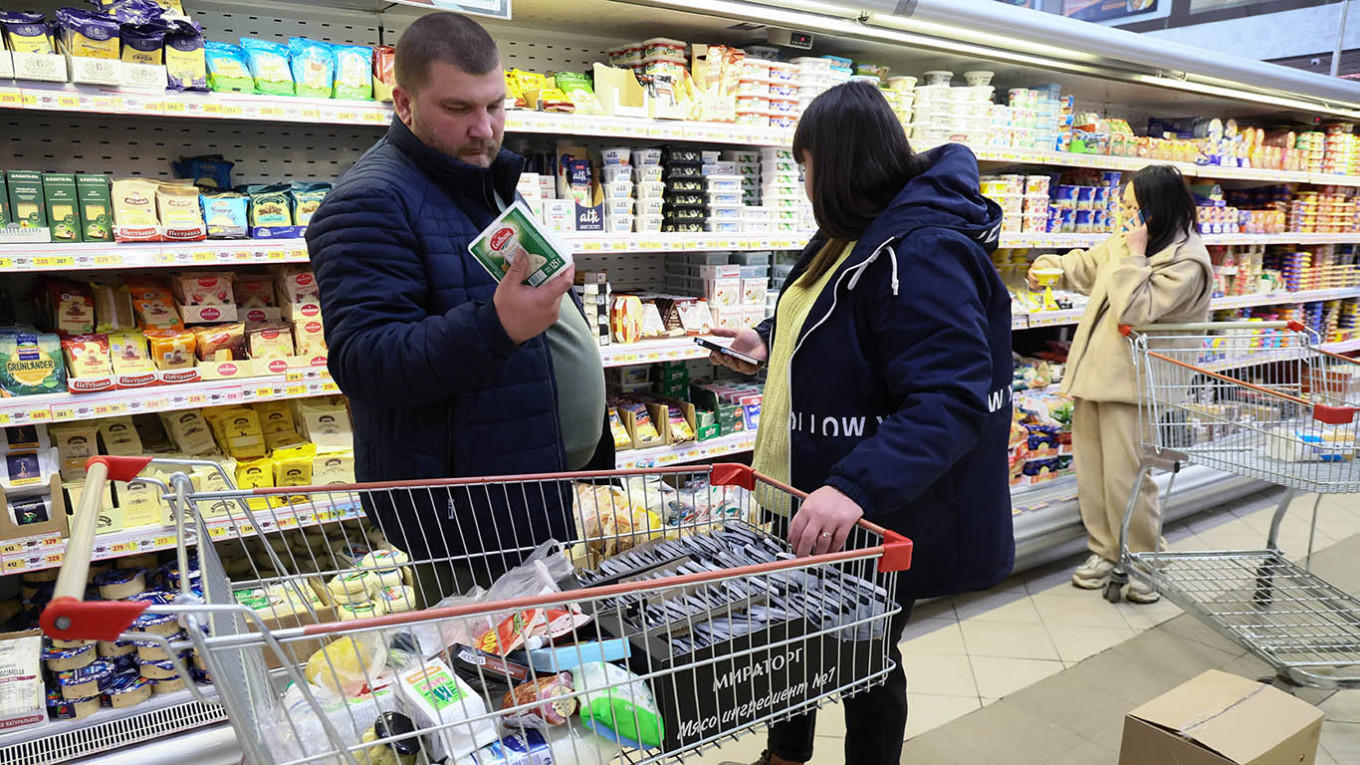
The World Bank expects a global oil supply surplus to push Brent crude prices down from an average of $68 a barrel in 2025 to around $60 in 2026, the lowest level in five years.
Authorities are now hiking taxes in an effort to shore up the budget. The value-added tax (VAT) rate will increase from 20% to 22% from Jan. 1, while more businesses will be brought into the VAT system as the annual revenue threshold for mandatory payments is lowered to 10 million rubles ($125,000) from 60 million rubles ($750,000).
The government also plans to introduce a levy on finished electronic goods, including laptops, smartphones and lighting products.
Altogether, these measures point to a post-spending hangover, with households and businesses facing higher taxes to refill the Kremlin’s war coffers as the energy sector struggles under sanctions.
No respite from war pressures
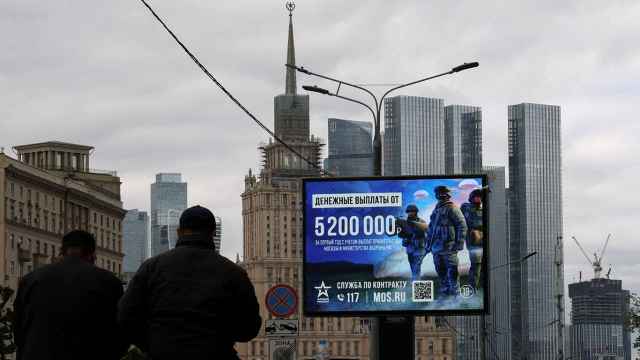
Despite the economic slowdown, Russian authorities have little room to cut military spending as the war in Ukraine drags on.
President Vladimir Putin has shown no sign of backing down from his maximalist demands, repeatedly saying Russia is prepared to fight until it secures control over the four Ukrainian regions it claims to have annexed.
Officially, spending on national defense is set at 13.5 trillion rubles ($168.8 billion) in 2025 and 12.93 trillion rubles ($161.6 billion) in 2026. But actual outlays, including classified spending, are likely to be higher.
Russia does not disclose full military expenditures in its federal budget, publishing only planned figures.
Officials occasionally provide partial disclosures. In December, Defense Minister Andrei Belousov said defense spending amounted to 7.3% of GDP in 2025.
With GDP estimated at 217.3 trillion rubles ($2.72 trillion) in 2025, this implies total defense spending of around 15.86 trillion rubles ($198.3 billion), well above the figures published in the budget.
As the war continues into 2026, military spending will remain a major drag on the economy and its prospects for recovery.
While ever larger sums are funneled into arms production and the war effort, this spending does little to increase the supply of consumer goods, adding to inflationary pressure.
The longer the war continues, the less funding will be available for civilian development, while taxes are likely to keep rising to close the gap between spending and revenues.
A Message from The Moscow Times:
Dear readers,
We are facing unprecedented challenges. Russia's Prosecutor General's Office has designated The Moscow Times as an "undesirable" organization, criminalizing our work and putting our staff at risk of prosecution. This follows our earlier unjust labeling as a "foreign agent."
These actions are direct attempts to silence independent journalism in Russia. The authorities claim our work "discredits the decisions of the Russian leadership." We see things differently: we strive to provide accurate, unbiased reporting on Russia.
We, the journalists of The Moscow Times, refuse to be silenced. But to continue our work, we need your help.
Your support, no matter how small, makes a world of difference. If you can, please support us monthly starting from just $2. It's quick to set up, and every contribution makes a significant impact.
By supporting The Moscow Times, you're defending open, independent journalism in the face of repression. Thank you for standing with us.

Remind me later.