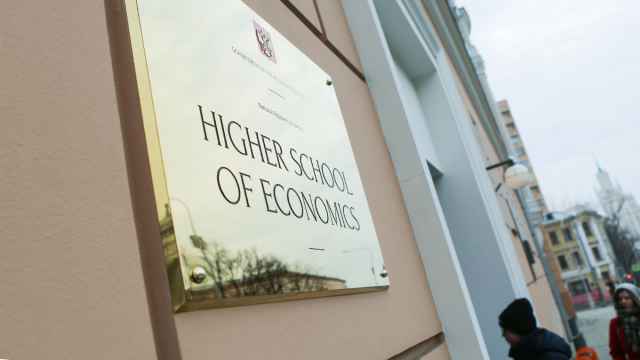
Russia’s state education watchdog on Monday suspended the license of Moscow’s Higher School of Social and Economic Sciences, better known as Shaninka, effectively halting its ability to teach students, Russian media reported.
The suspension by Rosobrnadzor means the university is no longer authorized to provide instruction and must arrange for students, with their consent, to transfer to other institutions.
According to the business newspaper Kommersant, the license can remain suspended until a court determines whether the university has remedied the violations cited by officials. A full revocation would make reinstatement impossible.
The move follows Rosobrnadzor’s decision last month to strip accreditation from several of Shaninka’s degree programs after it accused the university of lacking core higher education programs and qualified teaching staff, reporting poor student performance on standardized tests and failing to keep employee information on its website up to date.
Rosobrnadzor first accused Shaninka of violations in November 2024, and since then, the university has been barred from admitting new students.
Shaninka has not publicly commented on the license suspension or the loss of accreditation for several of its programs. The university has appealed the admissions suspension in court.
In July, Shaninka rector Maria Sigova told students that she was not confident the university would win its legal battle against Rosobrnadzor and urged students to explore transfer options.
Founded in 1995 by British sociologist Theodore Shanin, Shaninka is considered one of Russia’s leading humanities institutions and counts prominent figures like political analyst Ekaterina Shulmann and sociologist Grigory Yudin among its alumni.
A Message from The Moscow Times:
Dear readers,
We are facing unprecedented challenges. Russia's Prosecutor General's Office has designated The Moscow Times as an "undesirable" organization, criminalizing our work and putting our staff at risk of prosecution. This follows our earlier unjust labeling as a "foreign agent."
These actions are direct attempts to silence independent journalism in Russia. The authorities claim our work "discredits the decisions of the Russian leadership." We see things differently: we strive to provide accurate, unbiased reporting on Russia.
We, the journalists of The Moscow Times, refuse to be silenced. But to continue our work, we need your help.
Your support, no matter how small, makes a world of difference. If you can, please support us monthly starting from just $2. It's quick to set up, and every contribution makes a significant impact.
By supporting The Moscow Times, you're defending open, independent journalism in the face of repression. Thank you for standing with us.

Remind me later.