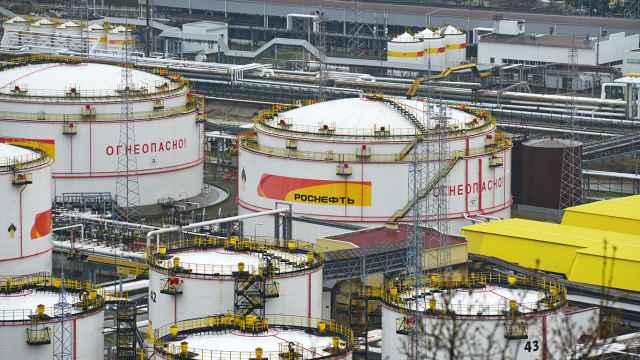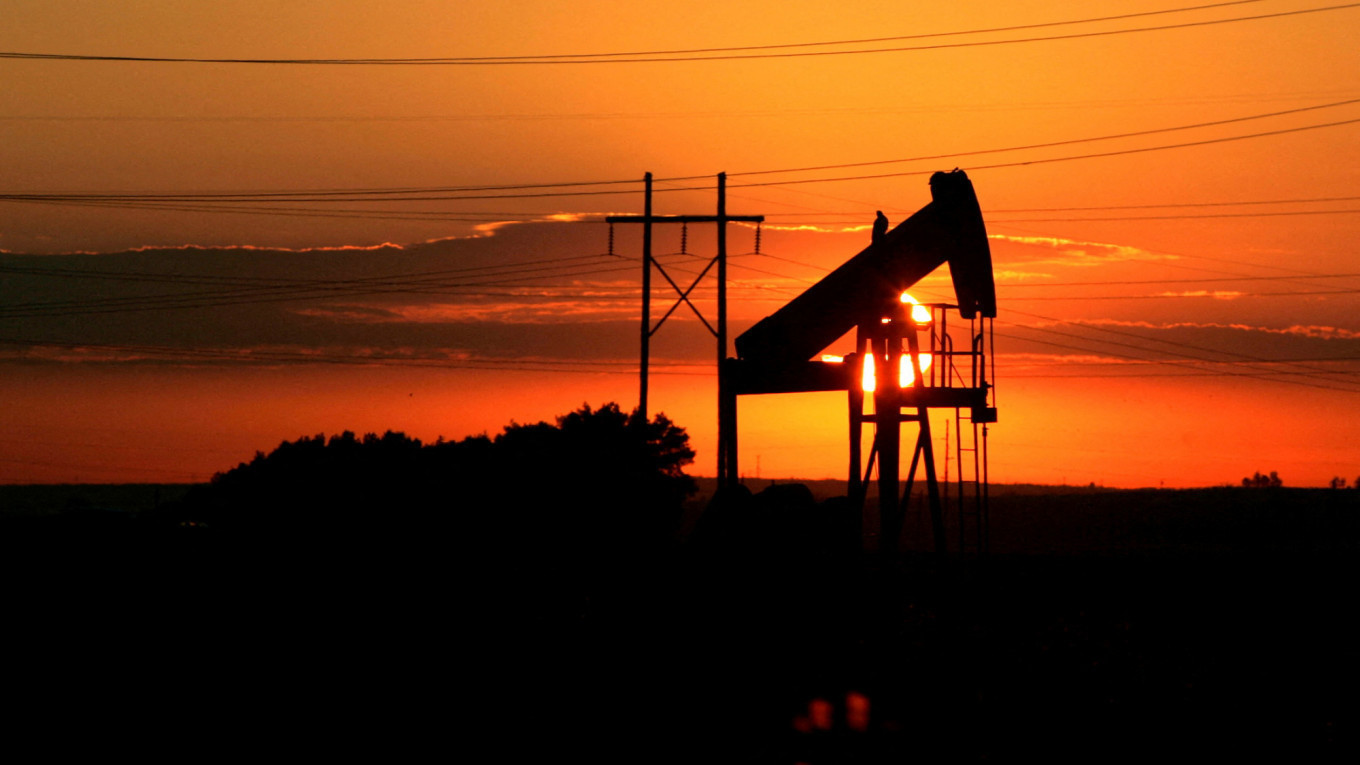
Russian oil prices have tumbled to their lowest levels since the pandemic after the U.S. sanctioned Rosneft and Lukoil, further squeezing producers already facing sharp profit declines this year.
Producers are struggling to cover capital expenditures at several fields at current Urals crude prices, sources at Russian oil companies told Reuters.
Last week, Argus reported that Urals was selling abroad for $34-36 per barrel, a record low since the pandemic, while discounts on the crude reached $23-25 per barrel — the largest since the February 2022 invasion of Ukraine.
Discounts reportedly reached $35 per barrel for some cargos sold to Chinese refineries.
At around $40 per barrel, Urals barely covers extraction and transportation costs, experts say.
Remote fields with high production costs may already be unprofitable.
In contrast, mature deposits in the Volga region and western Siberia remain profitable due to lower operating costs, large reserves and proximity to pipelines, Maxim Shevyrenkov, an analyst at the Institute of Energy and Finance, told Reuters.
“The upstream oil industry is sliding into a crisis, and the most recent sanctions are going to accelerate that,” said Craig Kennedy, former Bank of America vice president and now an expert at the Davis Center for Russia and Eurasian Studies at Harvard.
“There are only so many buyers with an appetite for sanctioned oil,” Kennedy told The Washington Post. “When you do the numbers, it looks like somewhere between 1.6 million and 2.8 million barrels per day will get stranded without firm demand. At the moment, a lot of unsold oil is being stored on the water in tankers.”
A healthy refining margin with low crude prices and high petroleum product prices partially offsets upstream challenges, Bakhtin noted.
Still, financial results for Russian oil companies have already deteriorated. Net profit at Rosneft fell threefold for January-September, Gazprom Neft’s profit dropped 38% and Lukoil lost half of its first-half earnings.
U.S. sanctions may also threaten Lukoil’s foreign assets valued at roughly $20 billion.
Bakhtin said that financial results for oil companies have been worse in the second half of the year compared to the first half, and predicted even worse results in 2026.
According to Renaissance Capital, dividend payments this year are expected to be the lowest in five years. Oil and gas revenues for the budget have also fallen to December levels of just 410 billion rubles, down 49% from the same month last year, Reuters calculations show.
Discounts on Russian crude could remain high for several months but are likely to return to $10-12 per barrel in the long term, Renaissance Capital analyst Mark Shumilov told Reuters.
Bakhtin added that low oil prices and potential negative cash flows may discourage some companies from increasing production under the OPEC+ agreement.
A Message from The Moscow Times:
Dear readers,
We are facing unprecedented challenges. Russia's Prosecutor General's Office has designated The Moscow Times as an "undesirable" organization, criminalizing our work and putting our staff at risk of prosecution. This follows our earlier unjust labeling as a "foreign agent."
These actions are direct attempts to silence independent journalism in Russia. The authorities claim our work "discredits the decisions of the Russian leadership." We see things differently: we strive to provide accurate, unbiased reporting on Russia.
We, the journalists of The Moscow Times, refuse to be silenced. But to continue our work, we need your help.
Your support, no matter how small, makes a world of difference. If you can, please support us monthly starting from just $2. It's quick to set up, and every contribution makes a significant impact.
By supporting The Moscow Times, you're defending open, independent journalism in the face of repression. Thank you for standing with us.

Remind me later.