
Top European officials met on Tuesday to establish an international body that will rule on tens of billions of euros of eventual reparations to compensate Ukraine for Russia's full-scale invasion.
The International Claims Commission for Ukraine will assess and decide on claims for reparations, including any amount to be paid out.
The body was expected to be approved at a high-level summit on Tuesday in The Hague, attended by Ukrainian President Volodymyr Zelensky and EU foreign policy chief Kaja Kallas.
The commission's establishment follows the setting up of a so-called "Register of Damages," which has already received more than 80,000 claims for reparations from individuals and organizations.
The third step will be setting up a compensation fund. It is not clear how that critical part of the process will work in practice.
The reparations mechanism is being coordinated via the Strasbourg-based Council of Europe, the 46-nation group protecting human rights on the continent.
Dutch Foreign Minister David van Weel told reporters that the new commission would be based in The Hague.
EU leaders are under pressure to reach an agreement on what to do with the frozen Russian assets at a summit that begins Thursday.
They are seeking ways to fund a loan to Kyiv, which, under the proposal, would be paid back by any eventual Russian reparations to Ukraine.
But while the plan has the strong backing of many member states, including heavyweight Germany, it has drawn fierce opposition so far from Belgium.
The country is home to the international deposit organization Euroclear, which holds most of the Russian assets, and has so far rejected the proposal due to potential legal repercussions.
The debate over frozen assets comes amid efforts to end the Ukraine war, which U.S. President Donald Trump said was "closer now than we have been ever."
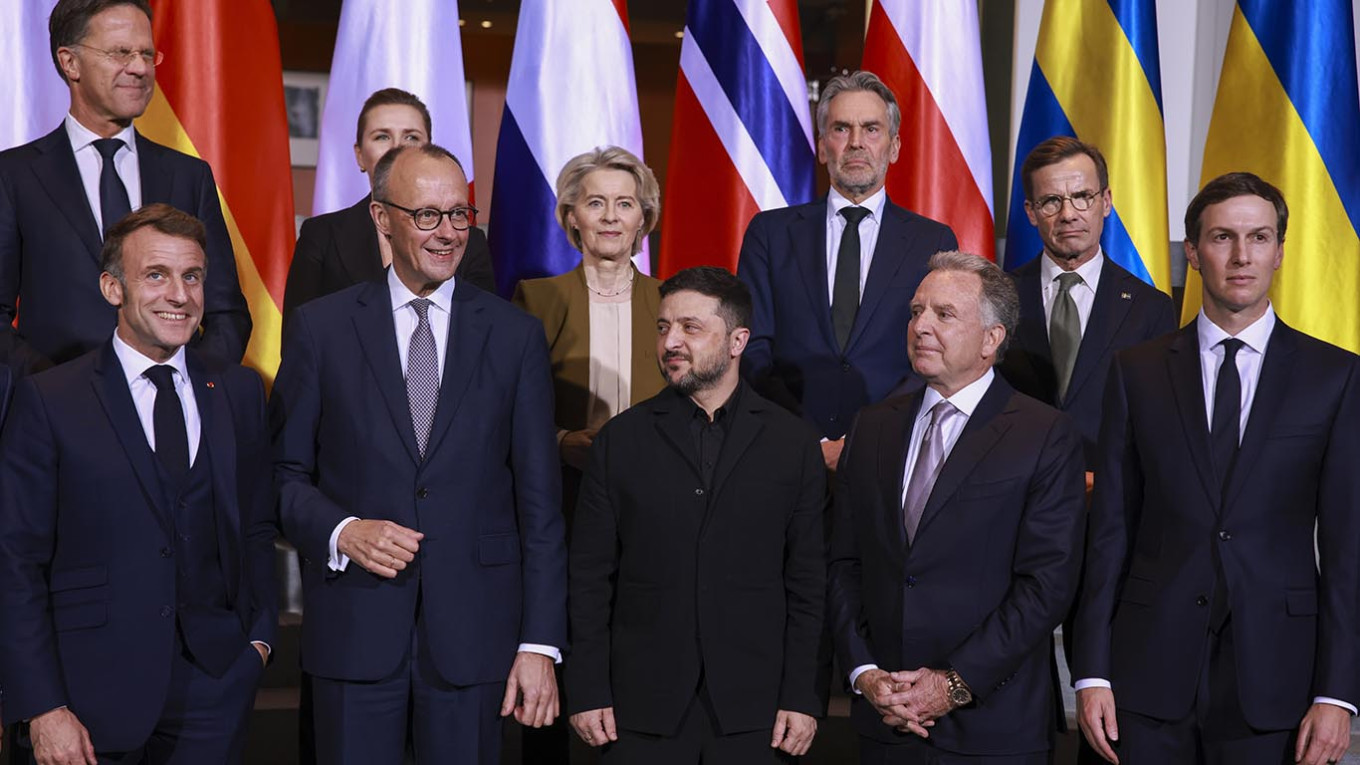
After two days of talks with senior U.S. officials in Berlin, Zelensky said negotiations were "not easy" but brought "real progress" on the question of security guarantees.
European leaders on Monday proposed a European-led "multinational force" with U.S. support to enforce a potential peace deal.
"Discussions on accountability and reparation and reconstruction must be part of the peace talks," Council of Europe Secretary General Alain Berset told reporters on arrival at the meeting in The Hague.
A Message from The Moscow Times:
Dear readers,
We are facing unprecedented challenges. Russia's Prosecutor General's Office has designated The Moscow Times as an "undesirable" organization, criminalizing our work and putting our staff at risk of prosecution. This follows our earlier unjust labeling as a "foreign agent."
These actions are direct attempts to silence independent journalism in Russia. The authorities claim our work "discredits the decisions of the Russian leadership." We see things differently: we strive to provide accurate, unbiased reporting on Russia.
We, the journalists of The Moscow Times, refuse to be silenced. But to continue our work, we need your help.
Your support, no matter how small, makes a world of difference. If you can, please support us monthly starting from just $2. It's quick to set up, and every contribution makes a significant impact.
By supporting The Moscow Times, you're defending open, independent journalism in the face of repression. Thank you for standing with us.

Remind me later.